[ENGLISH] A Childlike Eiffel Tower in the Language of Joy
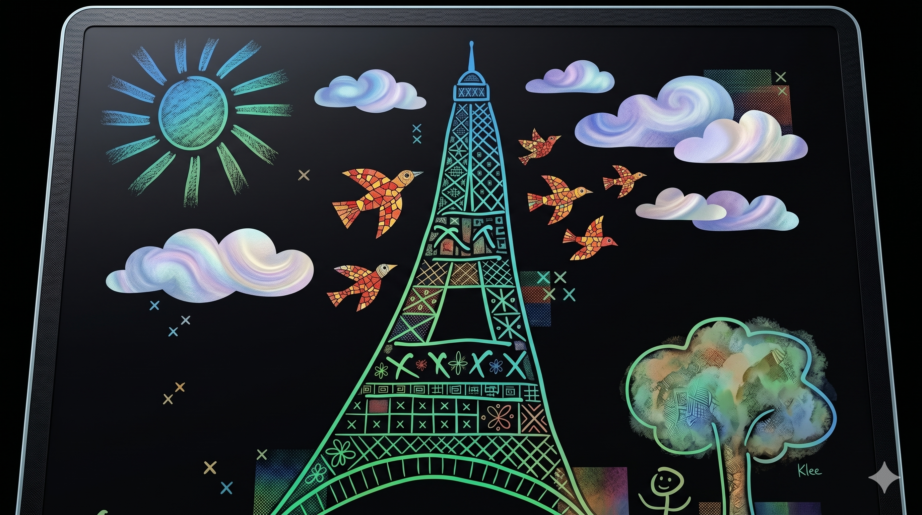
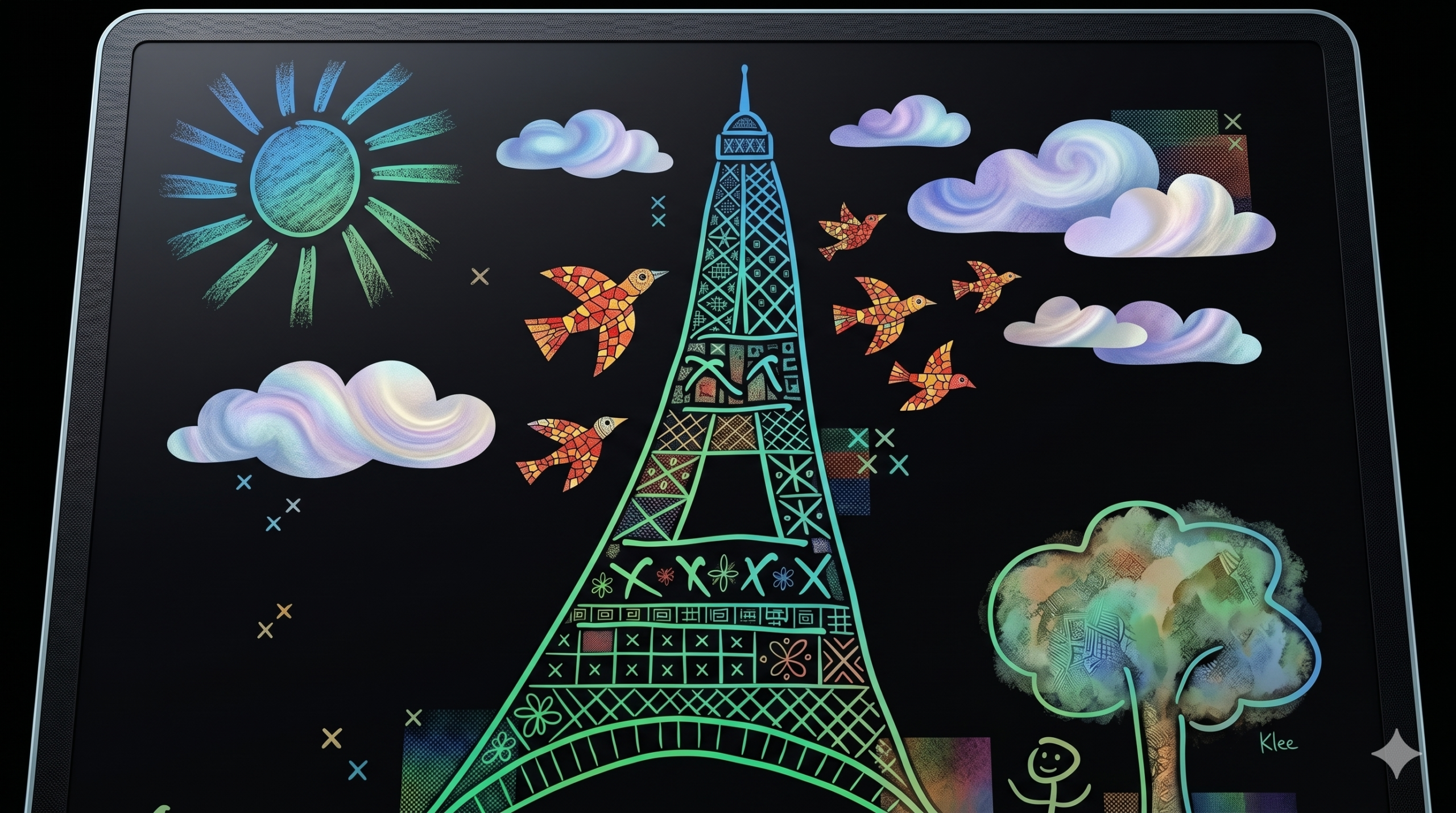
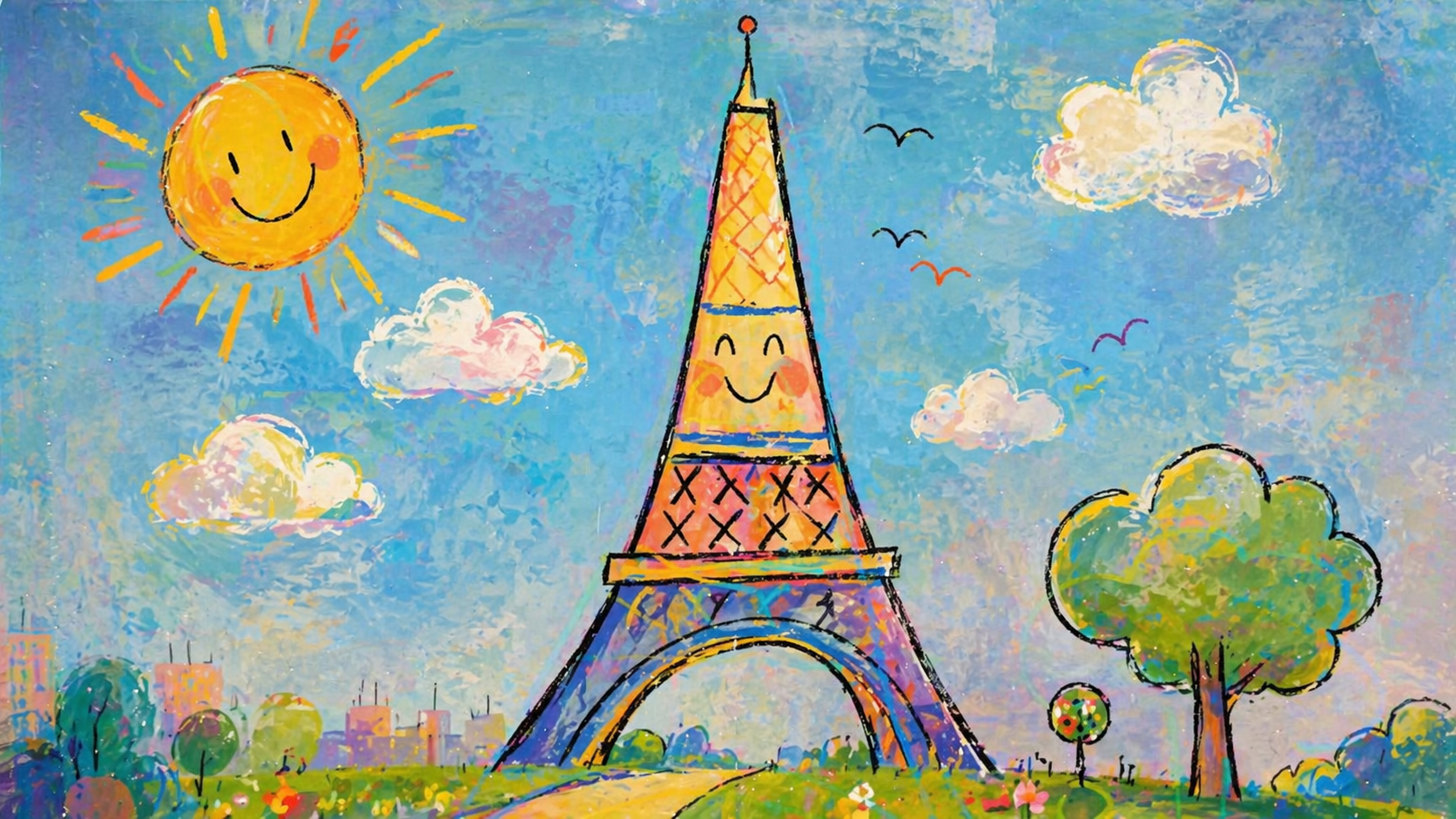
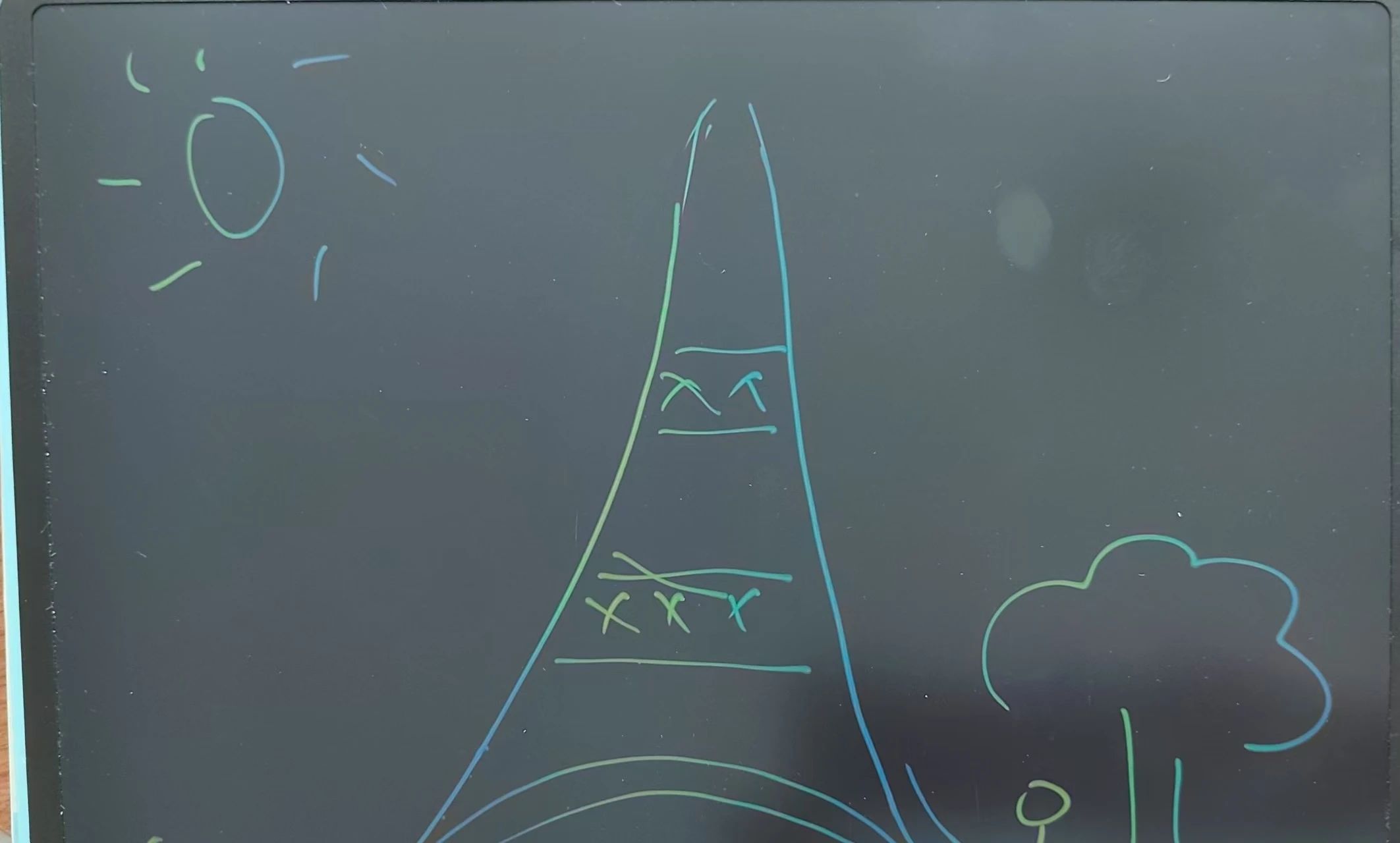
This artwork transforms the Eiffel Tower into a warm, playful character rather than a distant architectural monument. Inspired by naïve art and the childlike spirit associated with Paul Klee, the composition uses simplified geometry, smiling forms, and lively color to turn Paris into an imaginative playground. The original sketch provides the essential emotional structure: a tall triangular tower, a sun, a tree, and open space. The generated images expand this modest beginning into a complete visual story, adding birds, drifting clouds, patterned surfaces, and luminous gradients. The Eiffel Tower becomes almost alive, decorated with repeated crosses, grids, flowers, and mosaic-like panels that suggest both structure and fantasy. The black or blue sky variations create two different moods: one feels like a magical illuminated tablet, while the brighter version feels like a sunny children’s mural. In both, line remains central. The lines are not technically rigid; they preserve the freshness of a child’s hand, where proportion is less important than feeling. The smiling sun and tower soften the urban subject, replacing grandeur with friendliness. Birds introduce movement and freedom, while the tree anchors the scene in nature. The image succeeds because it does not simply imitate a child’s drawing; it respects the child’s way of seeing. Architecture becomes a companion, the city becomes a storybook, and simple marks become a language of wonder.
[TRADITIONAL_CHINESE] 以童心觀看艾菲爾鐵塔的快樂圖像
這件作品將艾菲爾鐵塔從嚴肅的城市地標,轉化為一個親切、活潑、近乎有生命的童話角色。整體語彙屬於樸素藝術與童稚風格,並帶有保羅・克利式的想像性線條與符號感。原始手繪圖提供了作品最重要的情感基礎:高高的鐵塔、左上方的太陽、右側的樹,以及簡單開放的空間。生成後的圖像在此基礎上加入雲朵、飛鳥、漸層色彩、裝飾性紋樣與光影,使畫面從一張兒童速寫發展成完整的視覺敘事。鐵塔不再只是建築物,而像一位站在城市中央微笑的朋友。塔身上的交叉線、格紋、花朵與色塊,既呼應鐵塔本身的結構,也帶出兒童對世界的自由想像。深色背景版本像是在發光畫板上的夜間幻想,色彩更具神秘感;明亮天空版本則像陽光下的兒童壁畫,充滿戶外活動的開朗氣氛。作品最動人的地方在於它保留了兒童線條的不完美與直接性。比例並非重點,情感才是核心。微笑的太陽、漂浮的雲、飛翔的鳥與旁邊的樹,共同構成一個友善世界。這不是單純模仿兒童畫,而是尊重童心觀看世界的方式:城市可以變成故事,建築可以變成朋友,簡單線條也能成為想像力的語言。
[SIMPLIFIED_CHINESE] 用童心重新看见埃菲尔铁塔
这件作品把埃菲尔铁塔从宏大的城市地标,转化成一个亲切、活泼、几乎带有生命感的童话形象。画面属于朴素艺术与儿童式绘画风格,同时带有保罗・克利式的符号性、想象性和自由线条。原始草图提供了最核心的视觉骨架:高高的铁塔、左上方的太阳、右侧的树,以及一个开放而单纯的空间。生成后的图像在这个基础上进一步加入云朵、飞鸟、渐变色彩、装饰图案和柔和光影,使一张简单儿童画发展成具有完整故事感的艺术场景。铁塔不再只是建筑,而像一位站在城市中央微笑的朋友。塔身上的交叉线、网格、花朵和色块,既让人想到铁塔的结构,也表现出儿童观看世界时不受规则限制的想象力。深色背景版本像一块发光画板上的梦境巴黎,神秘而富有装饰性;蓝天版本则像阳光下的儿童壁画,明亮、轻快、充满户外气息。作品最有价值的地方,是它没有过度修正儿童线条的不稳定感。比例不是重点,情绪和故事才是重点。微笑的太阳、飘动的云、飞翔的鸟和旁边的树,共同构成一个友善的世界。它不是简单复制儿童画,而是尊重童心的观看方式:城市可以变成故事书,建筑可以成为朋友,简单线条也可以承载丰富的想象。
[FRENCH] La Tour Eiffel vue par le regard de l’enfance
Cette œuvre transforme la Tour Eiffel, habituellement perçue comme un monument urbain majestueux, en une figure joyeuse, proche et presque vivante. Elle s’inscrit dans une esthétique naïve et enfantine, avec un esprit qui évoque l’imaginaire graphique de Paul Klee : lignes simples, signes décoratifs, formes symboliques et liberté de composition. Le dessin d’origine donne la structure émotionnelle essentielle : une grande tour triangulaire, un soleil, un arbre et un espace ouvert. Les images générées enrichissent cette base par des nuages, des oiseaux, des couleurs en dégradé, des motifs géométriques et des effets de lumière. Ainsi, une esquisse très simple devient une scène narrative complète. La Tour Eiffel n’est plus seulement une architecture ; elle devient un personnage souriant au centre d’un monde accueillant. Les croisillons, les grilles, les fleurs et les petits panneaux colorés sur la tour rappellent à la fois sa structure métallique et l’imagination libre d’un enfant. La version au fond sombre ressemble à un tableau lumineux, presque magique, tandis que la version au ciel bleu évoque une fresque enfantine pleine de soleil. La force de l’image tient à la conservation de l’imperfection expressive du trait. La proportion exacte importe moins que la sensation de joie. Le soleil souriant, les nuages flottants, les oiseaux en mouvement et l’arbre voisin construisent un univers paisible et vivant. Cette création ne copie pas simplement un dessin d’enfant ; elle valorise une manière enfantine de voir le monde, où la ville devient récit, le monument devient compagnon, et la ligne simple devient langage poétique.
