[ENGLISH] Warm Realism at the Dinner Table
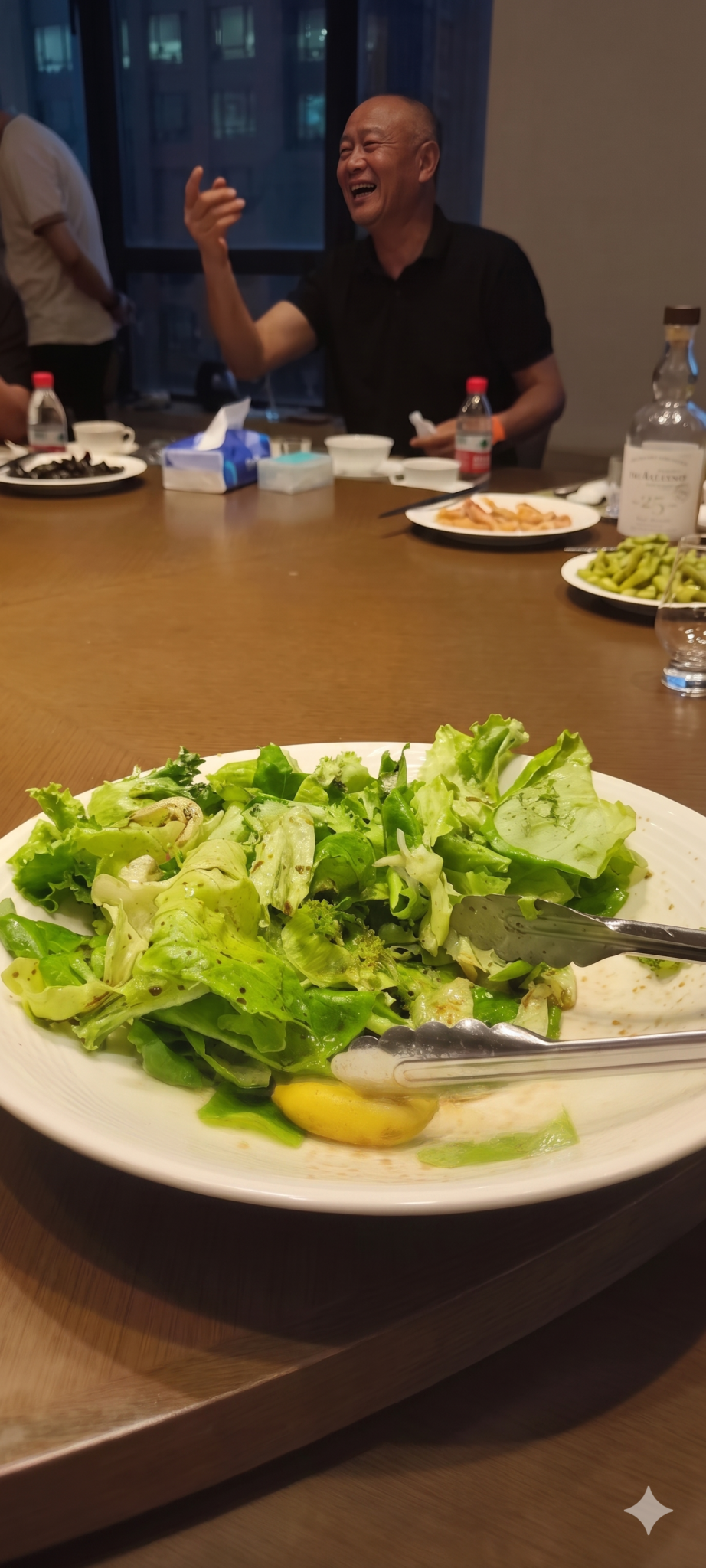
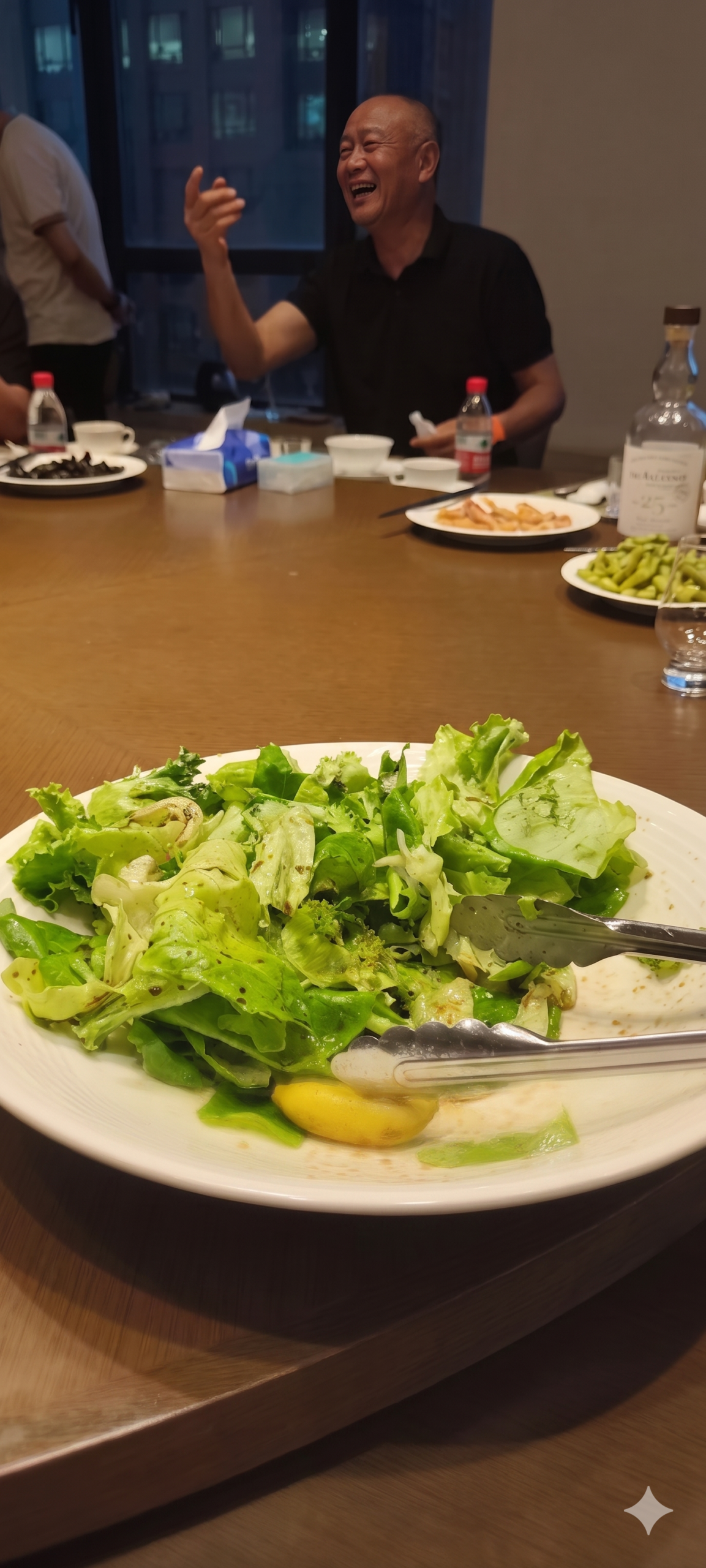
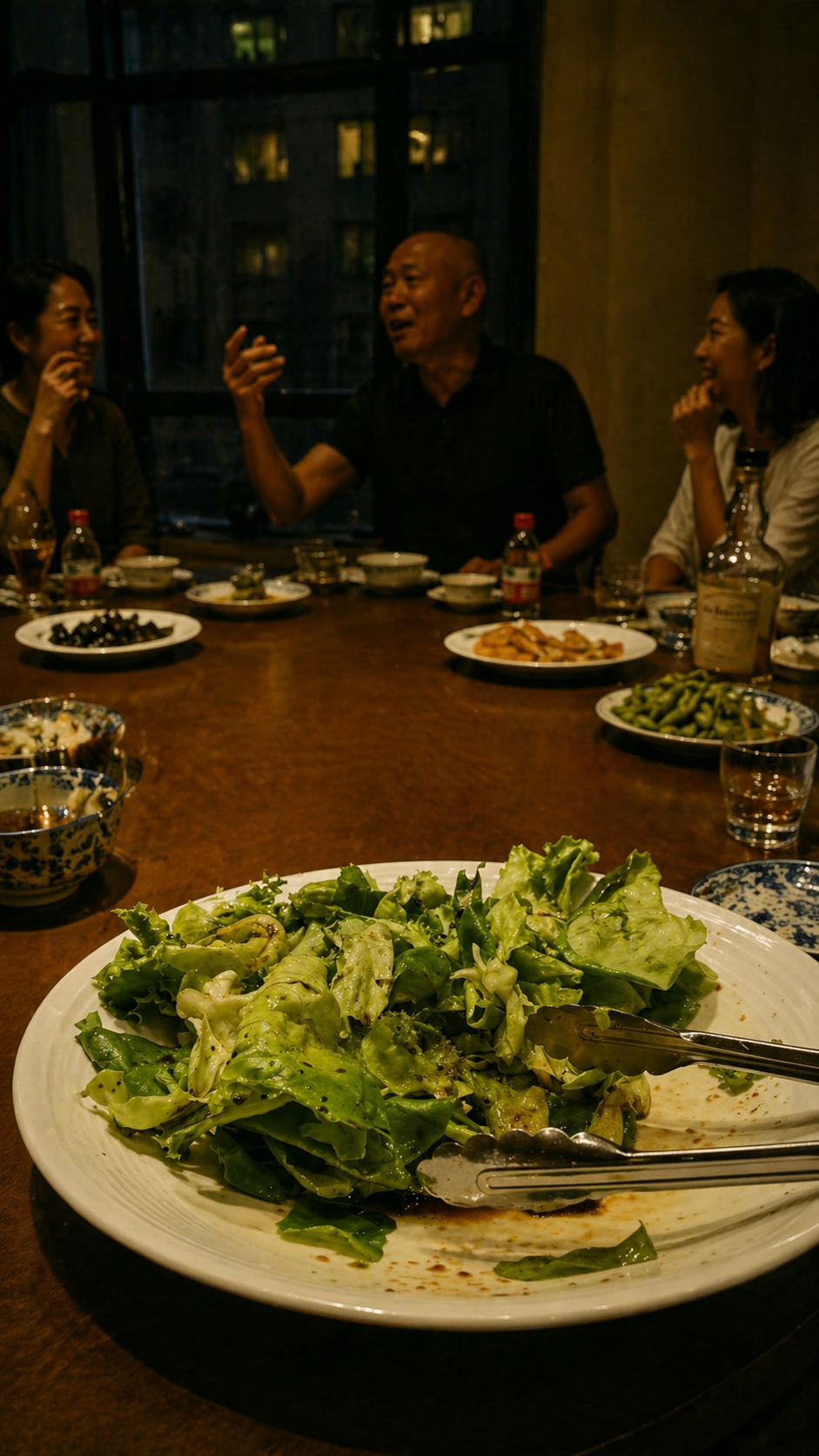
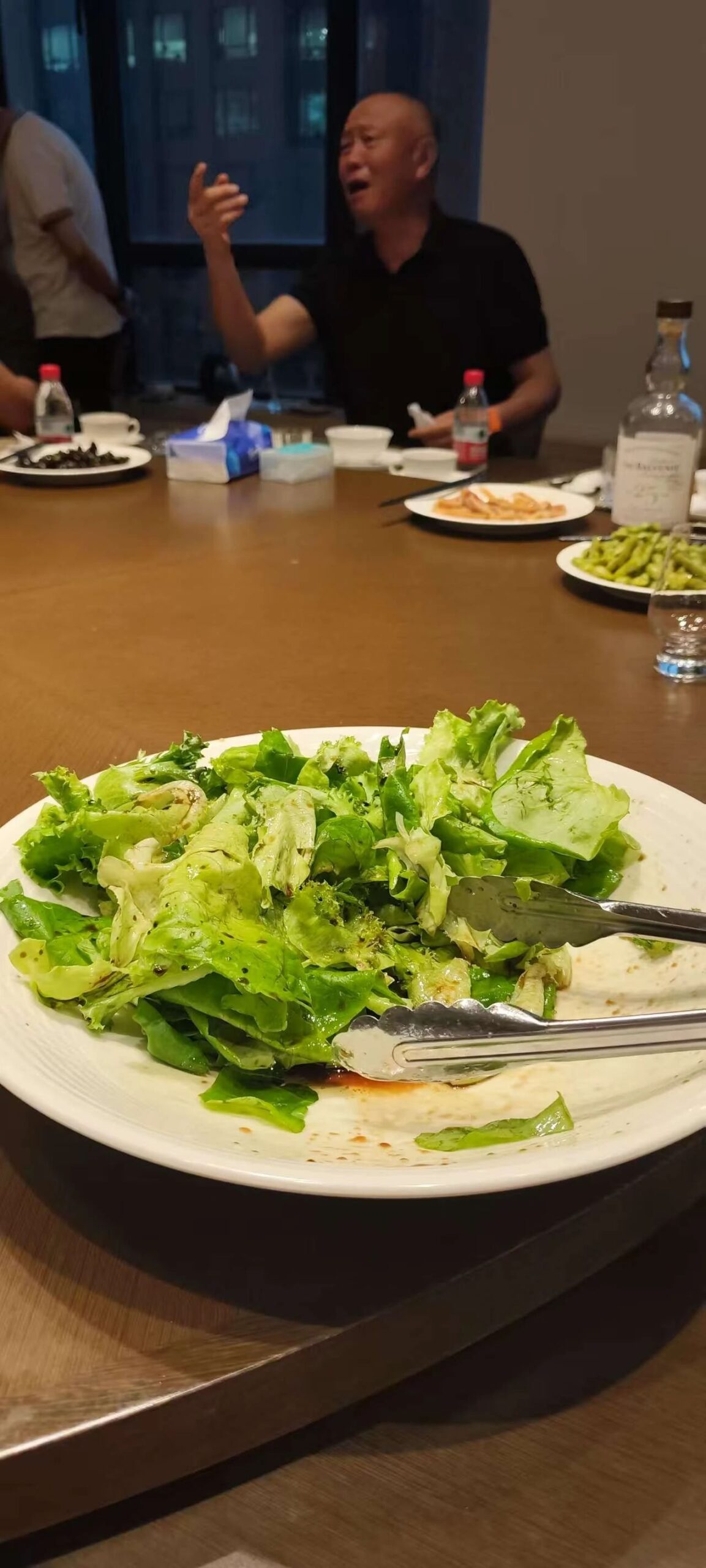
This photographic composition transforms an ordinary dinner gathering into a quiet study of appetite, companionship, and lived atmosphere. The plate of green salad in the foreground becomes the visual anchor: its bright leaves, glossy dressing, and metal serving tongs are rendered with tactile immediacy, inviting the viewer first through texture rather than narrative. Behind it, the wooden table stretches into a social field filled with dishes, glasses, bottles, and patterned bowls, each object suggesting a meal already in progress and a shared rhythm of conversation. The background figures are intentionally softer and darker, yet their gestures and smiles carry the emotional center of the work. This contrast between sharp foreground still life and blurred human interaction creates a layered realism: food becomes evidence of presence, while conversation becomes the invisible subject. The warm, low interior lighting recalls Edward Hopper’s sensitivity to rooms, windows, and evening moods, but here solitude is replaced by conviviality. The window behind the group introduces a dark urban exterior, making the indoor space feel protected, intimate, and almost theatrical. The composition succeeds because it does not idealize the gathering; instead, it preserves the informal imbalance of real life: half-finished plates, casual tableware, overlapping bodies, and spontaneous laughter. As an art creation, it celebrates everyday beauty through realism, showing that community is often found not in grand events, but in the shared textures of a table, a meal, and a fleeting expression of joy.
[TRADITIONAL_CHINESE] 餐桌上的溫暖寫實
這組影像將一場日常聚餐轉化為關於食物、情感與共同生活氣氛的寫實性敘事。畫面前景的綠色沙拉是最明確的視覺中心,葉片的鮮亮色澤、醬汁的濕潤光感,以及金屬夾子的反射質地,都讓觀者先從觸覺與味覺的想像進入作品。木質餐桌向後延伸,桌面上散落著菜盤、酒杯、瓶罐與帶有文化感的碗盤紋樣,形成一種正在進行中的生活場景。背景人物雖然相對模糊、光線較暗,但他們的笑容、手勢與彼此凝視,反而構成作品真正的情感核心。前景靜物的清晰與背景人際互動的柔化,建立出一種有層次的現實感:食物是人們聚在一起的證據,而談話與笑聲則成為看不見卻最重要的主題。作品中的暖色室內光線,使整個場景帶有愛德華・霍普式對房間、窗戶與夜晚氣氛的敏銳感受;不同的是,這裡並非孤獨的城市室內,而是被笑聲填滿的親密空間。窗外深色的都市景象,進一步強化了室內的庇護感與劇場感。這件作品最動人的地方,在於它沒有把聚餐美化成完美場景,而是保留了真實生活的不均衡:吃到一半的盤子、隨意擺放的餐具、交錯的人影與即興的大笑。它讓人看見,日常之美常常就在一張餐桌、一盤食物與一瞬間的連結之中。
[SIMPLIFIED_CHINESE] 餐桌上的温暖写实
这组影像把一次普通聚餐转化为关于食物、情感与共同生活气氛的写实叙事。画面前景的绿色沙拉是最强烈的视觉锚点,鲜亮的叶片、带有光泽的酱汁,以及金属夹子的反光质感,让观者首先通过触觉和味觉的想象进入作品。木质餐桌从前景延伸到后方,桌面上的菜盘、酒杯、瓶子和带有文化气息的碗盘纹样,共同构成一个正在发生的生活现场。背景中的人物虽然略显模糊、处在较暗的光线中,但他们的笑容、手势和彼此之间的注视,构成了作品真正的情感中心。清晰的前景静物与柔化的人物互动形成对比,使画面具有层次丰富的现实感:食物是相聚的证据,而谈话和笑声则成为看不见却最重要的主题。温暖的室内灯光让人联想到爱德华・霍普对房间、窗户和夜晚气氛的敏锐处理;但与霍普常见的孤独感不同,这里呈现的是被友情和交流填满的室内空间。窗外深色的城市夜景加强了室内的庇护感,使这张餐桌像一个小型舞台。作品的价值在于它没有追求完美摆拍,而是保留了真实生活的自然状态:半吃完的菜、随意摆放的餐具、交错的人影和突然爆发的笑声。它说明,日常之美并不依赖宏大的场面,而存在于一张桌子、一顿饭和人与人短暂而真诚的连接之中。
[FRENCH] Réalisme chaleureux autour de la table
Cette composition photographique transforme un simple repas entre proches en une scène réaliste consacrée à la nourriture, à la présence humaine et à la chaleur du quotidien. Au premier plan, l’assiette de salade verte agit comme un véritable point d’ancrage visuel. Les feuilles lumineuses, la brillance de la vinaigrette et le reflet métallique de la pince donnent à l’image une qualité presque tactile, comme si le spectateur entrait d’abord par la matière avant d’accéder au récit. La table en bois s’étend ensuite vers l’arrière, chargée d’assiettes, de verres, de bouteilles et de bols ornés de motifs culturels discrets. Chaque objet suggère un repas déjà commencé, une conversation en cours, une intimité partagée. Les personnages du fond sont plus flous et plongés dans une lumière plus sombre, mais leurs gestes, leurs sourires et leurs regards portent le véritable centre émotionnel de l’œuvre. Le contraste entre la nature morte nette du premier plan et l’interaction humaine adoucie à l’arrière-plan crée un réalisme stratifié : la nourriture devient la preuve visible de la réunion, tandis que le rire et la parole deviennent le sujet invisible. La lumière chaude de l’intérieur rappelle la sensibilité d’Edward Hopper pour les pièces, les fenêtres et les atmosphères du soir, mais ici la solitude cède la place à la convivialité. L’extérieur urbain sombre renforce la sensation d’abri, comme si la table formait une petite scène protégée. L’œuvre touche parce qu’elle ne cherche pas la perfection : elle conserve les assiettes entamées, le désordre naturel, les corps partiellement cadrés et l’éclat spontané du rire. Elle révèle ainsi la beauté ordinaire d’un repas partagé.
