[ENGLISH] The Circus Elephant as a Playful Study in Transformation
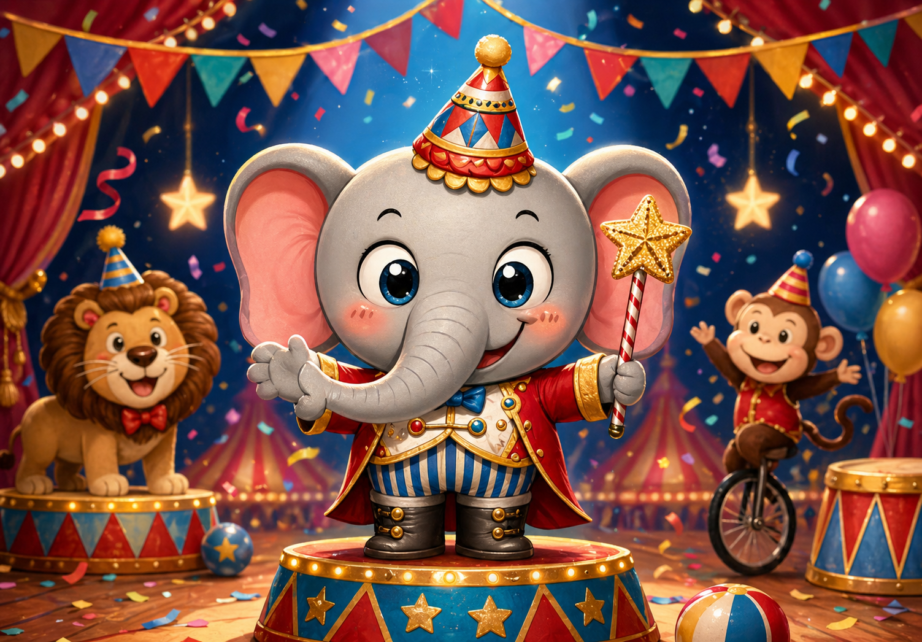
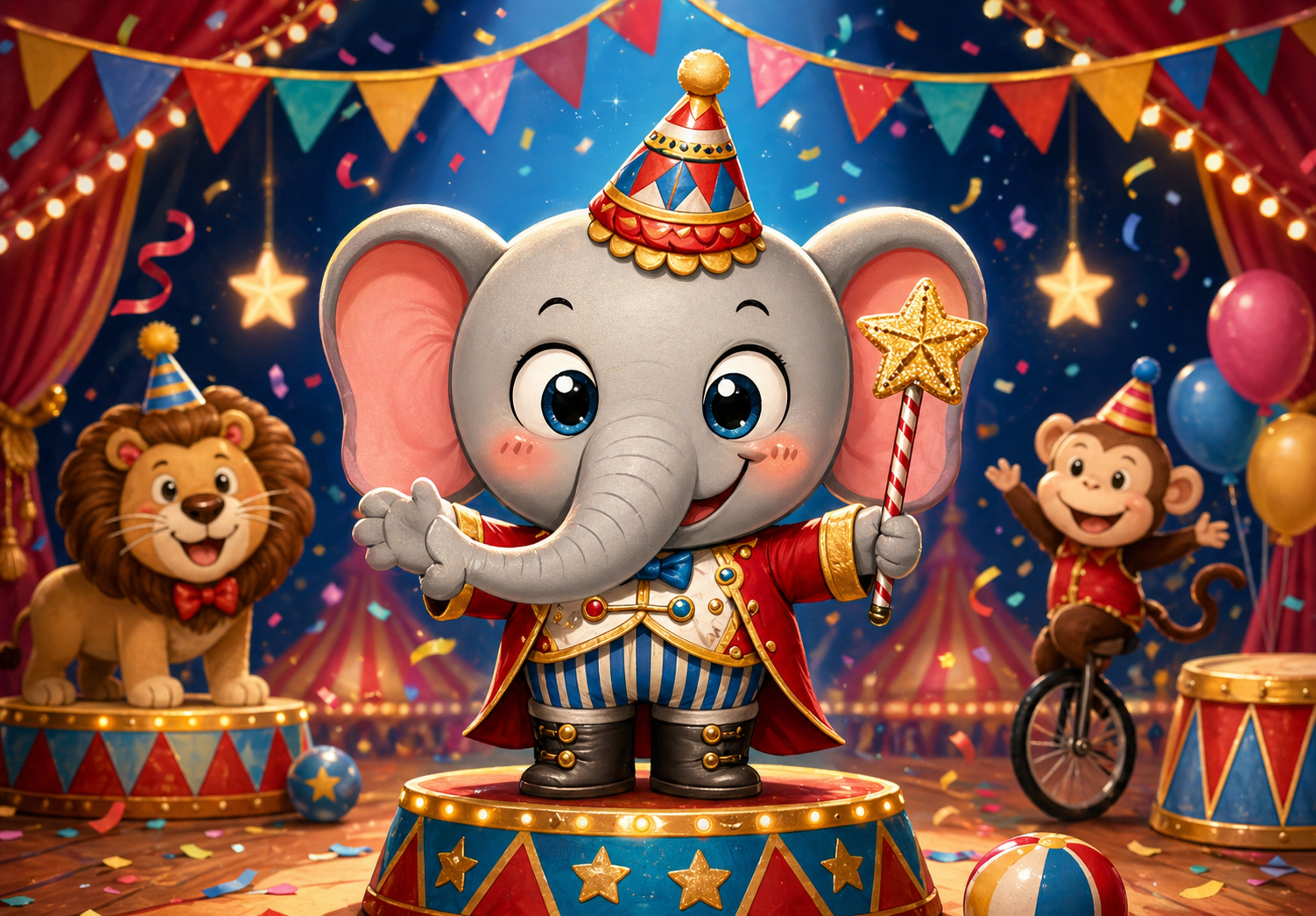
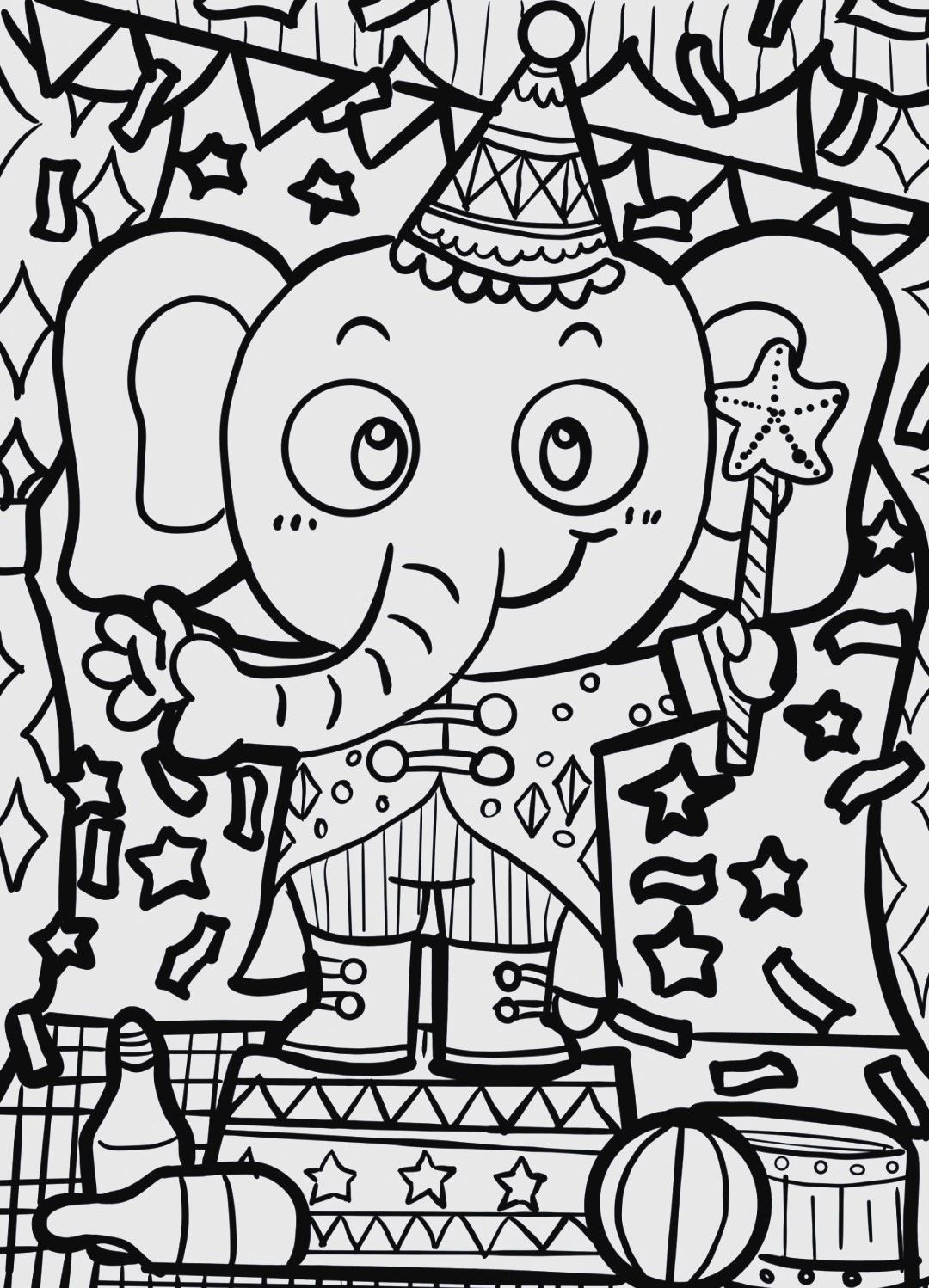
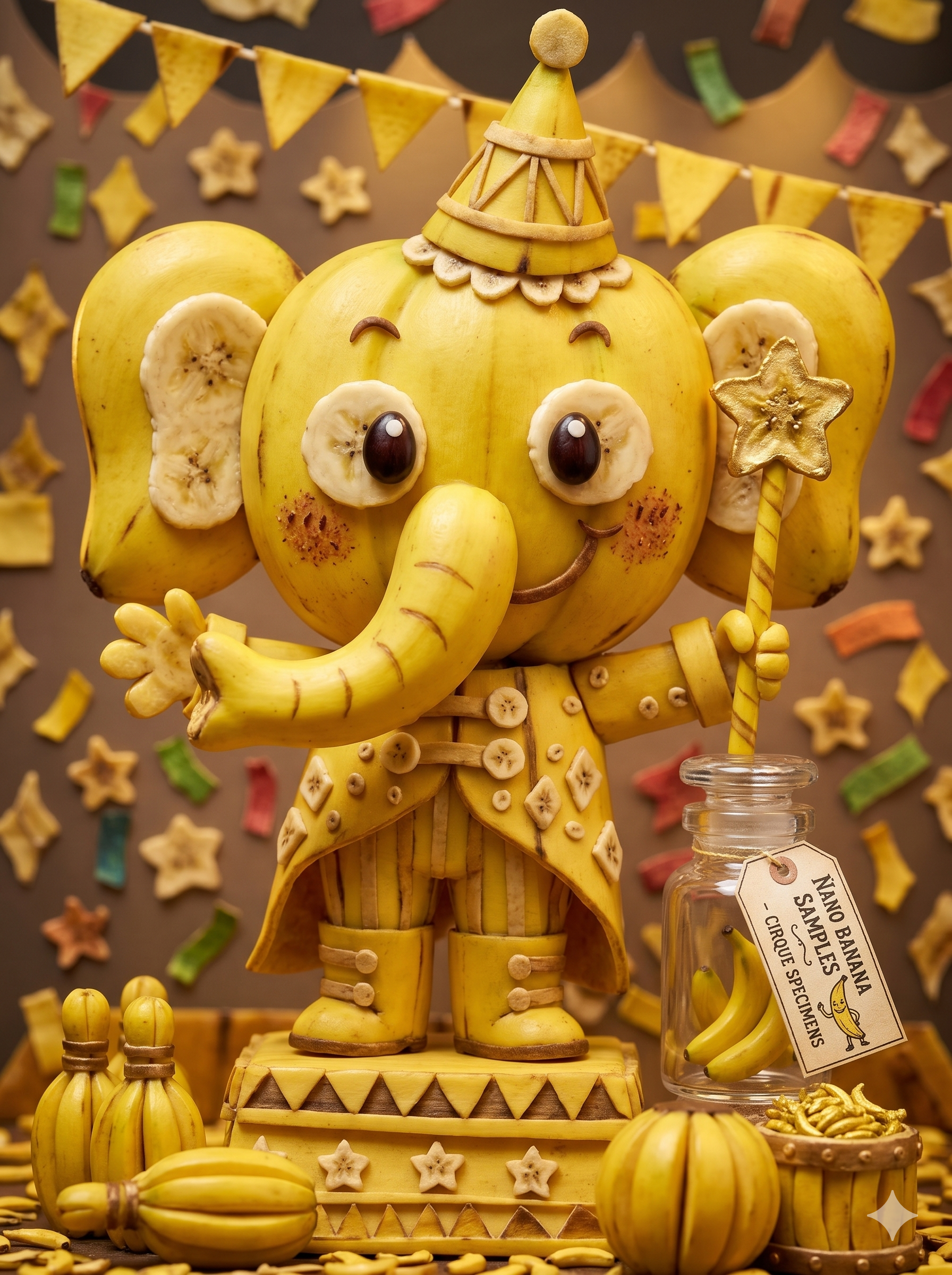
This artwork presents a cheerful circus elephant as a symbol of imagination, celebration, and material transformation. Although the original prompt data appears to have failed, the visual sequence itself creates a clear artistic narrative: a black-and-white coloring-page design becomes a vivid digital circus scene, while another version reimagines the elephant as a sculptural figure made from bananas and fruit-like forms. The central character is instantly approachable, with large rounded ears, bright eyes, a smiling expression, a party hat, and a star wand. These elements give the elephant a child-friendly personality and transform the circus setting into a world of wonder rather than spectacle. Compositionally, the elephant stands at the center like a performer on stage, framed by flags, curtains, confetti, drums, balloons, and glowing lights. The colorful version uses saturated reds, blues, yellows, and golds to create theatrical energy, while the monochrome drawing emphasizes line rhythm, simplified shapes, and participatory creativity, inviting children to complete the work through coloring. The banana sculpture version adds another conceptual layer: it turns everyday food into a fantasy character, blending craft, photography, and illustration. The yellow palette unifies the scene and gives it warmth, humor, and tactile charm. Across the three images, the same idea moves through different artistic languages: outline drawing, polished digital illustration, and edible sculptural design. The work is especially suitable for children’s art education because it demonstrates how one character concept can be interpreted through line, color, texture, material, and storytelling. It encourages viewers to see art not only as an image, but as a process of playful reinvention.
[TRADITIONAL_CHINESE] 馬戲團小象:想像、轉化與童趣創作
這組作品以一隻歡樂的馬戲團小象作為核心形象,呈現出想像力、節慶感與材料轉化的藝術敘事。雖然原始提示資料顯示分析失敗,但圖像本身已經形成清楚的創作脈絡:一張黑白線稿被延伸為色彩飽滿的數位插畫,同時又被重新詮釋為由香蕉與水果質感構成的立體雕塑式角色。小象位於畫面中央,具有圓潤的大耳朵、明亮的眼睛、微笑的表情、派對帽與星星魔杖,這些元素共同塑造出親切、可愛且充滿童話感的主角性格。構圖上,小象如同舞台上的表演者,被彩旗、紅幕、燈光、彩紙、鼓、氣球與星星裝飾環繞,使整個場景具有馬戲團表演的歡騰氣氛。彩色版本運用紅、藍、黃、金等高飽和色彩,強化劇場感與節日能量;黑白線稿則凸顯線條節奏、造型簡化與兒童參與性,讓觀者能透過著色完成個人創作。香蕉雕塑版本則加入了材料想像的層次,把日常食物轉化為奇幻角色,結合了手作、攝影與插畫語言。統一的黃色調讓畫面具有溫暖、幽默與可觸摸的質感。三張圖像展示了同一角色如何在不同媒介中變形:從線稿、數位插畫到食物雕塑。這件作品特別適合兒童藝術教育,因為它讓孩子理解角色設計可以透過線條、色彩、材質與故事不斷被重新創造。
[SIMPLIFIED_CHINESE] 马戏团小象:想象、转化与童趣创作
这组作品以一只欢乐的马戏团小象作为核心形象,呈现出想象力、节庆感与材料转化的艺术叙事。虽然原始提示资料显示分析失败,但图像本身已经形成清楚的创作脉络:一张黑白线稿被延伸为色彩饱满的数字插画,同时又被重新诠释为由香蕉与水果质感构成的立体雕塑式角色。小象位于画面中央,拥有圆润的大耳朵、明亮的眼睛、微笑的表情、派对帽与星星魔杖,这些元素共同塑造出亲切、可爱且充满童话感的主角性格。构图上,小象如同舞台上的表演者,被彩旗、红幕、灯光、彩纸、鼓、气球与星星装饰环绕,使整个场景具有马戏团表演的欢腾气氛。彩色版本运用红、蓝、黄、金等高饱和色彩,强化剧场感与节日能量;黑白线稿则凸显线条节奏、造型简化与儿童参与性,让观看者能够通过涂色完成个人创作。香蕉雕塑版本进一步加入材料想象的层次,把日常食物转化为奇幻角色,结合了手作、摄影与插画语言。统一的黄色调让画面具有温暖、幽默与可触摸的质感。三张图像展示了同一角色如何在不同媒介中变形:从线稿、数字插画到食物雕塑。它特别适合儿童艺术教育,因为它让孩子理解角色设计可以通过线条、色彩、材质与故事不断被重新创造。
[FRENCH] L’éléphant de cirque comme jeu de transformation artistique
Cette série d’images présente un éléphant de cirque joyeux comme symbole d’imagination, de fête et de transformation matérielle. Même si les données initiales du prompt indiquent un échec d’analyse, les images construisent elles-mêmes une narration artistique claire : un dessin noir et blanc de type coloriage devient une illustration numérique richement colorée, tandis qu’une autre version transforme le même personnage en sculpture fantaisiste composée de bananes et de formes proches du fruit. Le personnage central est immédiatement attachant grâce à ses grandes oreilles arrondies, ses yeux expressifs, son sourire, son chapeau de fête et sa baguette étoilée. Ces éléments créent une identité douce, enfantine et proche du conte. Sur le plan de la composition, l’éléphant occupe la scène comme un petit artiste de cirque, entouré de fanions, de rideaux rouges, de confettis, de tambours, de ballons, d’étoiles et de lumières chaleureuses. La version colorée utilise des rouges, bleus, jaunes et ors très saturés pour renforcer l’énergie théâtrale, tandis que le dessin au trait met en valeur le rythme graphique, la simplification des formes et la possibilité de participation par le coloriage. La version en banane ajoute une dimension conceptuelle : elle transforme un aliment quotidien en personnage imaginaire, associant artisanat, photographie et illustration. La dominante jaune apporte chaleur, humour et sensation tactile. Ensemble, les trois images montrent comment une même idée peut changer de langage visuel : ligne, couleur, volume, matière et récit. L’œuvre convient particulièrement à l’éducation artistique des enfants, car elle démontre que la création n’est pas seulement une image finale, mais un processus ludique de réinvention.
