[ENGLISH] A Childlike House of Color and Imagination
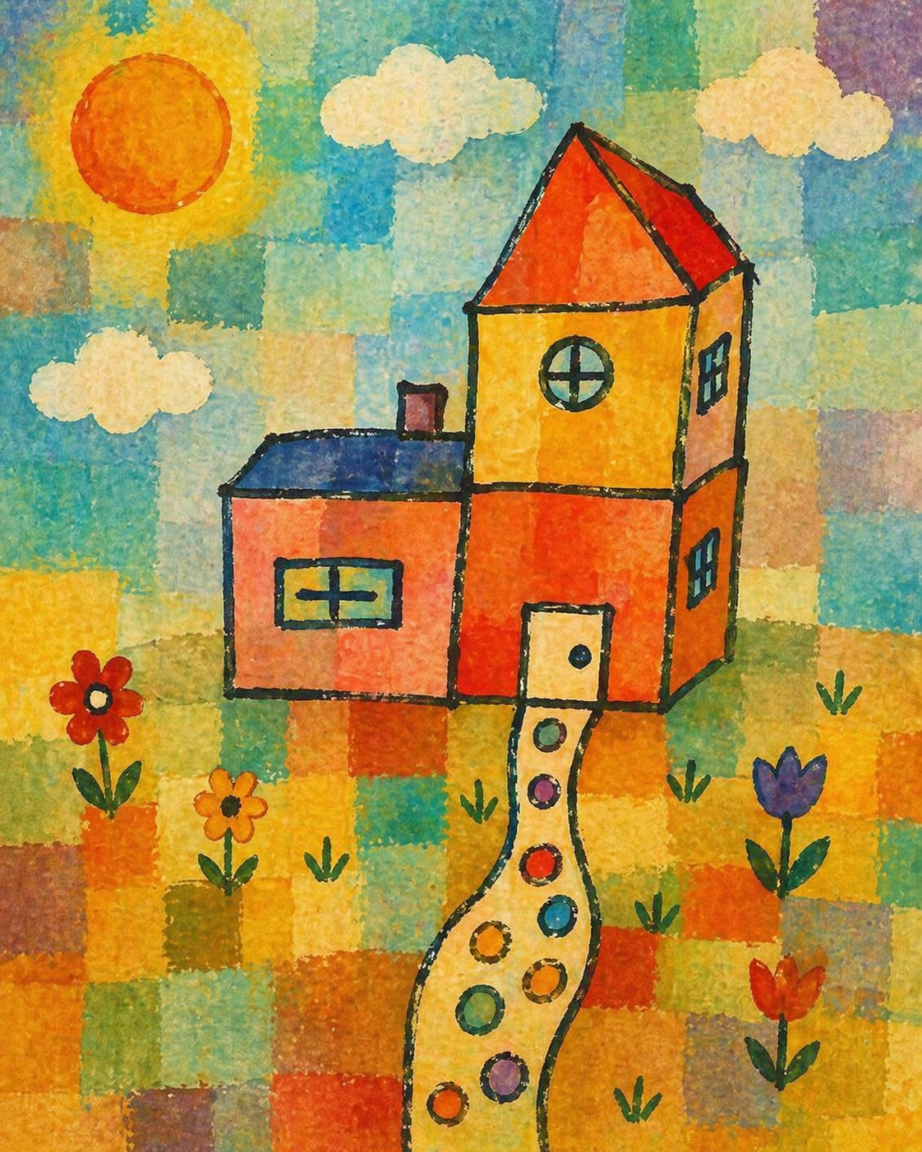
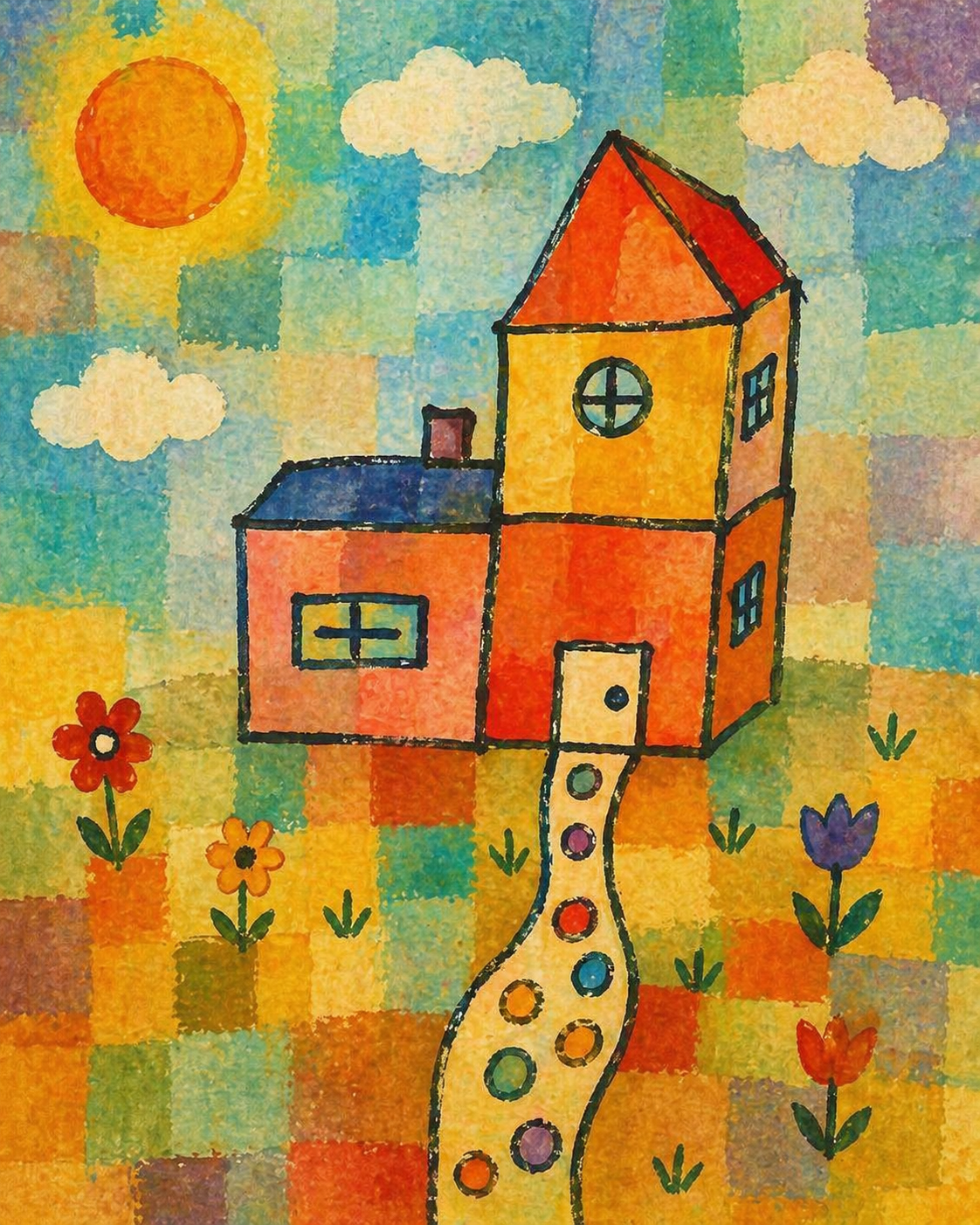
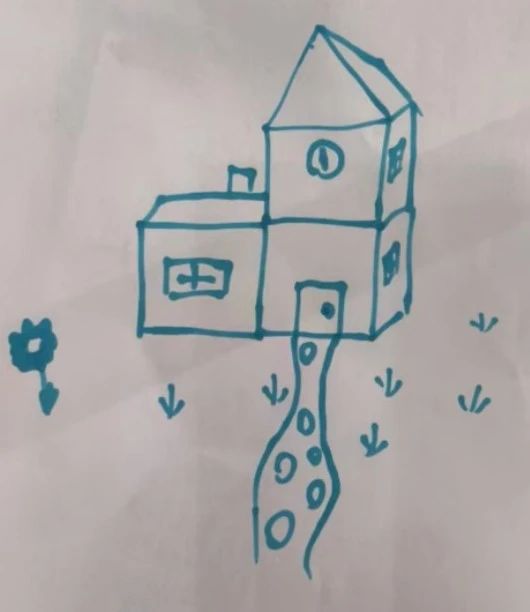
This artwork begins from a very pure childlike drawing: a simple house made with blue outlines, a tilted roof, square windows, a small door, a winding path filled with circles, and a few flowers and grass marks around it. The original image carries the directness of children’s art, where the house is not built according to strict perspective but according to memory, feeling, and imagination. In the transformed version, this innocent structure is preserved, yet it is expanded into a lively naïve art composition inspired by the poetic geometry often associated with Paul Klee. The black outlines keep the hand-drawn quality visible, while the house is filled with warm reds, oranges, yellows, and blues. These colors give the building a cheerful personality, almost as if the house has become a character in a story. The background is especially important: instead of leaving the paper blank, it becomes a patchwork field of soft rectangular color blocks, suggesting sky, land, sunlight, and emotional atmosphere at the same time. The sun, clouds, flowers, and grass add a sense of daily wonder, turning an ordinary home into a dreamlike landscape. The circular decorations on the path are retained and made more colorful, guiding the viewer’s eye toward the door like stepping stones of imagination. The textured coloring and gentle shading create depth without making the image too realistic. This balance is the strength of the piece: it respects the original child’s drawing while enriching it with rhythm, warmth, and visual storytelling.
[TRADITIONAL_CHINESE] 童心之屋:色彩與想像的延伸
這件作品的起點是一幅非常純粹的兒童線條畫:一棟簡單的房子,有傾斜的屋頂、方形窗戶、小小的門,以及一條佈滿圓點裝飾的彎曲小路。周圍只有幾朵簡化的花與草,整體以單一藍色線條完成,呈現出兒童繪畫特有的直接、天真與未經修飾的想像力。原始畫面中的房子並不追求正確透視,而是根據孩子心中的記憶與感受來建立空間,這正是它最珍貴的地方。轉化後的彩色作品保留了原本的結構與童趣,但加入了更豐富的視覺層次。粗黑線條強化了手繪感,使房子仍然像是從孩子的筆下長出來;紅色屋頂、黃色牆面、橘色牆身與藍色屋頂則讓建築變得溫暖而活潑,彷彿一個有生命的小角色。背景不再是空白,而是由藍、綠、黃、橘等色塊構成的拼貼式空間,既像天空,也像田野,更像一種情緒的色彩地圖。太陽、白雲、花朵與小草使畫面充滿生活感與童話感。通往門口的小路上,一顆顆彩色圓點像想像力的踏石,引導觀者進入這個家。作品在增加光影、質感與色彩深度的同時,沒有破壞原始童畫的樸拙精神,反而讓童心被更完整地看見。
[SIMPLIFIED_CHINESE] 童心小屋:从蓝色线稿到彩色梦境
这件作品源自一幅非常单纯的儿童画:孩子用蓝色线条画出一栋简单的小屋,屋顶微微倾斜,正面和侧面有窗户,门前有一条弯曲的小路,路上布满圆形装饰,周围点缀着花朵和小草。原始画面最动人的地方,是它没有受到成人透视规则和结构比例的限制,而是直接呈现孩子对家的想象。房子不是建筑图,而是一个情感空间,代表安全、欢迎和幻想。经过艺术化转化后,作品保留了原本的童真结构,同时加入了鲜明的色彩、质感和画面层次。粗黑轮廓让线条保持手绘的朴素感,也使房子更有童话插画的力量。红色屋顶、黄色墙面、橘色主体和蓝色侧屋形成温暖而明亮的对比,使小屋看起来充满生命力。背景采用类似拼贴的色块构成,蓝绿表现天空的清新,黄橙表现阳光和土地的温度,让整个空间像一幅由情绪组成的地图。太阳、云朵、花草等元素进一步增强了画面的活泼感。门前那条带有彩色圆点的小路,是画面中最有想象力的部分,它像一串通往故事世界的脚印,引导观者走进孩子心中的家。作品通过渐层、纹理和色彩变化增加深度,却没有让画面变得过度真实,而是继续保持稚拙、自由和纯净的儿童艺术气质。
[FRENCH] La maison enfantine transformée en paysage de couleurs
Cette œuvre part d’un dessin d’enfant très simple et très sincère : une maison tracée en bleu, avec un toit incliné, deux fenêtres, une petite porte et un chemin sinueux décoré de cercles. Autour de la maison apparaissent quelques fleurs et de petites herbes, dessinées avec une économie de moyens typique de l’art enfantin. Dans l’image originale, la perspective n’est pas exacte, mais ce n’est pas une faiblesse. Au contraire, cette liberté donne au dessin sa force poétique, car l’espace est construit selon la mémoire, le sentiment et l’imagination de l’enfant. La version colorée conserve cette structure naïve tout en l’enrichissant. Les contours noirs gardent l’énergie du trait manuel, tandis que les rouges, les jaunes, les oranges et les bleus donnent à la maison une présence chaleureuse et presque vivante. Elle semble devenir un personnage accueillant, posé dans un monde de rêve. Le fond joue un rôle essentiel : il n’est plus vide, mais composé de rectangles colorés qui rappellent à la fois le ciel, la terre, la lumière et une mosaïque émotionnelle. Le soleil, les nuages, les fleurs et les herbes ajoutent une atmosphère de joie quotidienne. Le chemin circulaire devant la porte devient un élément narratif : chaque point coloré ressemble à une pierre magique menant vers l’intérieur de la maison et vers l’imaginaire. Les textures, les dégradés et les légères ombres créent de la profondeur sans effacer la fraîcheur du dessin initial. L’œuvre réussit ainsi à transformer une esquisse naïve en image riche, tout en respectant la spontanéité, l’innocence et la tendresse du regard enfantin.
