[ENGLISH] Little Voyager on a Pink Sea
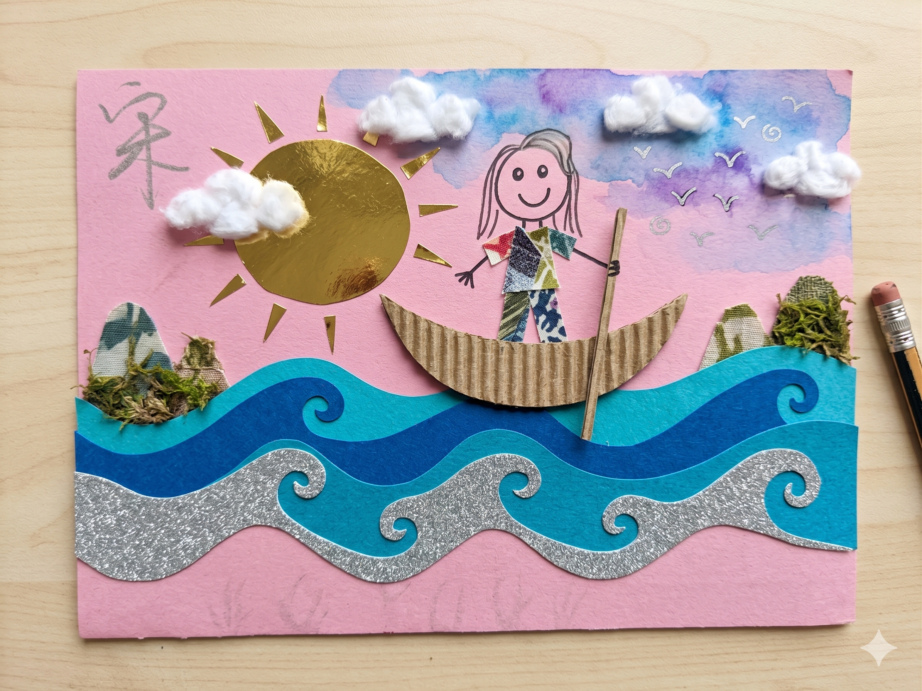
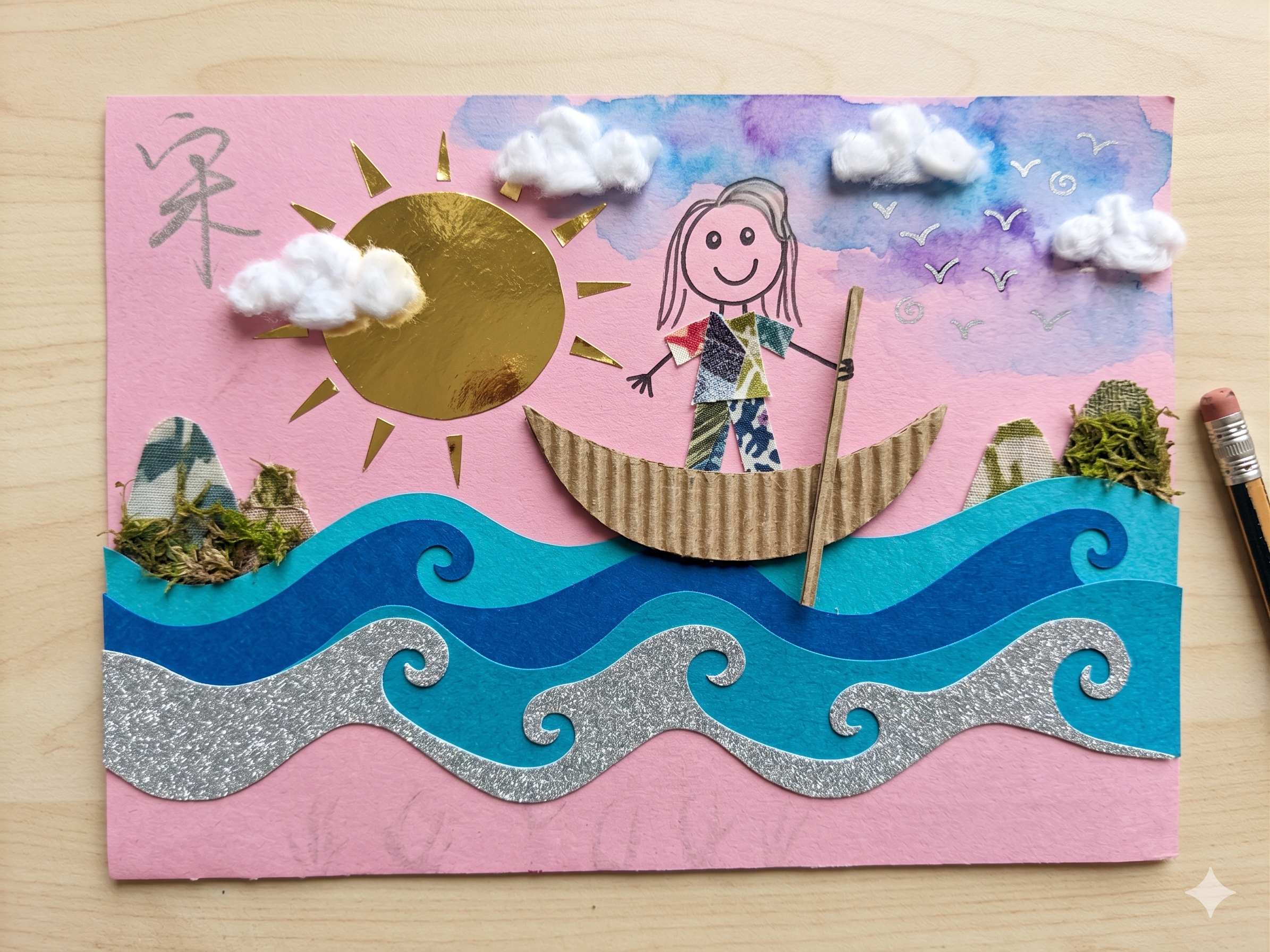
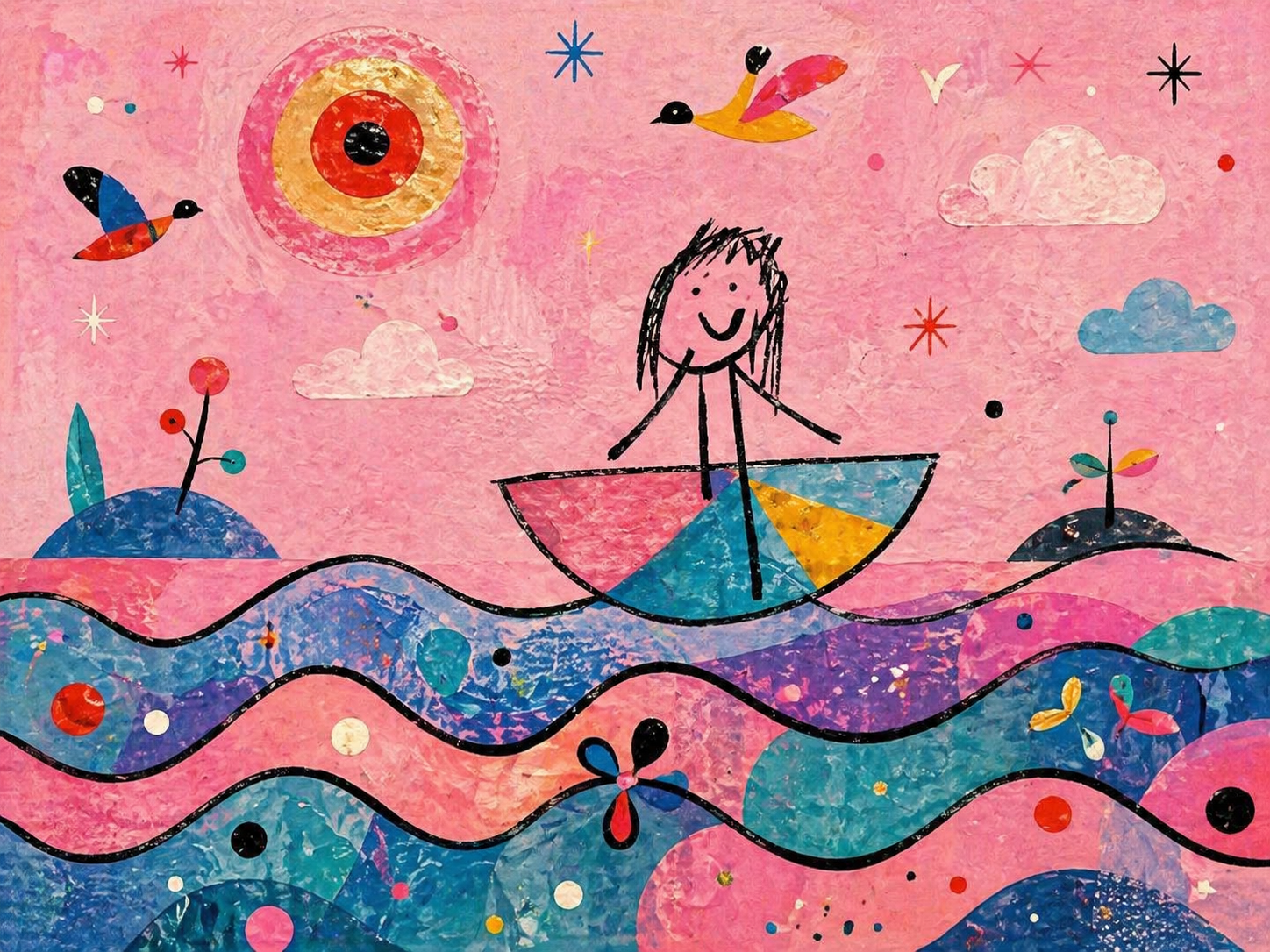
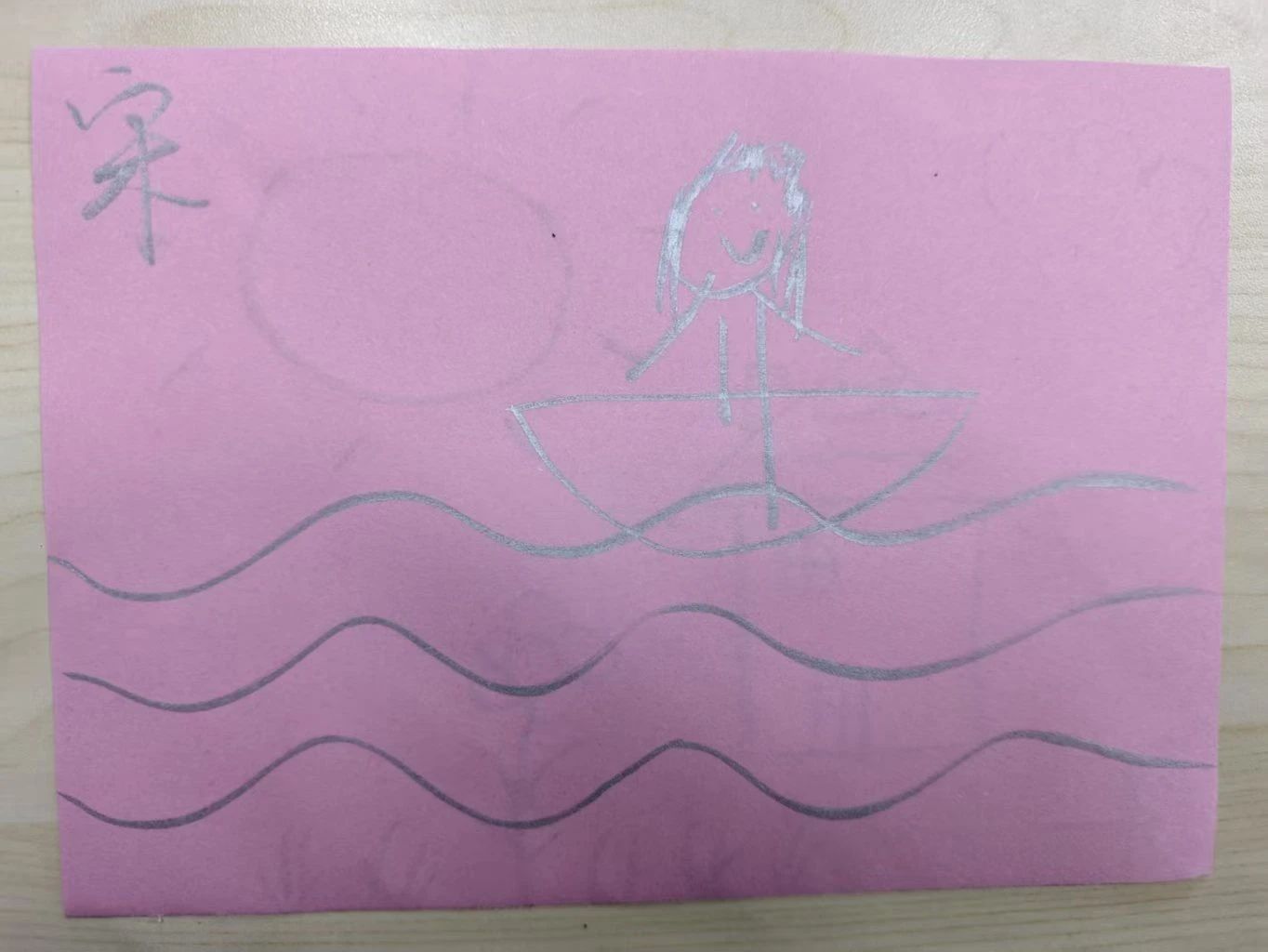
This artwork begins from a very simple childlike drawing: a smiling stick figure standing in a small boat, carried by three gentle wave lines across a pink background. The finished image transforms that innocent sketch into a rich mixed-media sea adventure while carefully preserving the original spirit of curiosity and joy. The boat becomes a corrugated cardboard vessel, giving the scene a tactile, handmade quality. The child’s body is assembled with patterned fabric pieces, suggesting imagination, movement, and playful self-expression. Around the figure, layered blue paper waves roll across the lower half of the composition, creating rhythm and depth. The silver glitter wave at the front adds brightness, as if sunlight is dancing on the water. The gold circular sun and triangular rays introduce a bold focal point, while cotton clouds soften the sky and make the scene feel warm and dreamlike. Small birds, distant islands, moss-like natural textures, and watercolor-like patches in the sky expand the child’s small drawing into a complete world of exploration. The pink background remains important because it connects the final work to the original paper and keeps the emotional tone gentle, hopeful, and personal. The influence of naïve art appears in the direct shapes, simple facial expression, and unpolished charm, while the symbolic playfulness recalls the freedom often associated with Joan Miró. Rather than correcting the child’s drawing, the artwork celebrates it, showing how a few lines can become a voyage, a story, and an imaginative universe.
[TRADITIONAL_CHINESE] 粉紅海上的小小航海家
這件作品以一張非常單純的兒童線條畫為起點:粉紅色紙面上,一個微笑的小人站在小船裡,周圍只有幾條柔和的波浪線。完成後的畫面並沒有抹去原始塗鴉的天真感,而是把它轉化為一場充滿觸感與想像力的海上冒險。小船以瓦楞紙製成,弧形船身帶有自然的凹凸紋理,讓畫面產生手作的溫度。人物的衣服與褲子使用不同花紋的布料拼貼,像是孩子把自己的夢想穿在身上,既活潑又有個性。下方層層疊疊的藍色與青綠色紙浪,形成明顯的節奏感,也讓海面有了推動小船前進的力量。最前方的銀色閃光波浪彷彿陽光灑在海面上,使作品更具節慶與童話氣息。金色圓形太陽與放射狀光芒成為畫面的視覺中心,棉花雲則帶來柔軟、輕盈的天空感。遠方的小島、鳥群、水彩暈染的天空與苔蘚般的自然材料,進一步擴大了原本簡單線條所暗示的世界。粉紅背景被保留下來,使作品仍然與孩子最初的紙上想像相連。整體具有樸素藝術的直接、明亮與不修飾之美,也帶有米羅式的自由符號感。它不是在修正兒童畫,而是在尊重原始筆觸的基礎上,讓幾條線長成一段航行故事。
[SIMPLIFIED_CHINESE] 粉红海上的小小航海家
这件作品以一张非常单纯的儿童线条画为起点:粉红色纸面上,一个微笑的小人站在小船里,周围只有几条柔和的波浪线。完成后的画面没有抹去原始涂鸦的天真感,而是把它转化为一场充满触感与想象力的海上冒险。小船使用瓦楞纸制作,弧形船身带有自然的凹凸纹理,让画面产生真实的手作温度。人物的衣服和裤子由不同花纹的布料拼贴而成,像是孩子把自己的梦想穿在身上,活泼又有个性。下方层层叠叠的蓝色、青绿色纸浪形成清楚的节奏,也让海面具有推动小船前进的力量。最前方的银色闪光波浪仿佛阳光落在水面上,使作品更具童话与节庆气息。金色圆形太阳和三角形光芒成为画面的视觉焦点,棉花云则让天空显得柔软、轻盈而温暖。远处的小岛、飞鸟、水彩般晕染的云层以及苔藓质感的自然材料,进一步扩展了原本简单线条中隐藏的世界。粉红背景被保留下来,使最终作品仍然和孩子最初的纸上想象紧密相连。整体呈现出朴素艺术的直接、明亮和不加修饰之美,也带有米罗式自由符号的趣味。它不是在纠正儿童画,而是在尊重原始笔触的基础上,让几条线成长为一次充满好奇心的航行。
[FRENCH] Le petit navigateur sur la mer rose
Cette création part d’un dessin d’enfant très simple : sur un fond rose, un personnage souriant se tient dans une petite barque, entouré de quelques lignes ondulées qui évoquent la mer. L’image finale transforme cette esquisse innocente en une aventure maritime riche en matières, tout en conservant la fraîcheur du geste initial. La barque devient une forme en carton ondulé, dont la texture donne au paysage une présence artisanale et tactile. Le corps de l’enfant est composé de morceaux de tissus imprimés, comme si ses vêtements portaient déjà ses rêves de voyage. Les grandes vagues en papiers bleus et turquoise traversent le bas de la composition avec un mouvement régulier, presque musical. La vague argentée au premier plan ajoute un éclat lumineux, semblable à des reflets de soleil sur l’eau. Le grand soleil doré, entouré de rayons triangulaires, attire immédiatement le regard et apporte une énergie joyeuse. Les nuages en coton adoucissent le ciel, tandis que les oiseaux, les îles lointaines, les taches aquarellées et les éléments naturels proches de la mousse agrandissent l’univers suggéré par le dessin original. Le fond rose reste essentiel : il relie l’œuvre achevée à la première feuille de l’enfant et maintient une atmosphère tendre, personnelle et optimiste. L’ensemble s’inscrit dans une esthétique naïve par ses formes directes, son sourire simple et son charme imparfait. On y ressent aussi une liberté symbolique proche de l’esprit de Joan Miró. L’œuvre ne corrige pas le dessin d’enfant ; elle l’écoute, l’honore et lui permet de devenir un récit visuel d’exploration.
