[ENGLISH] Three Figures in a Garden of Joy
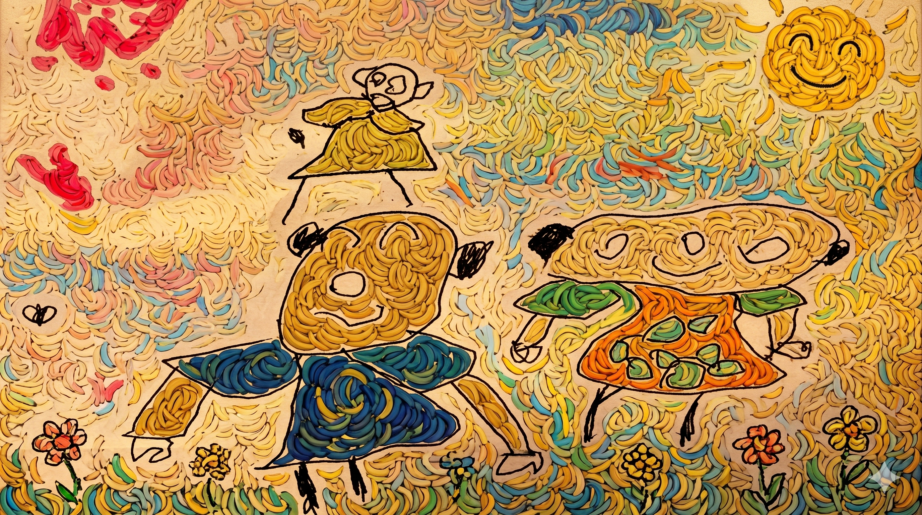
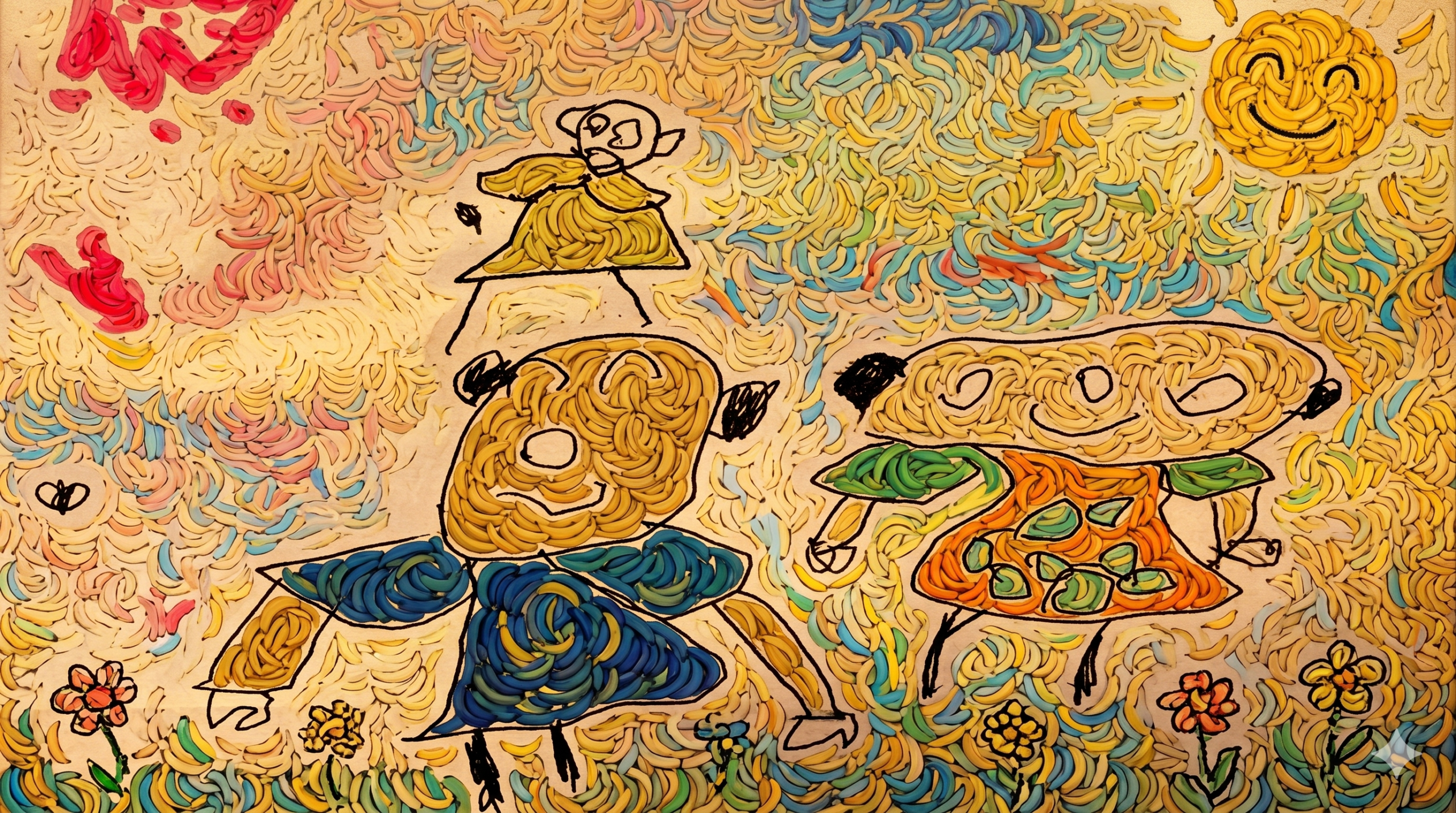
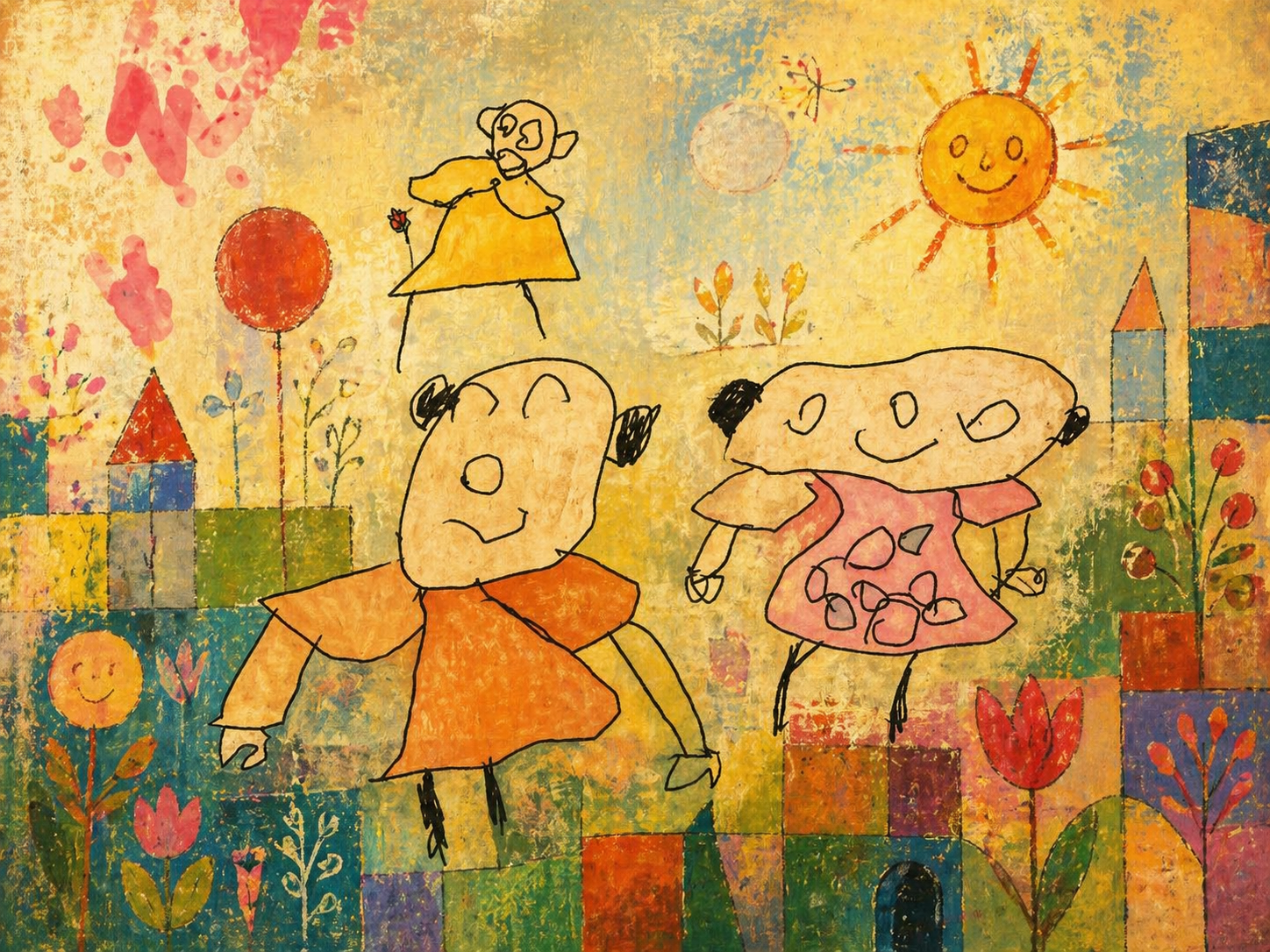
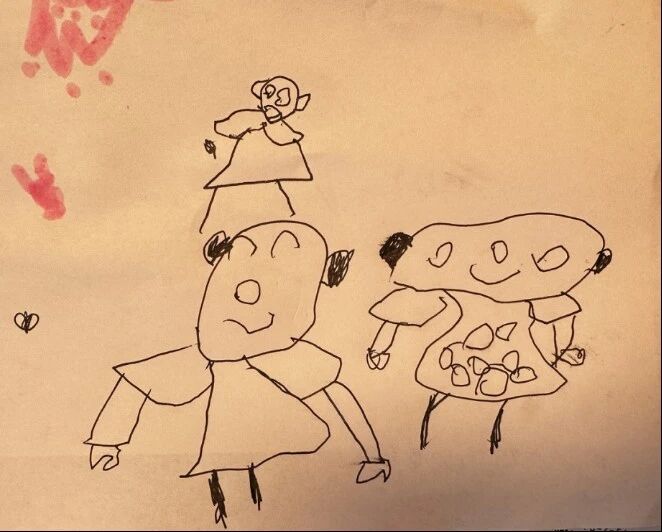
This artwork can be understood as a celebration of childlike imagination, using the visual language of naïve art to transform simple figures into a lively emotional scene. The three cartoonish characters are not meant to be realistic portraits; instead, they function as symbolic companions, each formed through bold outlines, simplified shapes, and expressive gestures. Their directness gives the image a sense of honesty, as if the drawing records a spontaneous moment of friendship, play, and discovery. The influence of Paul Klee appears in the way the composition values rhythm, color, and poetic abstraction over anatomical accuracy. Klee often treated line as a living path, and here the figures seem to emerge from playful marks rather than from strict design. The pink splashes in the background introduce warmth and tenderness, while the imagined additions of a smiling sun, dancing flowers, and a textured garden environment expand the emotional field of the work. These details make the background more than decoration; it becomes an active participant in the children’s world. The vibrant color palette gives depth to an otherwise simple composition, allowing joy, innocence, and curiosity to coexist. Artistically, the piece succeeds because it preserves the freshness of a child’s drawing while adding enough visual richness to invite longer viewing. It suggests that children do not merely draw what they see; they draw how the world feels to them—bright, friendly, musical, and full of small magical presences.
[TRADITIONAL_CHINESE] 歡樂花園中的三個小人物
這件作品可以被視為一首關於童心、友誼與想像力的視覺詩。畫面中的三個卡通式人物並不追求寫實比例,而是透過簡單而有力的線條、幾何化的身體與直接的表情,呈現兒童繪畫中特有的真誠與自由。每一個人物都像是從孩子的內在世界自然長出來的角色,他們可能是朋友、家人,也可能是幻想中的夥伴。作品帶有保羅・克利式的詩性精神:線條不是單純的輪廓,而像是在畫面中散步的節奏;色彩也不是對現實的模仿,而是情緒與音樂感的延伸。背景中原本簡潔的粉紅色潑灑,為畫面帶來溫柔、明亮與天真的氣氛;若再加入微笑的太陽、跳舞的花朵、草地與花園般的紋理,整個空間便從單純背景轉化為充滿生命力的遊戲場。這些元素不只是裝飾,而是與人物共同構成一個快樂的情感環境。鮮豔的色彩增強了畫面的層次,使作品在稚拙中保有豐富的表現力。從藝術角度來看,它最迷人的地方在於保留了兒童創作的即興感,同時又透過色彩與構圖引導觀者進入一個明亮、友善、充滿童話氣息的世界。它提醒我們,孩子畫的不是外在世界的準確形狀,而是世界在他們心中所散發出的溫度與快樂。
[SIMPLIFIED_CHINESE] 快乐花园里的三个小伙伴
这件作品可以看作是一幅关于童年想象、友谊和快乐情绪的天真艺术图像。画面中的三个卡通人物并不强调真实比例或复杂结构,而是用简单、粗犷而直接的线条构成身体与表情。这种处理方式非常接近儿童绘画的本质:孩子并不是按照成人的视觉规则来再现世界,而是用最直接的方式表达自己对世界的感受。三个小人物像是在一起游戏、交流或跳舞,他们的存在让画面具有亲密、活泼和开放的氛围。作品中可以看到类似保罗・克利的艺术精神,即把线条当作一种会移动、会呼吸的语言,把色彩当作情绪和音乐的延伸。背景中淡淡的粉红色泼洒为画面带来温暖和柔和的感觉,而进一步加入微笑的太阳、跳舞的花朵、草地、花园纹理和明亮天空之后,整个场景就不再只是空白背景,而成为一个充满生命力的儿童乐园。丰富的色彩让作品在简单构图中获得层次,也让人物的情绪更加鲜明。艺术上,这幅画的价值不在于技巧的成熟,而在于它保留了儿童创作中最珍贵的 spontaneous energy:大胆、真诚、不怕错误,并且充满游戏感。它让观者看到,孩子的画面世界并不是现实的复制,而是一个由快乐、好奇、阳光、花朵和朋友共同组成的内心宇宙。
[FRENCH] Trois personnages dans un jardin joyeux
Cette œuvre peut être interprétée comme une célébration de l’imagination enfantine et de la joie spontanée. Les trois personnages dessinés de manière presque cartoonesque ne cherchent pas à représenter le corps humain avec précision; ils existent plutôt comme des signes affectifs, construits par des lignes simples, des formes franches et une expressivité immédiate. Leur naïveté donne à l’image une grande sincérité, comme si l’enfant avait voulu fixer un moment d’amitié, de jeu ou de découverte. L’esprit de Paul Klee se ressent dans la façon dont la ligne devient un chemin poétique plutôt qu’un simple contour. Les formes semblent avancer librement dans l’espace, tandis que la couleur agit comme une musique visuelle. Les éclaboussures roses du fond apportent une douceur lumineuse, presque tendre, et créent une atmosphère innocente. Lorsque l’on imagine l’ajout d’un soleil souriant, de fleurs dansantes, d’herbes texturées et d’un jardin vivant, le fond cesse d’être un simple décor: il devient un monde émotionnel, complice des personnages. La palette vive enrichit la composition en donnant de la profondeur à une scène volontairement simple. Sur le plan artistique, la force de cette image réside dans son équilibre entre spontanéité enfantine et organisation sensible. Elle conserve l’énergie libre du dessin d’enfant tout en invitant le spectateur à contempler un univers chaleureux, ludique et presque musical. L’œuvre suggère que les enfants ne dessinent pas seulement ce qu’ils voient; ils dessinent surtout ce qu’ils ressentent: un monde amical, coloré, animé par le soleil, les fleurs et la présence joyeuse des autres.
