[ENGLISH] Wind, Leaves, and Living Light
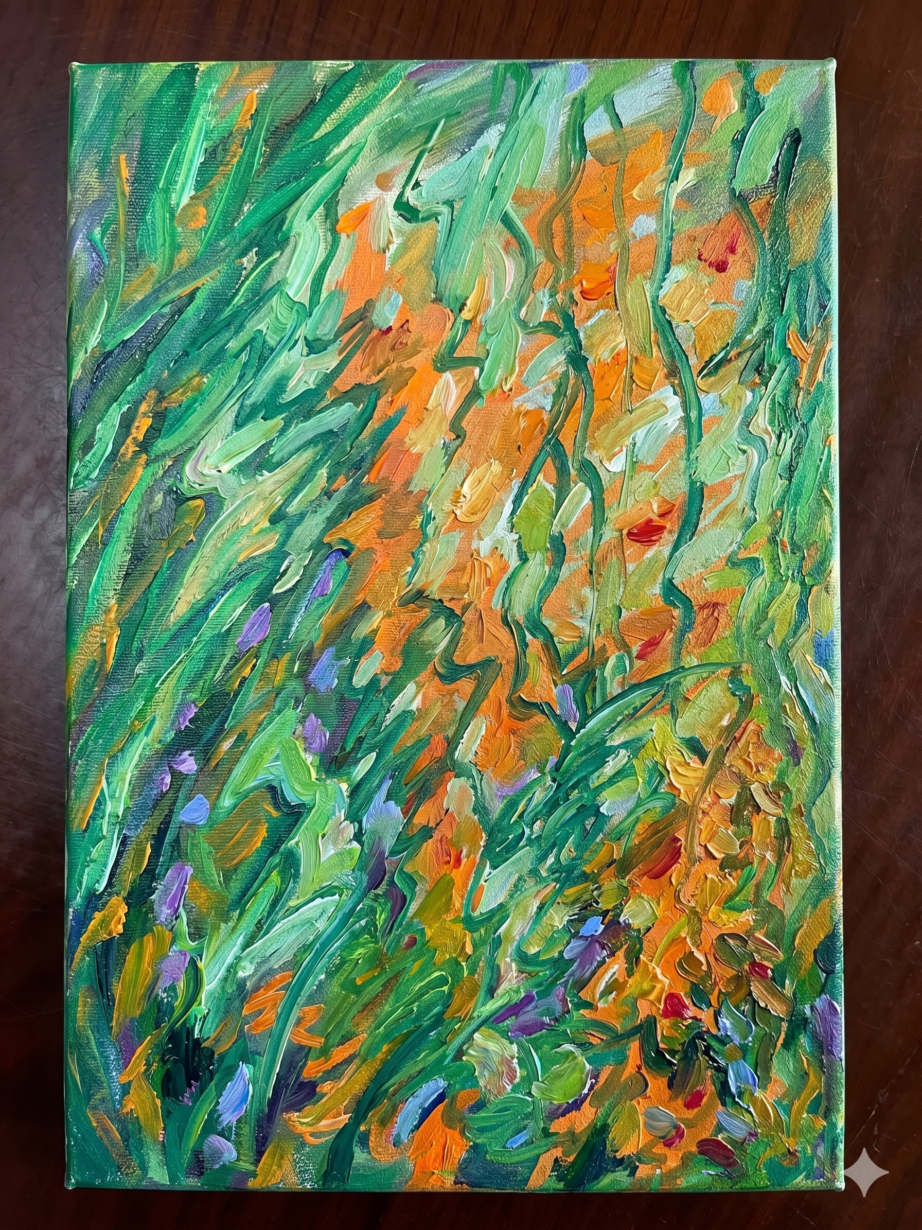
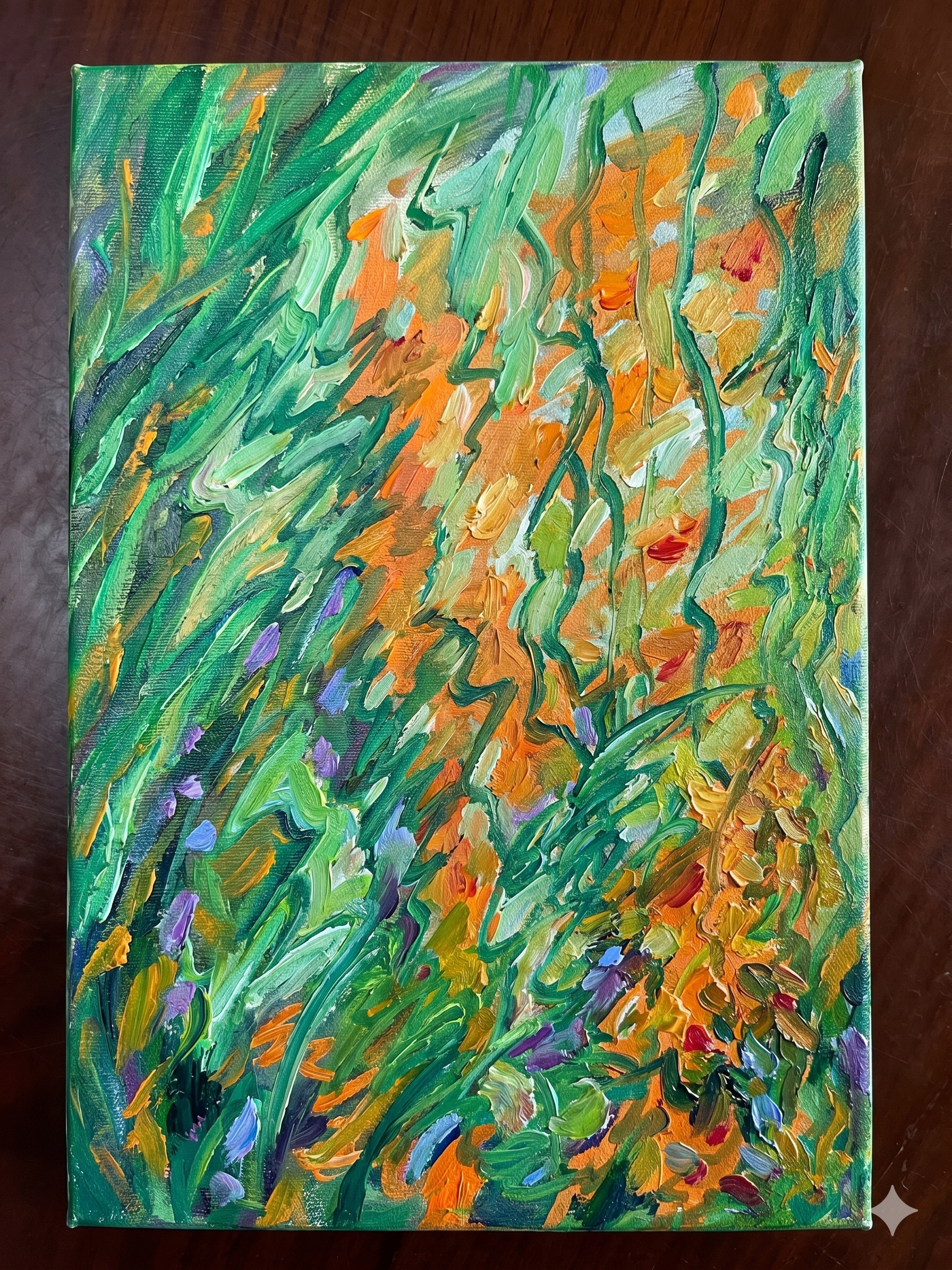
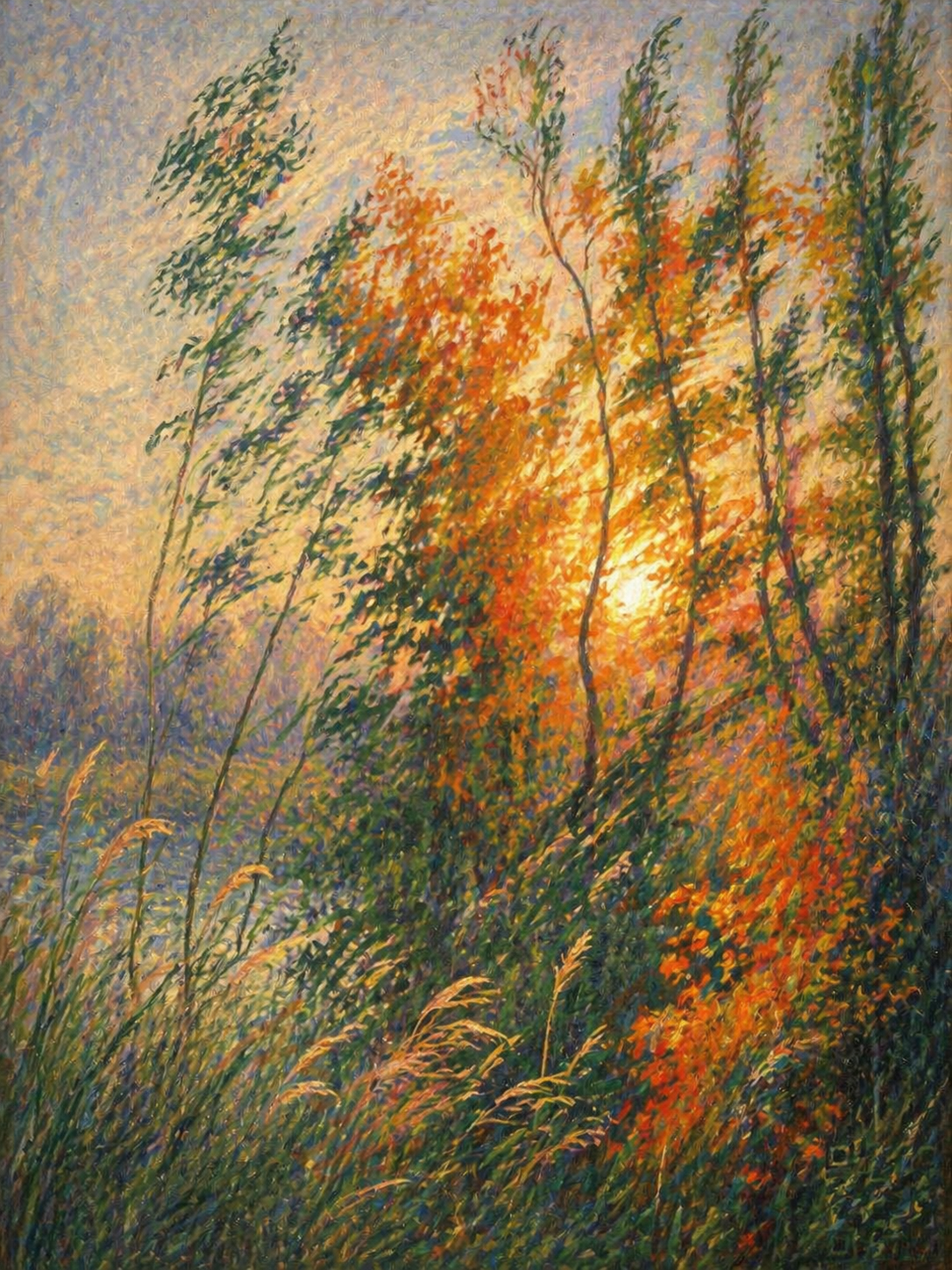
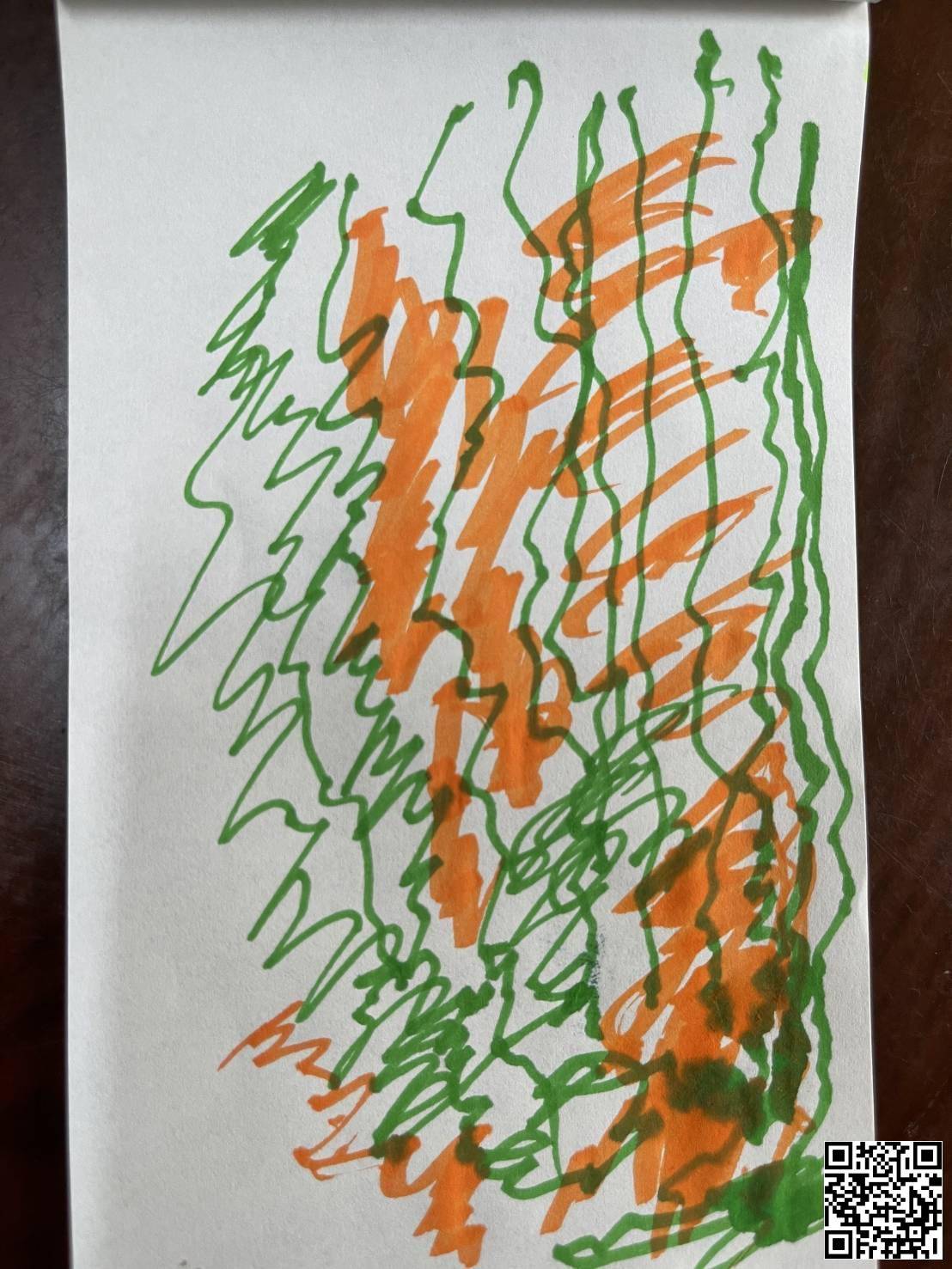
This work transforms a spontaneous drawing of green and orange lines into an expressive abstract nature painting filled with movement, vitality, and atmospheric light. The original image suggests a childlike visual language: green vertical and wandering strokes resemble grass, trees, vines, or reeds, while orange marks move through the center like sunlight, autumn leaves, or warm wind passing across the landscape. Instead of treating the drawing as a literal scene, the final artwork expands its emotional rhythm into an impressionistic field of color. The green lines become dense vegetation, bending and swaying as if touched by air. The orange areas grow into luminous clusters, creating the feeling of sunlight filtering through leaves at the edge of a forest. The brushwork is energetic and layered, allowing the surface to remain alive rather than fixed. Short, broken strokes, textured paint, and overlapping colors echo the spirit of Impressionism, where sensation is more important than exact representation. The reference to Claude Monet appears through the attention to light, atmosphere, and the changing relationship between color and perception. Yet the image remains abstract, preserving the freedom and directness of the original gesture. Purple, blue, yellow, and red accents enrich the natural palette, suggesting flowers, shadows, and hidden movement within the landscape. The artwork can be read as a visual celebration of environmental awareness: nature is not static, but breathing, flowing, and emotionally present. It invites viewers to feel the forest as a living rhythm of wind, light, color, and growth.
[TRADITIONAL_CHINESE] 風中的綠意與橙色光芒
這件作品以一張自由奔放的線條草圖為出發點,將綠色與橙色的即興筆觸轉化為充滿生命感的抽象自然繪畫。原始圖像中的綠色線條帶有強烈的手勢感,像草叢、藤蔓、樹幹,也像風中搖曳的植物輪廓;橙色筆跡則穿插其間,彷彿陽光、秋葉,或穿越林間的暖風。最終畫面並未把這些元素轉成具象風景,而是保留其童真的直覺與節奏,進一步發展成一片具有印象派氣息的自然場域。畫面中的綠色層層堆疊,形成茂密、流動的植被;橙黃與金色在中央與右側閃耀,像光線透過枝葉後產生的跳動反射。厚重的油彩筆觸讓畫面具有明顯肌理,每一道顏色都像正在生長或被風吹動。這種短促、破碎、交錯的筆法,使作品不追求精確描繪,而是捕捉自然瞬間的感受,呼應莫內式印象主義對光、空氣與色彩變化的關注。紫色、藍色與紅色的小面積點綴,像隱藏在草叢中的花朵與陰影,增加畫面的深度與詩意。整體而言,這件作品表達的不是單一景物,而是一種對自然生命力的感知:森林在呼吸,光線在流動,風正在穿過枝葉。它也傳達出環境意識,提醒觀者自然並非背景,而是與人類情感共同存在的生命系統。
[SIMPLIFIED_CHINESE] 风、森林与橙色阳光
这件作品从一张充满自由线条的原始绘画出发,将绿色与橙色的即兴笔触发展为一幅具有印象主义气质的抽象自然图像。原始画面中的绿色线条有明显的身体动作痕迹,既像树枝、藤蔓、草叶,也像风吹过森林时留下的轨迹;橙色区域则像阳光、秋天的叶片,或者在植物之间流动的温暖空气。最终作品没有把这些符号简单地还原成写实风景,而是保留了儿童绘画中直接、敏感、未经修饰的生命感,并将其转化为更丰富的色彩结构和绘画肌理。画面中大量绿色笔触层层叠加,形成茂密而有方向感的自然空间;橙黄、金色和红色在其中跳动,仿佛太阳穿过树叶后产生的光斑。厚涂的油彩使表面充满触感,每一笔都像正在生长的植物或被风推动的枝叶。作品与莫奈式印象主义的关系,主要体现在对光线、空气和瞬间感受的强调,而不是对物体轮廓的精确描写。蓝色、紫色和浅黄色的点缀进一步丰富了视觉层次,暗示花朵、阴影和自然深处的细微变化。整体来看,这幅画表现的是自然的流动性与生命力。绿色象征生长,橙色象征光与季节,二者交织成一种充满希望的生态节奏。作品也带有环境意识,提醒观者用感受而非占有的方式重新亲近自然。
[FRENCH] La lumière orange dans la forêt abstraite
Cette création transforme un dessin spontané, composé de lignes vertes et de marques orange, en une peinture abstraite de la nature pleine de mouvement, de lumière et de vitalité. Dans l’image d’origine, les traits verts évoquent des herbes hautes, des branches, des lianes ou des silhouettes d’arbres agitées par le vent. Les formes orange traversent la composition comme des feuilles d’automne, des rayons de soleil ou une chaleur lumineuse circulant entre les plantes. L’œuvre finale ne cherche pas à représenter un paysage de manière réaliste. Elle conserve au contraire l’énergie directe du geste initial, puis l’amplifie par une matière picturale riche, épaisse et vibrante. Les verts superposés construisent une végétation dense et mouvante, tandis que les jaunes, les ors et les oranges créent des zones de clarté, comme si le soleil se fragmentait à travers un rideau de feuillage. La référence à l’impressionnisme apparaît dans cette attention portée à la lumière, à l’atmosphère et à la sensation immédiate plutôt qu’au contour précis des formes. L’esprit de Claude Monet se manifeste moins par l’imitation que par la recherche d’un instant naturel changeant, presque respirant. Les petites touches de violet, de bleu et de rouge enrichissent la surface et suggèrent des fleurs, des ombres ou des vibrations cachées dans la forêt. Cette peinture peut être comprise comme une célébration de l’environnement vivant. La nature n’y est pas un décor immobile, mais un organisme sensible, traversé par le vent, la couleur et la lumière. Elle invite le spectateur à ressentir la forêt comme un rythme intérieur, fragile et précieux.
