[ENGLISH] Guardian of the Night: A Contemporary Origami Owl
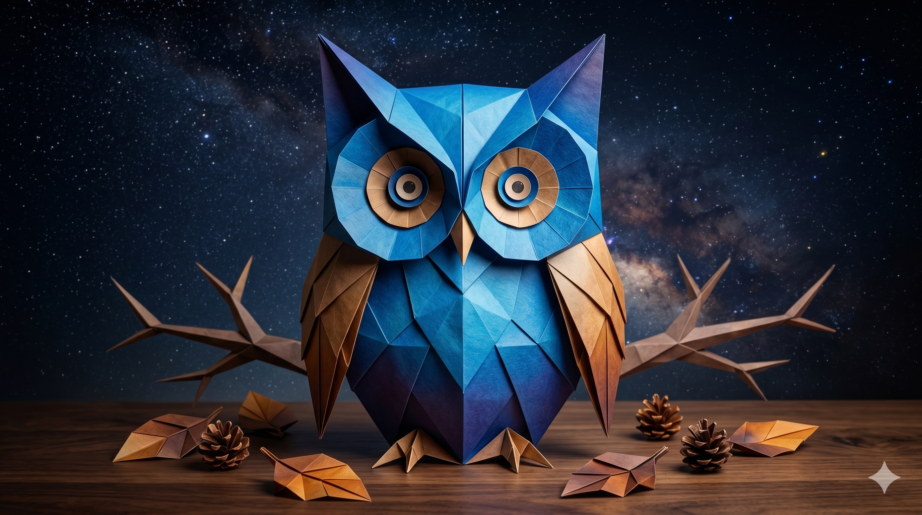
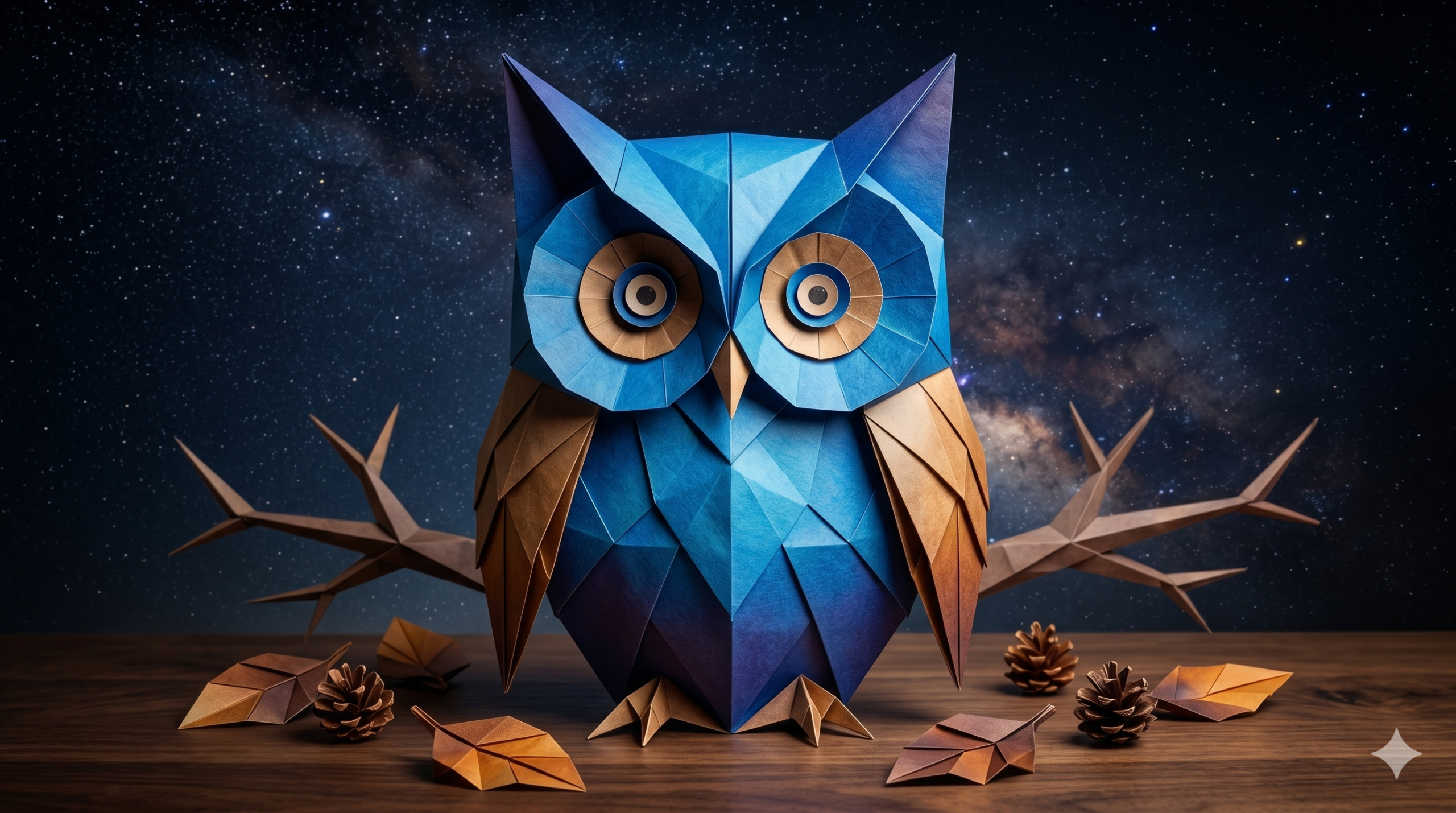
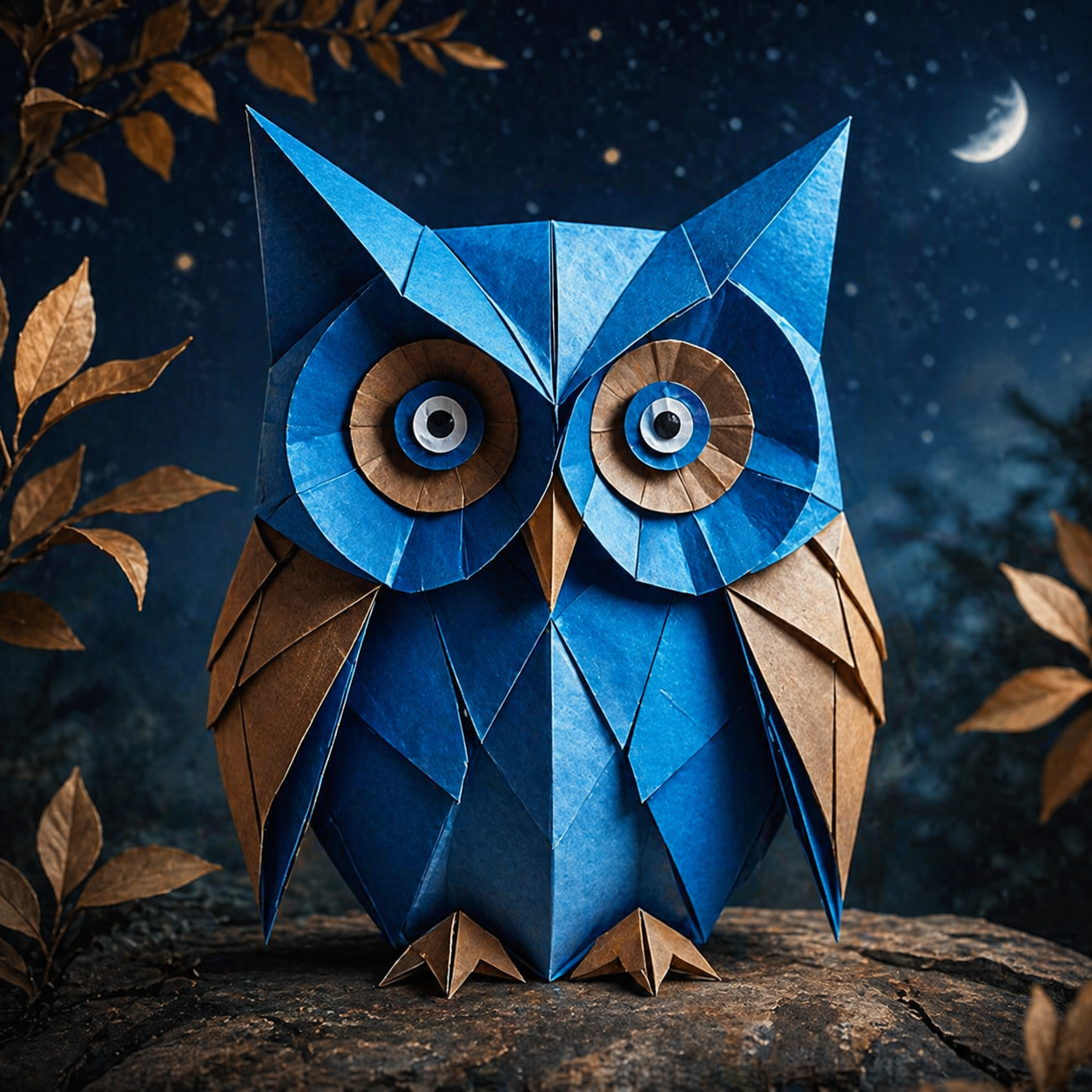
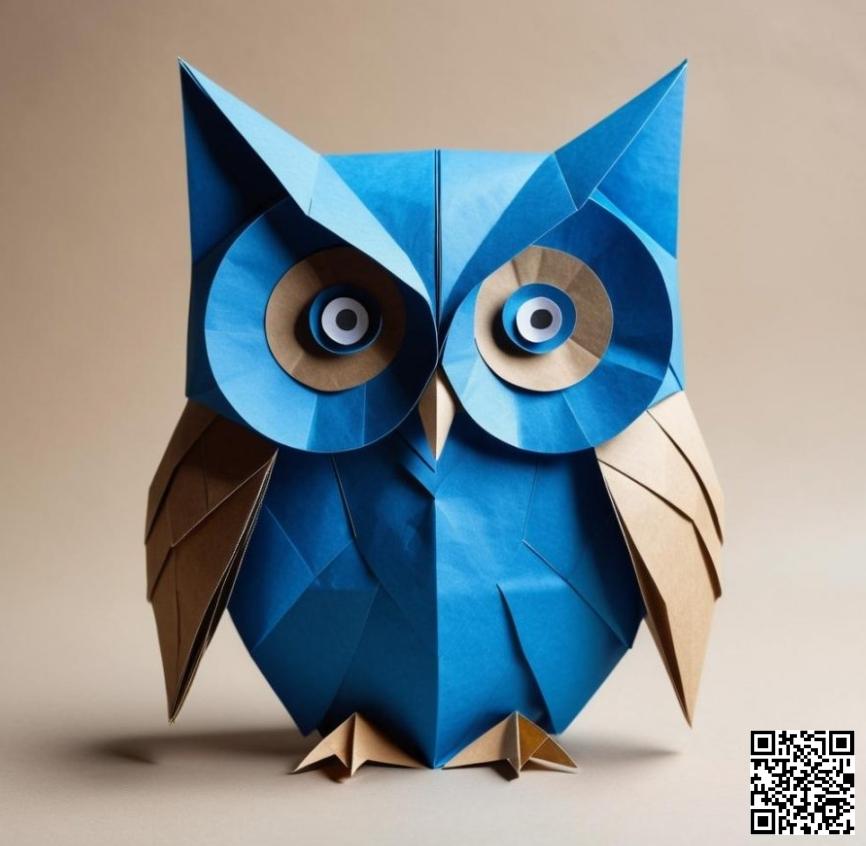
This artwork presents a meticulously constructed origami owl that transforms folded paper into a symbolic guardian of the night. Inspired by the refined spirit of Akira Yoshizawa’s origami tradition, the piece emphasizes precision, patience, and the expressive potential of a single material. The owl’s body is built from sharply defined geometric planes, creating a sculptural rhythm of triangles, diamonds, and layered feather forms. Vibrant blue paper dominates the head and torso, suggesting moonlight, mystery, and calm intelligence, while earthy brown wings and circular eye structures connect the figure to wood, soil, autumn leaves, and the natural world. The large symmetrical eyes become the emotional center of the composition. Their layered rings resemble both folded paper rosettes and watchful nocturnal vision, reinforcing the owl’s association with wisdom and guardianship. The strong central axis gives the work a ceremonial stillness, while the angular ears and folded chest panels add alertness and dignity. In the surrounding scenes, starry skies, crescent moonlight, branches, leaves, pinecones, and paper-like natural forms extend the owl’s identity beyond a decorative object. It appears as a bridge between craft, nature, and imagination. The lighting is especially important: highlights along the fold ridges reveal paper texture, shadow depth, and the subtle gradient from deep ultramarine to bright cyan. Rather than simply imitating a bird, the work celebrates origami as a language of structure, transformation, and quiet symbolic power.
[TRADITIONAL_CHINESE] 夜之守護者:當代摺紙貓頭鷹
這件作品以一隻精密摺製的貓頭鷹為核心,將紙張從平面材料轉化為具有精神象徵的立體雕塑。作品承襲吉澤章摺紙藝術所重視的結構、呼吸感與材料尊重,同時加入當代視覺語彙,使傳統摺紙不只是技巧展示,而成為關於智慧、守護與自然連結的藝術敘事。貓頭鷹的身體由清晰的幾何折面組成,三角形、菱形與層層羽片形成穩定而富節奏的造型。鮮明的藍色用於頭部與胸腹,讓人聯想到夜空、月光、冷靜的思考與神祕的洞察力;棕色翅膀與眼部外圈則呼應樹木、土壤、秋葉與森林氣息。雙眼是整件作品的視覺中心。圓形層疊結構既像摺紙花盤,也像夜行動物敏銳的凝視,使貓頭鷹呈現出守望者的存在感。畫面中的中央對稱軸賦予作品莊重與儀式感,尖銳的耳羽、折疊的胸甲與下垂的羽翼則增加了警覺、安定與威嚴。不同背景中的星空、月亮、枝葉、松果與紙葉,進一步強化牠與自然的關係。燈光沿著摺線滑動,突顯紙張纖維、陰影層次與藍色漸層,使作品在工藝與幻想之間取得平衡。它不只是貓頭鷹形象,而是摺紙作為秩序、轉化與靜默力量的表現。
[SIMPLIFIED_CHINESE] 夜之守护者:当代折纸猫头鹰
这件作品以一只精密折制的猫头鹰为核心,把普通纸张转化为具有象征意义的立体艺术形象。它延续了吉泽章折纸传统中对结构、手感和生命感的重视,同时融入当代视觉设计,使折纸不再只是手工技巧,而成为关于智慧、守护和自然精神的艺术表达。猫头鹰的身体由明确的几何折面组成,三角形、菱形和层层羽片构成稳定而富有节奏的造型。明亮的蓝色覆盖头部与身体,带来夜空、月光、冷静思考和神秘洞察的联想;棕色翅膀与眼部圆环则呼应树皮、泥土、枯叶和森林环境。作品最吸引人的部分是双眼。圆形层叠结构既像纸艺花轮,又像夜行动物敏锐而安静的凝视,使这只猫头鹰具有守护者般的存在感。中央对称的构图让形象显得庄重、稳定,尖锐的耳羽、折叠的胸部和下垂的翅膀则增加了警觉与威严。不同场景中的星空、弯月、枝叶、松果和纸折落叶,把猫头鹰从单一摆件扩展为自然叙事的一部分。灯光沿折线形成高光与阴影,突显纸张纹理、折痕深度和蓝色渐层。整件作品并不只是模仿鸟类,而是在展示折纸如何通过秩序、折叠和转化,表达安静而强大的精神力量。
[FRENCH] Gardien de la nuit : un hibou en origami contemporain
Cette œuvre présente un hibou en origami soigneusement construit, où le papier plié devient une sculpture symbolique et presque cérémonielle. Inspirée par l’esprit raffiné de la tradition d’Akira Yoshizawa, elle met en valeur la précision du pli, le respect du matériau et la capacité de l’origami à suggérer une présence vivante. Le corps de l’oiseau est composé de plans géométriques très nets : triangles, losanges, pointes et couches de plumes créent un rythme visuel à la fois stable et dynamique. Le bleu intense domine la tête et le torse, évoquant la nuit, la lumière lunaire, la sagesse calme et le mystère. Les ailes brunes et les cercles autour des yeux rappellent au contraire la terre, l’écorce, les feuilles d’automne et l’univers forestier. Les grands yeux symétriques constituent le centre émotionnel de la composition. Leurs anneaux superposés ressemblent à des rosaces de papier, mais aussi au regard vigilant d’un animal nocturne. Ainsi, le hibou devient une figure de protection, d’observation et de connaissance silencieuse. L’axe central renforce la dignité de l’image, tandis que les oreilles pointues, le bec angulaire et les plumes pliées donnent une impression d’éveil et de maîtrise. Les décors de ciel étoilé, de croissant de lune, de branches, de feuilles et de pommes de pin prolongent le lien entre l’objet artisanal et la nature. La lumière révèle les crêtes des plis, les textures du papier et les dégradés bleus. L’œuvre célèbre donc l’origami comme un langage de transformation, d’ordre et de poésie visuelle.
