[ENGLISH] Abstract Mountain Landscape in a Paul Klee-Inspired Minimalist Language
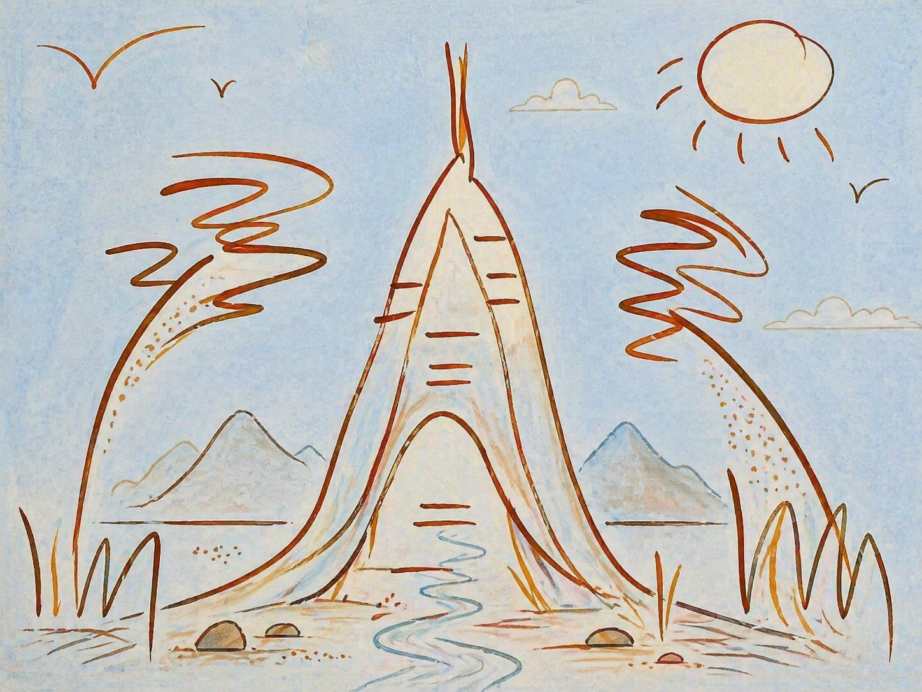
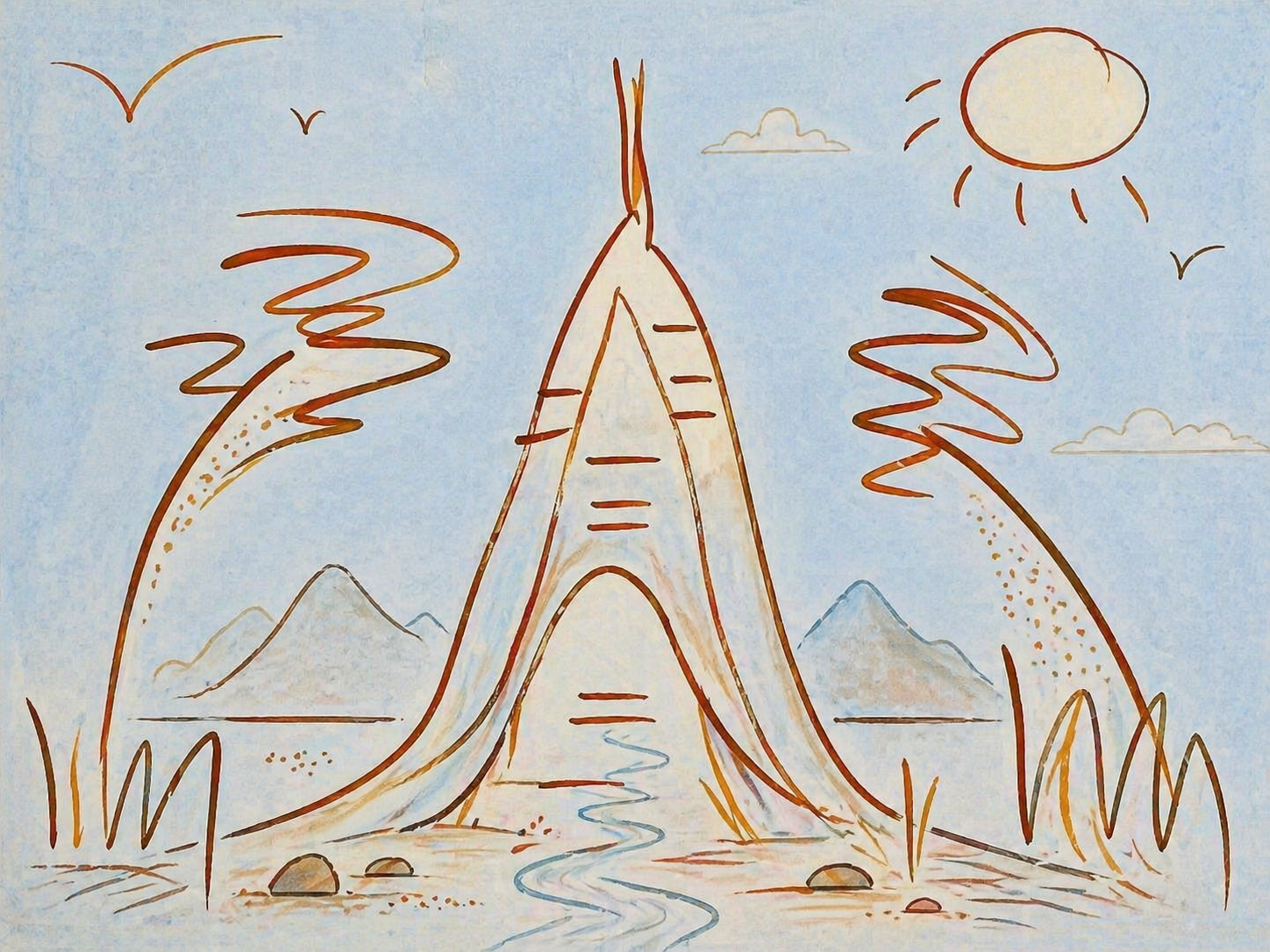
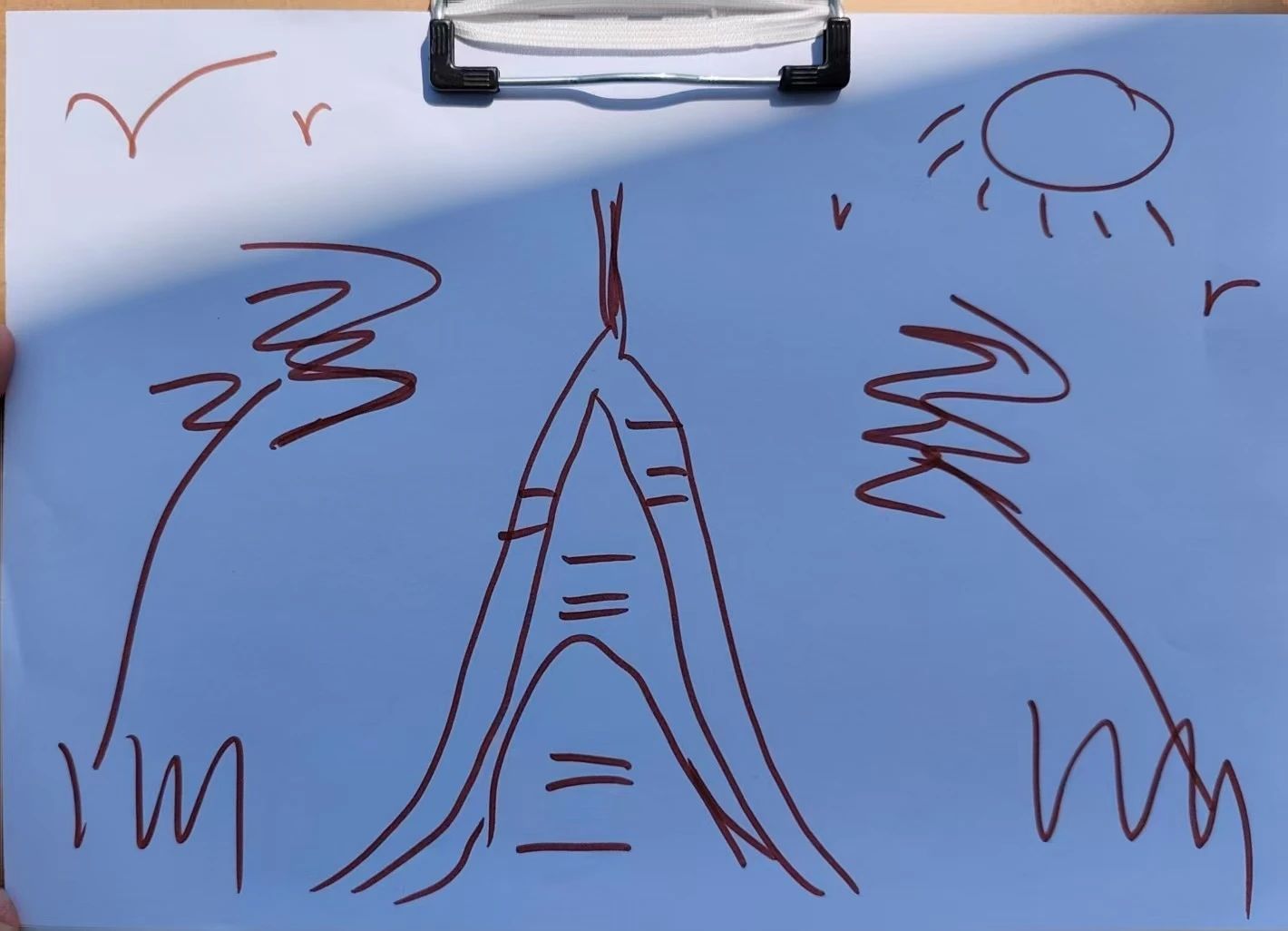
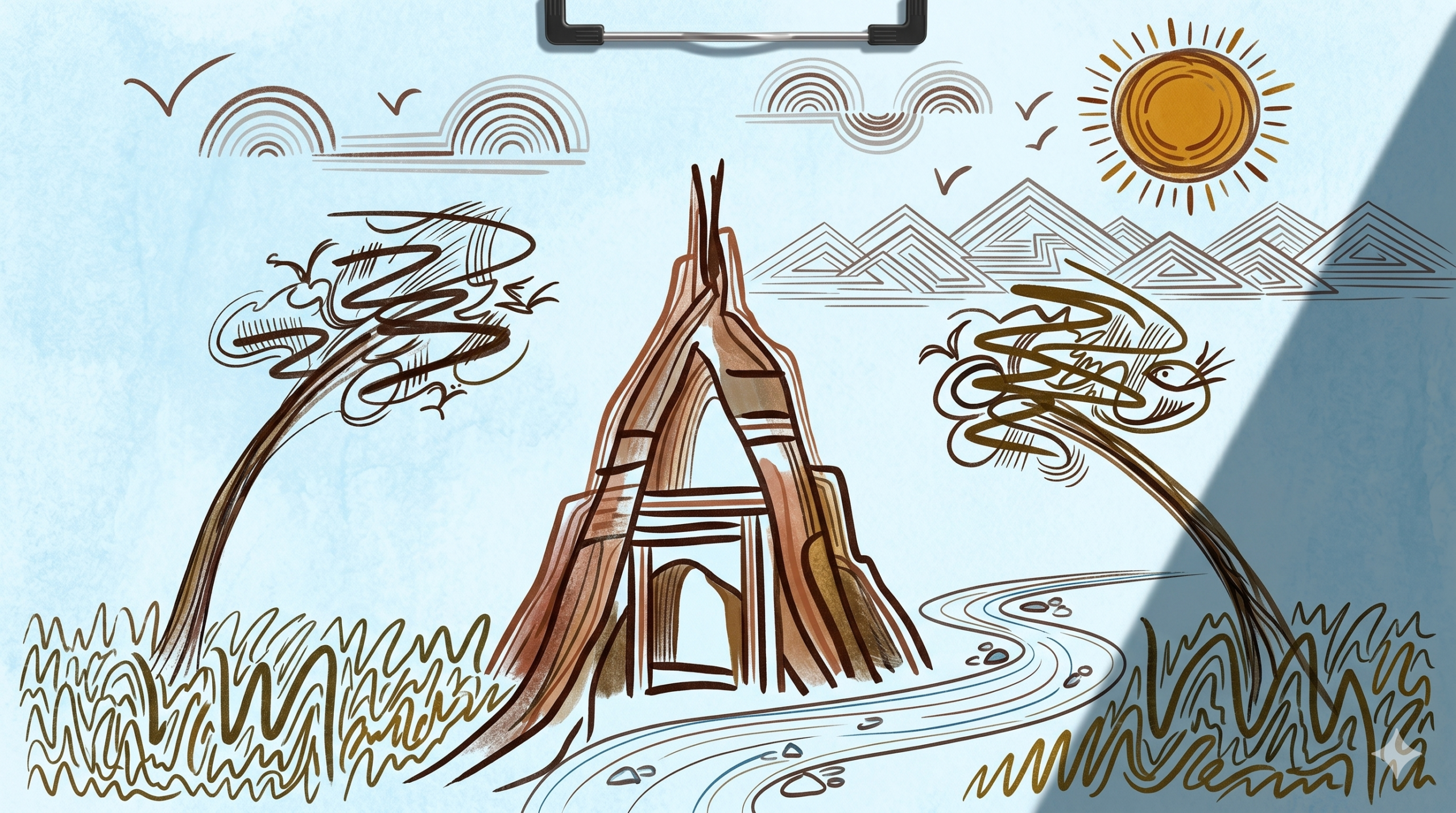
This artwork transforms a simple childlike line drawing into an abstract landscape built from rhythm, balance, and symbolic geometry. The central mountain-like structure functions as both a natural form and an architectural sign: it may be read as a peak, a tent, a doorway, or a sacred passage. Its tall triangular body gives the composition a strong vertical axis, while the small horizontal marks across the surface create a sense of steps, layers, or inner movement. Around this central form, the sweeping brown curves on both sides suggest trees, wind, or flowing energy. Their loose spiral gestures contrast with the stable mountain and make the scene feel alive rather than static. The light blue background establishes a calm, open atmosphere, close to sky or air, while the warm brown lines bring earthiness and handmade intimacy. The simplified sun, birds, clouds, distant mountains, stones, grasses, and narrow stream enrich the original sketch without destroying its minimal character. The stream in the foreground is especially important because it leads the viewer’s eye toward the central opening, creating visual depth and narrative direction. Inspired by Paul Klee’s poetic abstraction, the image does not imitate nature realistically. Instead, it reduces landscape into signs, lines, and emotional relationships. The charm of the work lies in its balance between innocence and composition: it preserves the spontaneity of a sketch while adding texture, depth, and a quiet dreamlike order.
[TRADITIONAL_CHINESE] 保羅・克利風格的抽象山景與極簡線條詩意
這件作品將一幅簡單、近似兒童塗鴉的線稿,轉化為具有節奏感、象徵性與空間層次的抽象風景。畫面中央的大型山形結構是整體構圖的核心,它既像山峰,也像帳篷、門洞或通往想像世界的入口。高聳的三角形輪廓建立了強烈的垂直軸線,而其表面一段段短橫線,則暗示階梯、紋理、地層或內在能量的流動。左右兩側以棕色曲線構成的樹形,並不追求自然主義的樹木再現,而是像風、植物、煙霧或旋轉的生命力,與中央穩定的山形形成動靜對比。淡藍色背景帶來清新、開闊的天空感,使畫面保持輕盈;溫暖的棕色線條則保留手繪的樸素質感。相較於原始草圖,完成圖加入了太陽、飛鳥、雲、遠山、石頭、草叢與前景溪流,使原本扁平的圖像產生更完整的風景敘事。其中,溪流從前景延伸至中央入口,形成視線引導,也讓觀者感覺自己正在走入這座抽象山谷。此作受到保羅・克利的詩性抽象啟發,並非寫實描繪自然,而是將自然轉化為符號、線條與情感關係。它最可貴之處,在於保留了童真的即興性,同時透過構圖、色彩與細節,建立出寧靜而富想像力的藝術秩序。
[SIMPLIFIED_CHINESE] 保罗・克利式抽象山景与极简线条表达
这件作品把一张简单、近似儿童涂鸦的线稿,发展成具有节奏、象征和空间层次的抽象风景。画面中央的大型山形结构是视觉核心,它既像山峰,也像帐篷、门洞,甚至像通往想象世界的入口。高耸的三角形轮廓建立了稳定的垂直中心,而表面一段段短横线,则让人联想到阶梯、地层、纹理或内部能量的流动。左右两侧以棕色弧线构成的树形,并不是对真实树木的写实描摹,而更像风、植物、烟雾或旋转的生命力,与中央山体的稳定感形成鲜明对比。淡蓝色背景营造出清新、开阔的天空氛围,使画面保持轻盈;温暖的棕色线条则保留了手绘的朴素质感和亲近感。与原始草图相比,完成图增加了太阳、飞鸟、云朵、远山、石头、草丛以及前景溪流,使原本平面的线条关系扩展为一个可进入的风景空间。尤其是溪流从前景蜿蜒通向中央入口,形成清楚的视觉引导,也赋予画面一种故事性:观者仿佛正沿着水路走向山中的秘密空间。作品受到保罗・克利诗性抽象语言的启发,并不追求真实再现自然,而是把自然简化为符号、线条、节奏和情绪。它的魅力在于同时保存了儿童绘画的即兴与天真,又通过色彩、构图和细节建立出安静、梦幻而完整的艺术秩序。
[FRENCH] Paysage de montagne abstrait dans un langage minimaliste inspiré de Paul Klee
Cette œuvre transforme un dessin linéaire simple, presque enfantin, en un paysage abstrait organisé par le rythme, l’équilibre et la géométrie symbolique. La grande forme centrale, semblable à une montagne, devient l’axe principal de la composition. Elle peut être lue comme un sommet, une tente, une porte ou un passage vers un espace imaginaire. Son corps triangulaire vertical donne de la stabilité à l’image, tandis que les petites lignes horizontales inscrites sur sa surface suggèrent des marches, des strates, des textures ou un mouvement intérieur. De chaque côté, les larges courbes brunes évoquent des arbres, mais aussi le vent, la fumée ou une énergie végétale en rotation. Elles introduisent une sensation de mouvement qui contraste avec la solidité calme de la montagne. Le fond bleu clair crée une atmosphère fraîche et ouverte, proche du ciel, tandis que les lignes brunes conservent la chaleur d’un geste manuel. Par rapport au croquis initial, l’image enrichie ajoute un soleil simplifié, des oiseaux, des nuages, des montagnes lointaines, des pierres, des herbes et un petit cours d’eau. Ce ruisseau est essentiel, car il guide le regard depuis le premier plan jusqu’à l’ouverture centrale, donnant profondeur et direction narrative à la scène. Inspirée par l’abstraction poétique de Paul Klee, l’œuvre ne cherche pas à représenter la nature de manière réaliste. Elle la réduit en signes, lignes et relations émotionnelles. Sa force réside dans l’équilibre entre innocence et construction: elle garde la spontanéité du croquis tout en développant une organisation visuelle calme, rêveuse et expressive.
