[ENGLISH] Blue Lines as a Map of Inner Freedom
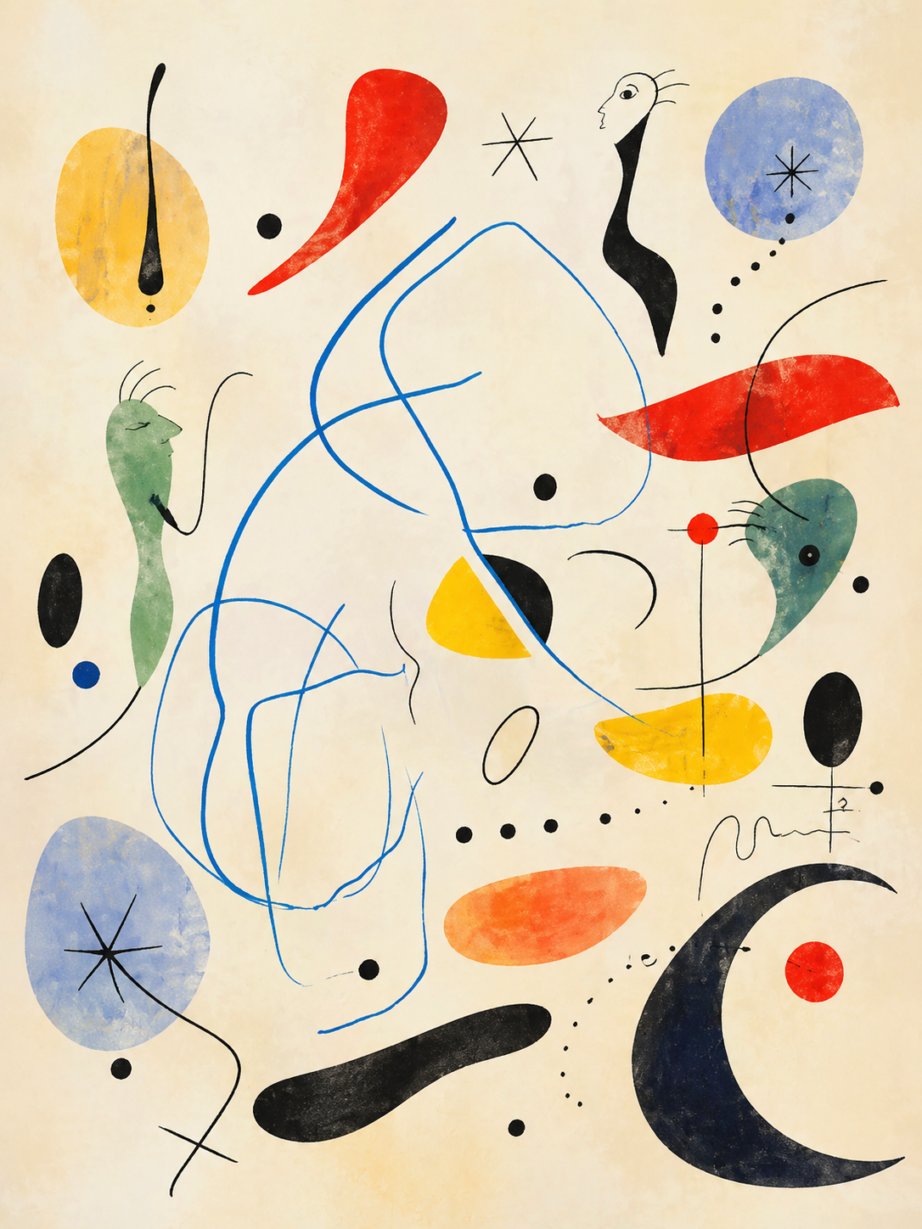
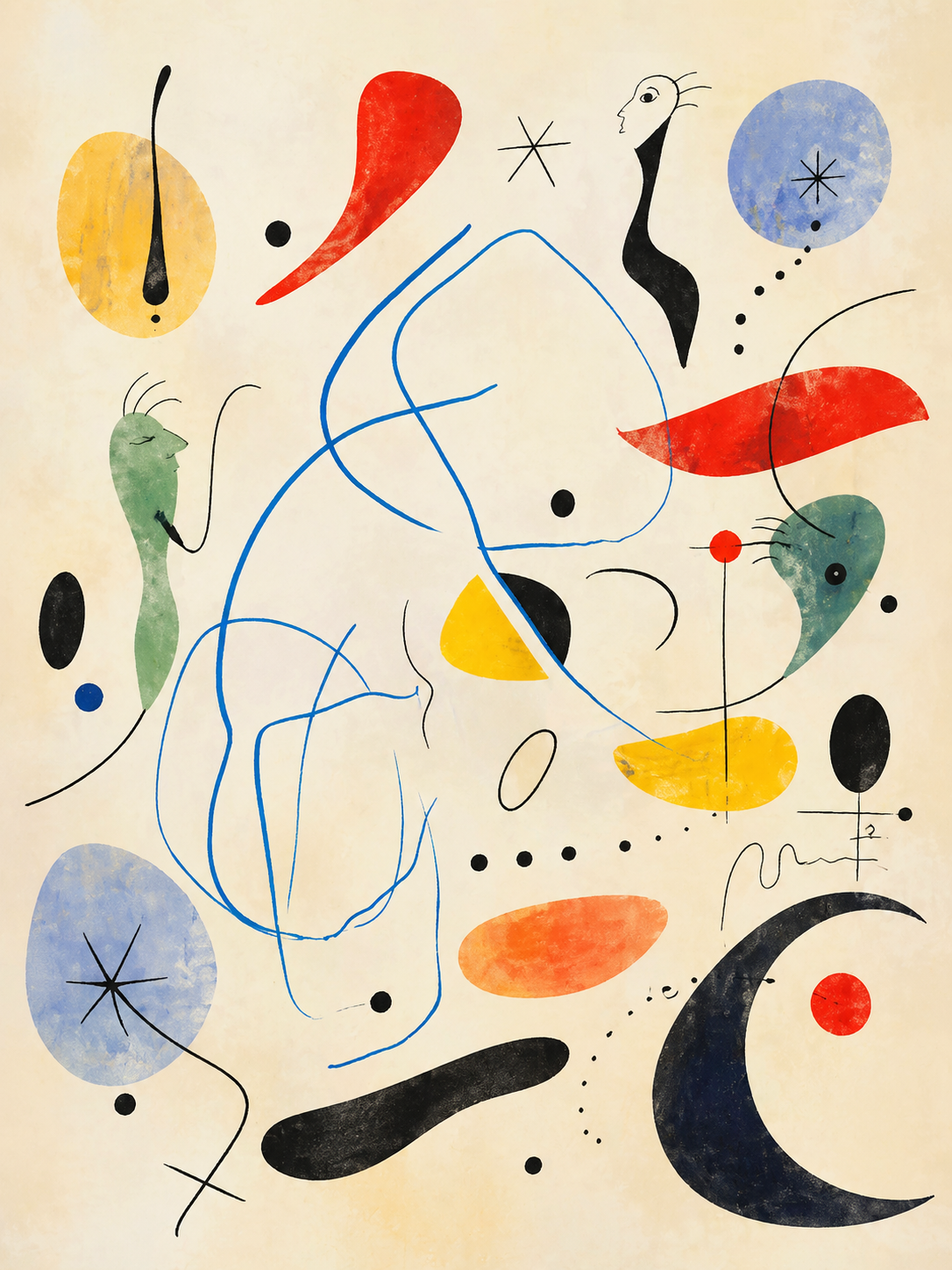
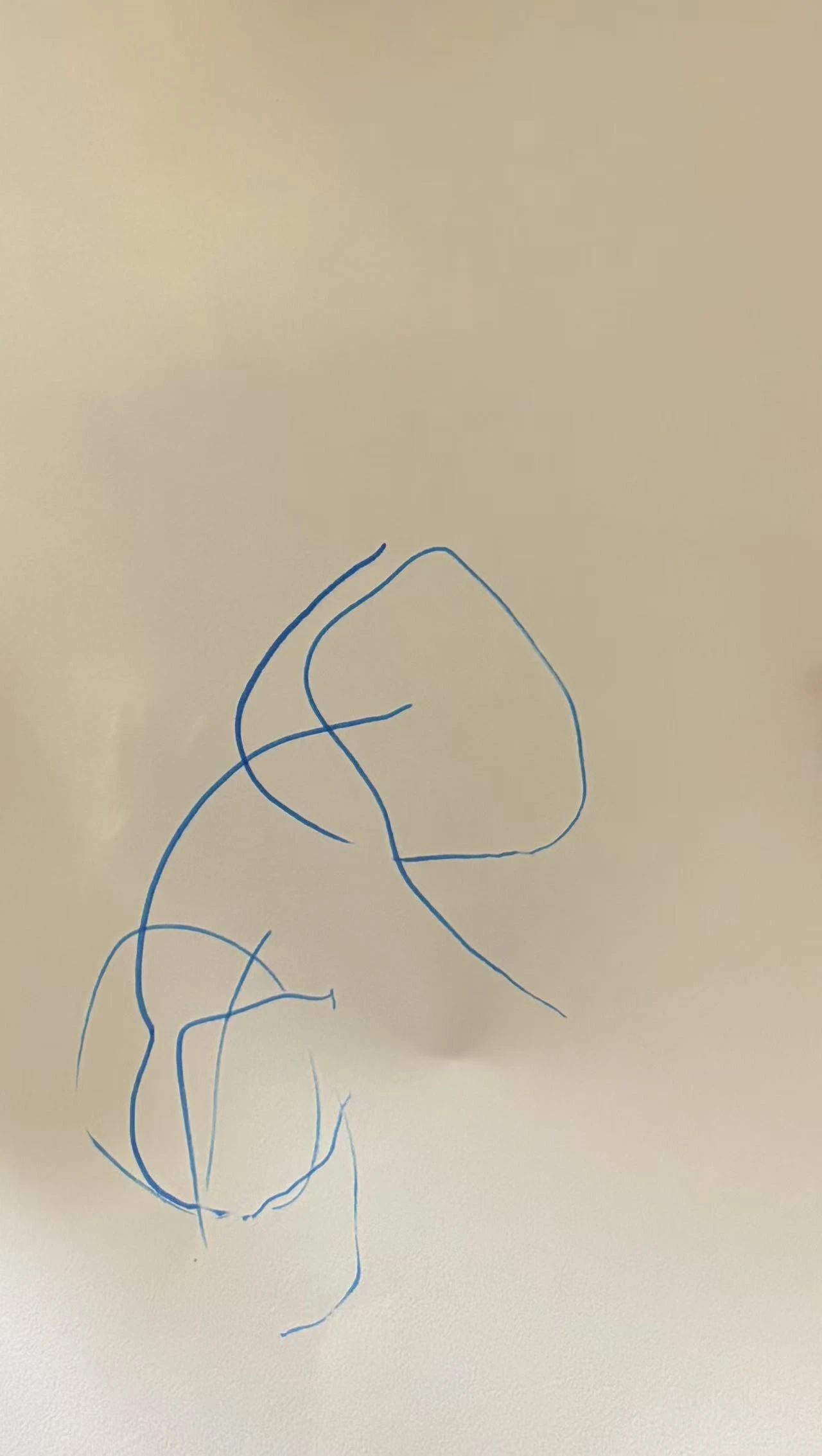
This artwork begins from a very simple visual event: several spontaneous blue lines drawn on a pale surface. In the original sketch, the marks feel direct, unplanned, and almost bodily, as if the hand were allowed to move before the mind decided what the image should become. The generated composition expands that first gesture into a wider abstract universe. The blue lines remain the emotional center, but they are surrounded by floating red, yellow, black, green, and pale blue shapes that give the drawing rhythm, contrast, and symbolic depth. The result recalls a childlike yet sophisticated language of abstraction, where a line can become a path, a figure, a thought, or a trace of movement. The curved blue stroke suggests freedom and uncertainty at the same time; it wanders, loops, crosses itself, and refuses to settle into a fixed object. Around it, the colored forms act like visual punctuation: dots, crescents, ovals, stars, and biomorphic figures create a playful field of association. The image does not tell a literal story, but it builds a poetic narrative of emergence. A small private mark becomes a cosmos of signs. The light background is important because it gives the lines air and silence, allowing every mark to appear intentional. This work can be understood as an exploration of creative innocence transformed into mature composition. It celebrates the moment when a casual gesture becomes art through balance, spacing, color, and imaginative expansion.
[TRADITIONAL_CHINESE] 藍色線條作為內在自由的地圖
這件作品的起點非常單純:在淡色背景上留下幾條自發性的藍色線條。原始草圖中的筆跡沒有刻意修飾,帶有一種直接、自由、甚至近乎身體本能的動作感,好像手在思考之前已經先行移動。生成後的畫面則把這個最初的手勢擴展成一個更完整的抽象宇宙。藍色線條仍然是整幅作品的情感核心,但周圍加入了紅色、黃色、黑色、綠色與淡藍色的幾何與有機形體,使畫面產生節奏、對比與象徵層次。這種處理方式讓作品呈現出一種既童真又成熟的抽象語言:線條不再只是線條,它可能是一條路徑、一個身體的輪廓、一段思想的軌跡,或是一種正在流動的情緒。畫面中央的藍線迴旋、交錯、轉折,既表現自由,也透露不確定性;它拒絕被固定成具體物象,而是在空間中持續生成意義。周圍的圓點、弧形、星芒、橢圓與類生物形體,像視覺標點般分布,使作品具有遊戲感與敘事暗示。這幅畫並不講述明確故事,而是在呈現一個生成過程:一個私人而偶然的筆觸,如何被轉化為充滿符號、節奏與想像的世界。淡色背景提供了呼吸與安靜,使每一筆都顯得清楚而有意義。整體而言,這是一件關於創作本能、童年自由與抽象構成之間關係的作品。
[SIMPLIFIED_CHINESE] 蓝色线条作为内在自由的地图
这件作品的起点非常简单:在浅色背景上留下几条自由流动的蓝色线条。原始图像中的线条看似随意,却保留了非常真实的手部动作痕迹,像是创作者没有预先设定主题,而是让身体、情绪和直觉先于理性判断行动。生成后的画面在这个基础上进行了艺术性的扩展,把原本孤立的蓝色线条转化为一个充满符号和节奏的抽象空间。蓝线仍然是画面的核心,它弯曲、交错、回旋,形成一种开放的运动感;它不像传统绘画中的轮廓线那样服务于具体形象,而更像情绪的轨迹、想象的路径,或者内心语言的视觉化表达。周围加入的红色、黄色、黑色、绿色和淡蓝色形体,则让画面获得更丰富的层次。圆点、椭圆、星形、弯月形和类似生物的形象分布在空间中,形成一种近似梦境的视觉叙事。这些元素并不要求观众寻找固定答案,而是邀请观众在自由联想中阅读作品。浅色背景具有重要作用,它让画面保持轻盈,使每一条线、每一个色块都拥有清晰的呼吸空间。从创作角度看,这幅作品表现的是从儿童式涂鸦到成熟抽象构成的转化过程。它强调艺术并不一定来自复杂技巧,也可以来自一次真诚的手势、一段未经压抑的线条,以及后续对节奏、颜色和空间关系的敏感组织。
[FRENCH] Les lignes bleues comme cartographie de la liberté intérieure
Cette œuvre prend naissance dans un geste extrêmement simple : quelques lignes bleues tracées librement sur un fond clair. Dans le dessin initial, le trait semble spontané, presque instinctif, comme si la main avait bougé avant que l’esprit ne cherche à définir une image précise. La composition finale développe ce premier geste en un univers abstrait plus vaste, où la ligne bleue demeure le centre émotionnel de l’œuvre. Elle se courbe, se croise, se replie, puis repart, créant une sensation de mouvement intérieur et de liberté non contrôlée. Autour d’elle apparaissent des formes rouges, jaunes, noires, vertes et bleu pâle, qui enrichissent l’espace pictural et donnent au dessin une structure rythmique. Ces formes flottantes, points, ovales, croissants, étoiles et figures biomorphiques, fonctionnent comme une ponctuation visuelle. Elles ne racontent pas une histoire au sens narratif, mais elles construisent un champ poétique d’associations. Le spectateur peut y voir des signes, des personnages, des astres, des fragments de pensée ou des traces de rêve. Le fond clair joue un rôle essentiel : il offre du silence, de l’air et de la distance, permettant à chaque marque d’exister pleinement. L’intérêt de cette création réside dans la transformation d’un geste enfantin en composition abstraite maîtrisée. L’œuvre montre que la liberté graphique peut devenir langage artistique lorsqu’elle est accompagnée par un équilibre subtil entre espace, couleur, forme et rythme. Elle célèbre ainsi l’innocence créatrice, non comme naïveté, mais comme force première de l’imagination.
