[ENGLISH] Transit Window as Urban Abstraction
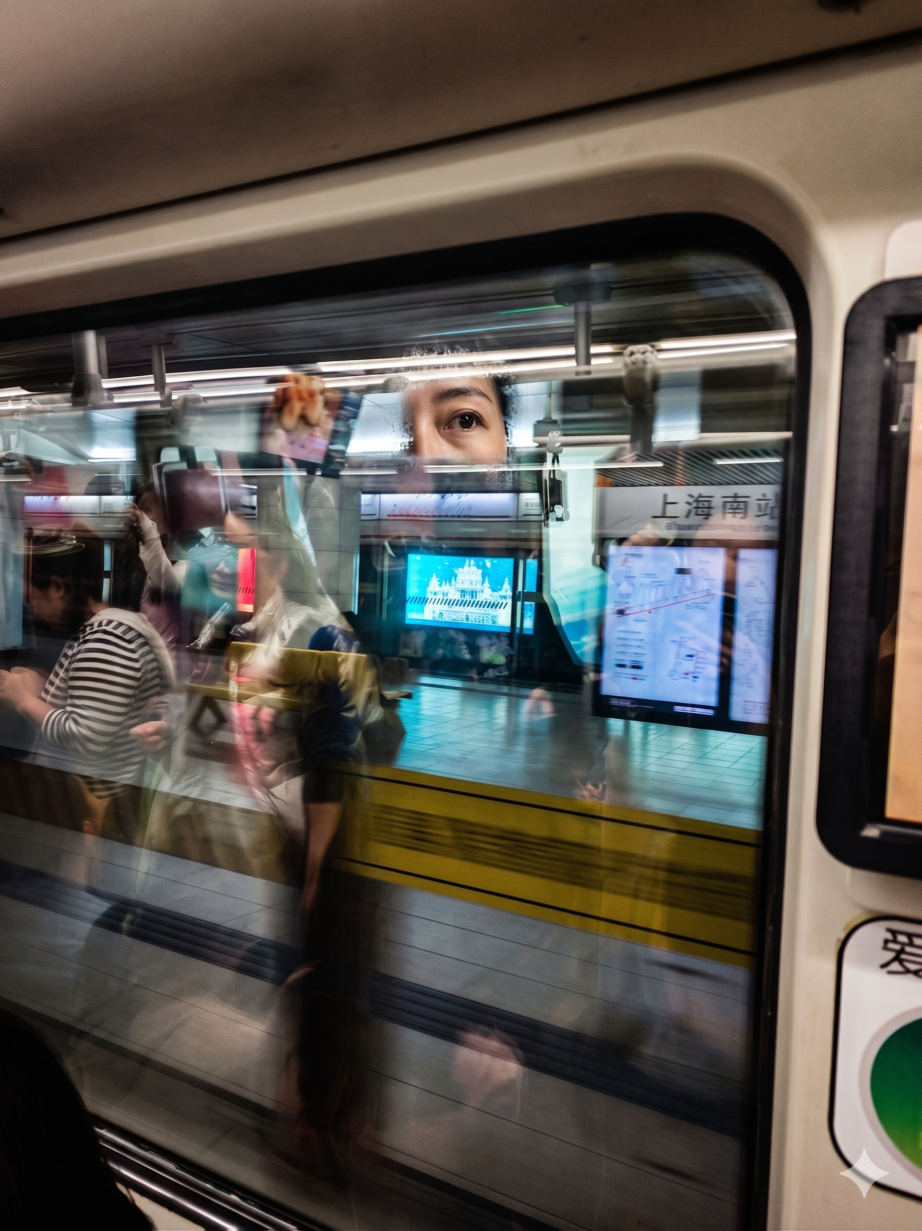
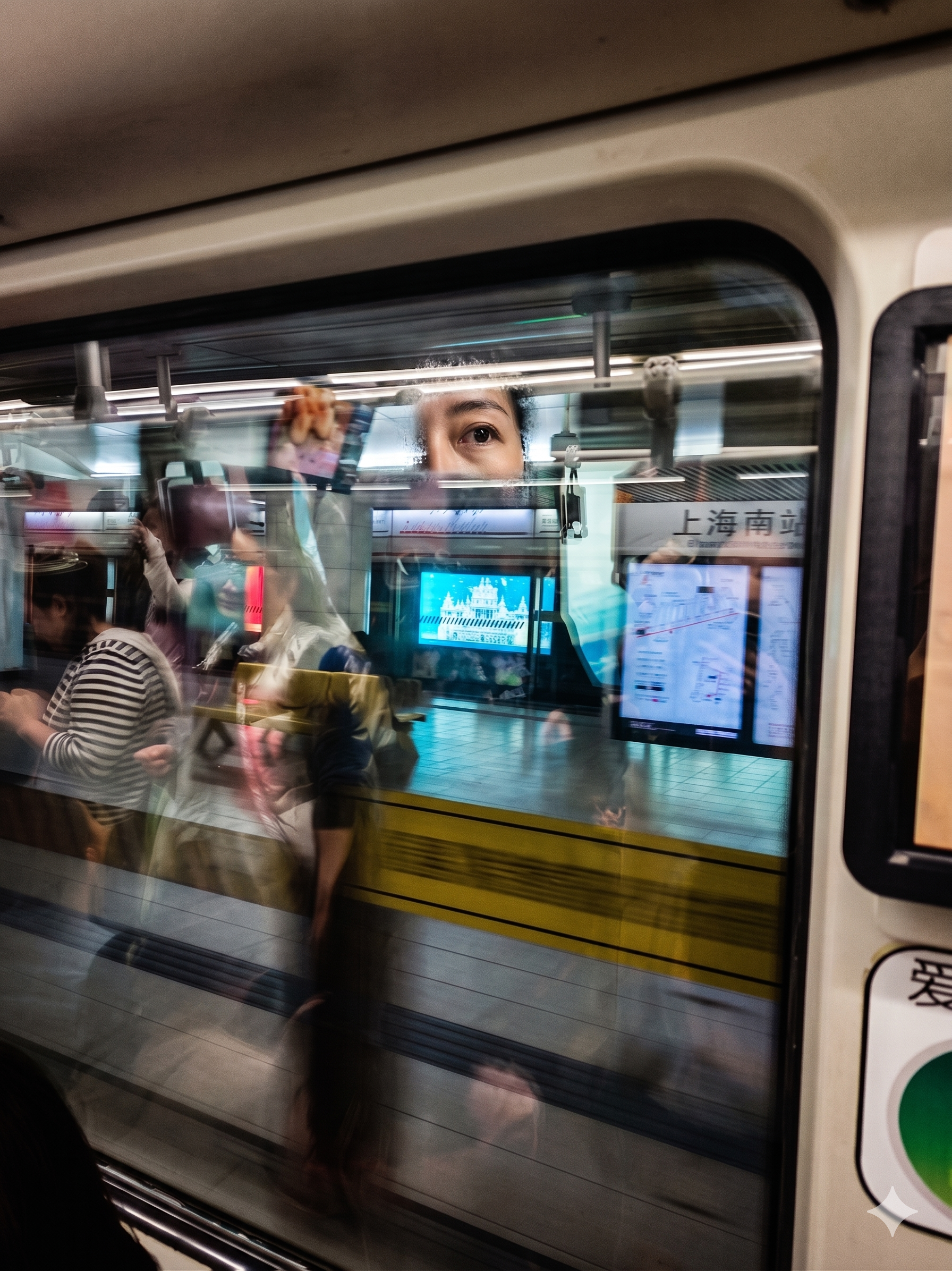
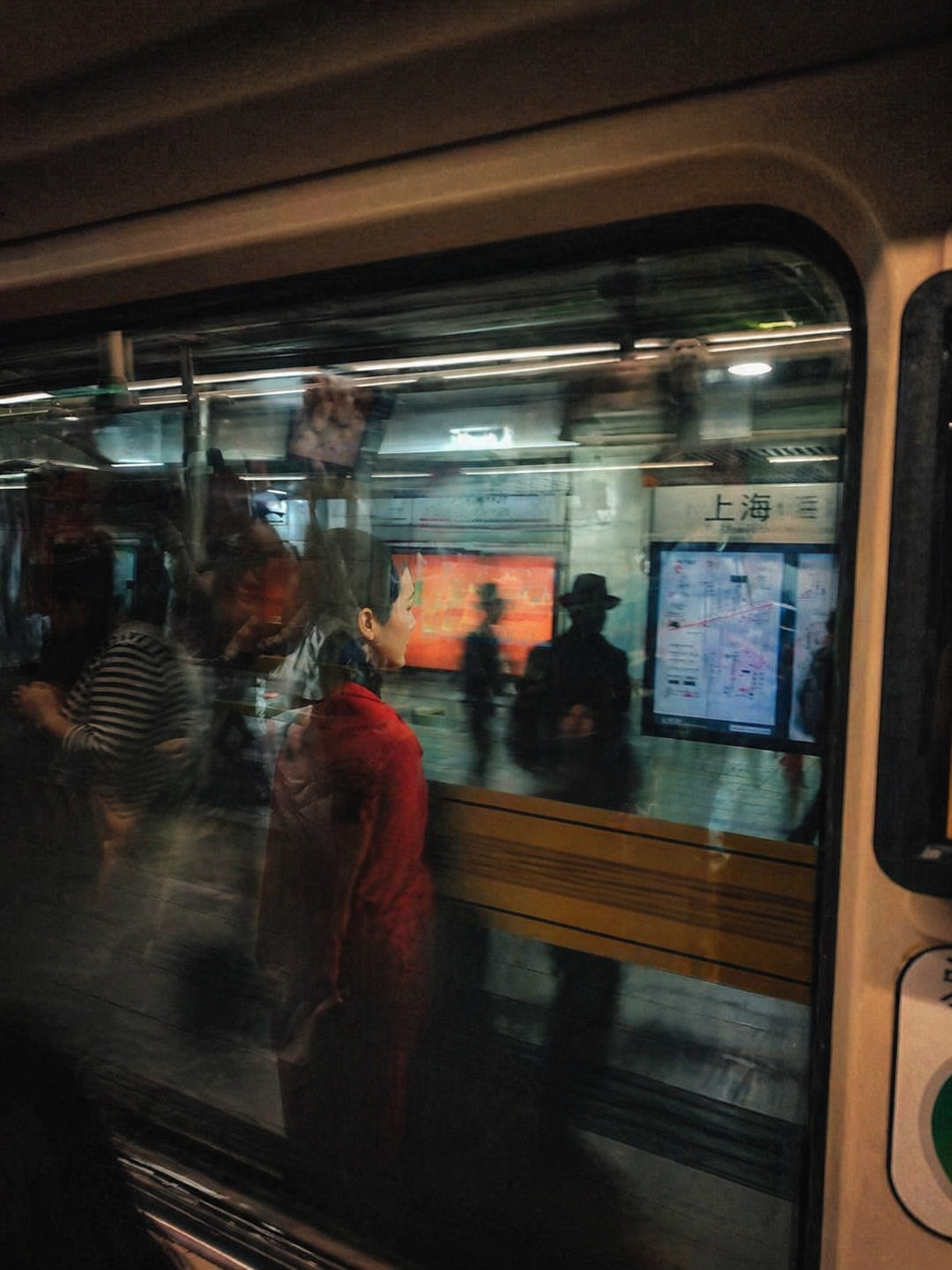
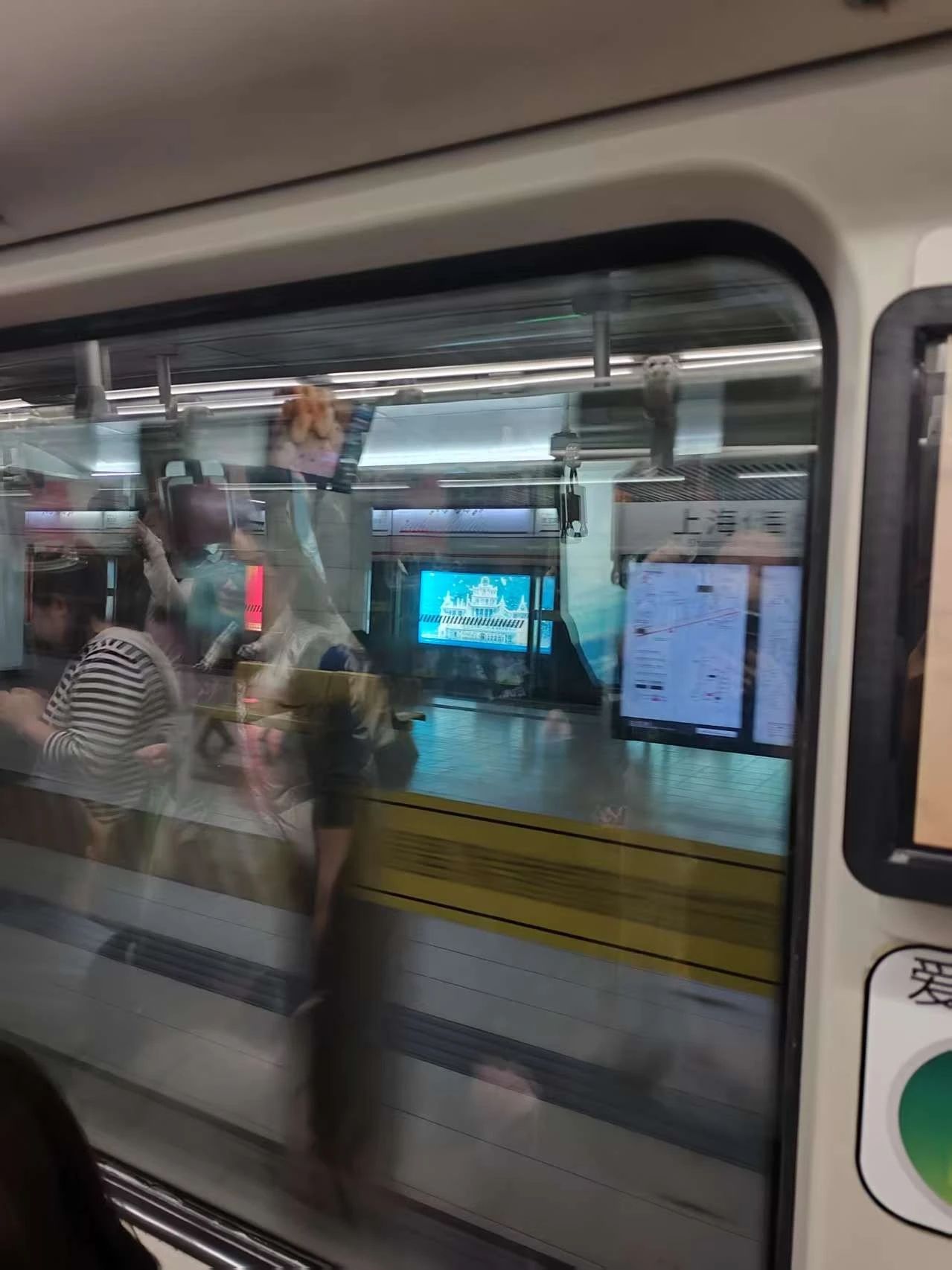
This work can be understood as an urban photographic construction built around reflection, speed, and partial visibility. The subway window becomes both lens and canvas: it records the station outside, the passengers inside, and the unstable space between them. Instead of presenting the city as a clear architectural view, the image dissolves it into streaks of light, layered bodies, signage, maps, and glass glare. The result echoes Saul Leiter’s poetic approach to street photography, where obstruction, color, and ambiguity are not flaws but central expressive tools. The strongest artistic decision is the insertion of a readable human subject within the blur. In one version, a single eye emerges from the moving reflections; in another, a woman in red stands like a still note inside a rushing visual chord. This focal point gives the composition narrative depth: the city moves too quickly to be fully grasped, yet one human presence briefly anchors our attention. The contrast between interior and exterior is essential. The warm, enclosed train frame presses against the cool fluorescent platform, while the yellow safety line cuts horizontally through the scene like an abstract brushstroke. Motion blur transforms commuters into gestural marks, linking urban photography with abstract expressionist energy. The image is not merely about a subway ride; it is about modern perception itself, fragmented by glass, speed, artificial light, and fleeting encounters. Its beauty lies in the tension between documentary reality and painterly abstraction.
[TRADITIONAL_CHINESE] 車窗中的城市抽象
這組影像可以被視為一件以速度、反射與局部可見性構成的都市攝影創作。地鐵車窗不只是觀看外部世界的透明介面,也像一塊承載多重影像的畫布:它同時映照車廂內的乘客、月台上的燈光、站名標示、路線圖與玻璃上的眩光。城市並沒有被呈現為清楚穩定的空間,而是被壓縮成光帶、人物殘影、色塊與重疊的平面。這種處理呼應 Saul Leiter 式的街頭詩意:遮蔽、模糊與不完整並非缺陷,而是觀看城市時最真實的狀態。作品最關鍵的創作策略,是在混亂的流動中安排一個相對清晰的主體。有的版本讓一隻眼睛從反射與速度中浮現,有的版本則讓穿紅衣的女子在暗色車窗中成為視覺錨點。這個人物使畫面不只是抽象構成,也產生了敘事感:城市快速掠過,但某個陌生人的存在短暫地停留在觀者心中。車內與車外的對比同樣重要。溫暖的車廂邊框與冷調的月台燈光互相擠壓,黃色安全線像一筆橫向的抽象筆觸切過畫面。通勤者因動態模糊而成為近似筆勢的形體,使都市攝影帶有抽象表現主義的能量。這件作品並非單純描寫地鐵,而是在描寫現代感知:被玻璃、速度、人工光與短暫相遇切割的觀看經驗。
[SIMPLIFIED_CHINESE] 车窗中的城市抽象
这组影像可以被理解为一件围绕速度、反射和局部可见性展开的都市摄影创作。地铁车窗不只是观看外部世界的透明媒介,也像一块承载多重影像的画布:它同时记录车厢内的乘客、站台上的灯光、站名标识、线路图以及玻璃上的眩光。城市没有被表现为清晰稳定的建筑空间,而是被压缩成光带、人物残影、色块和重叠的平面。这种视觉方法接近 Saul Leiter 式的街头诗意:遮挡、模糊和不完整不是失败,而是现代城市经验的重要组成部分。作品最有力的创作选择,是在混乱流动的画面中放置一个相对清楚的主体。有的版本让一只眼睛从反射和速度中显现出来,有的版本则让穿红衣的女子在暗色玻璃中成为视觉焦点。这个主体使作品不只是抽象构图,也获得了叙事深度:城市迅速掠过,但某个陌生人的存在短暂地抓住了观者的注意。车内与车外的对比构成了画面的张力。温暖的车厢框架压向冷色荧光照亮的站台,黄色安全线像一笔横向的抽象笔触穿过画面。运动模糊把通勤者转化为近似绘画手势的形体,使都市摄影带有抽象表现主义的力量。它并非单纯描写一次地铁旅程,而是在呈现现代观看本身:被玻璃、速度、人工光和短暂相遇不断切割的感知。
[FRENCH] La fenêtre du métro comme abstraction urbaine
Cette image peut être lue comme une construction photographique urbaine fondée sur la vitesse, le reflet et la visibilité fragmentaire. La fenêtre du métro devient à la fois objectif et surface picturale : elle enregistre la station extérieure, les passagers à l’intérieur, les plans lumineux, les panneaux, les cartes et les reflets produits par le verre. La ville n’apparaît pas comme un espace architectural stable, mais comme une superposition de traînées lumineuses, de silhouettes floues, de couleurs et de signes partiellement lisibles. Cette approche rappelle la poésie visuelle de Saul Leiter, pour qui l’obstruction, l’ambiguïté et la couleur sont des moyens expressifs essentiels plutôt que des imperfections. Le choix artistique le plus important consiste à introduire un sujet lisible au milieu du mouvement. Dans une version, un œil surgit entre les reflets; dans une autre, une femme vêtue de rouge devient un point d’ancrage dans l’obscurité mouvante de la vitre. Cette présence humaine donne une profondeur narrative à la composition : la ville file trop vite pour être saisie, mais un visage ou une silhouette retient brièvement notre regard. Le contraste entre intérieur et extérieur structure toute l’image. Le cadre chaud du wagon se heurte à la lumière froide de la station, tandis que la ligne jaune traverse la scène comme un coup de pinceau abstrait. Les passants, transformés par le flou cinétique, deviennent des gestes visuels proches de l’expressionnisme abstrait. L’œuvre ne décrit donc pas seulement un trajet en métro; elle explore la perception moderne, divisée par le verre, la vitesse, la lumière artificielle et les rencontres fugitives.
