[ENGLISH] Moonlit Voyage of a Child’s Imagination
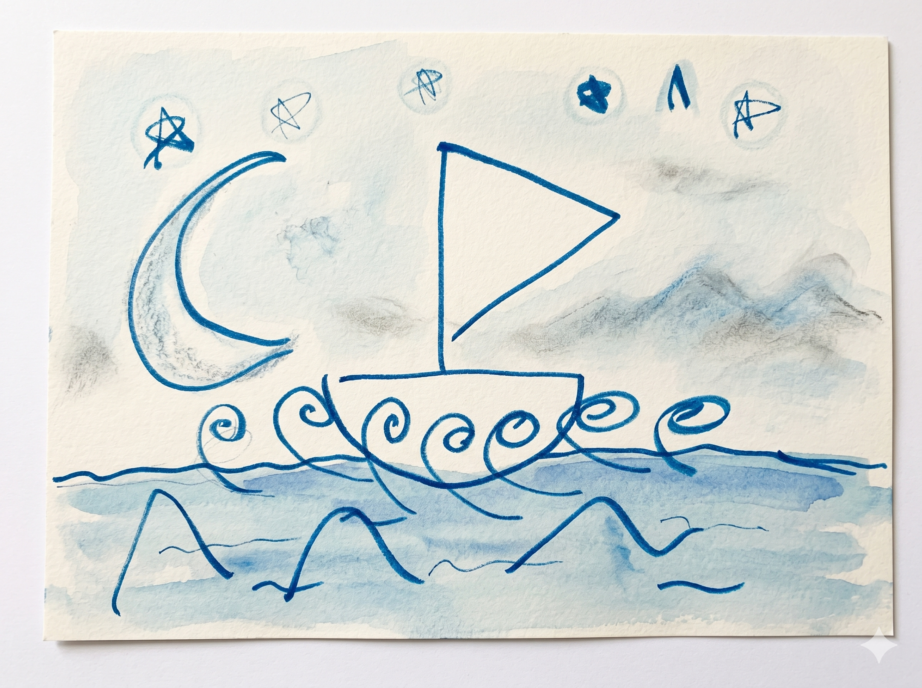
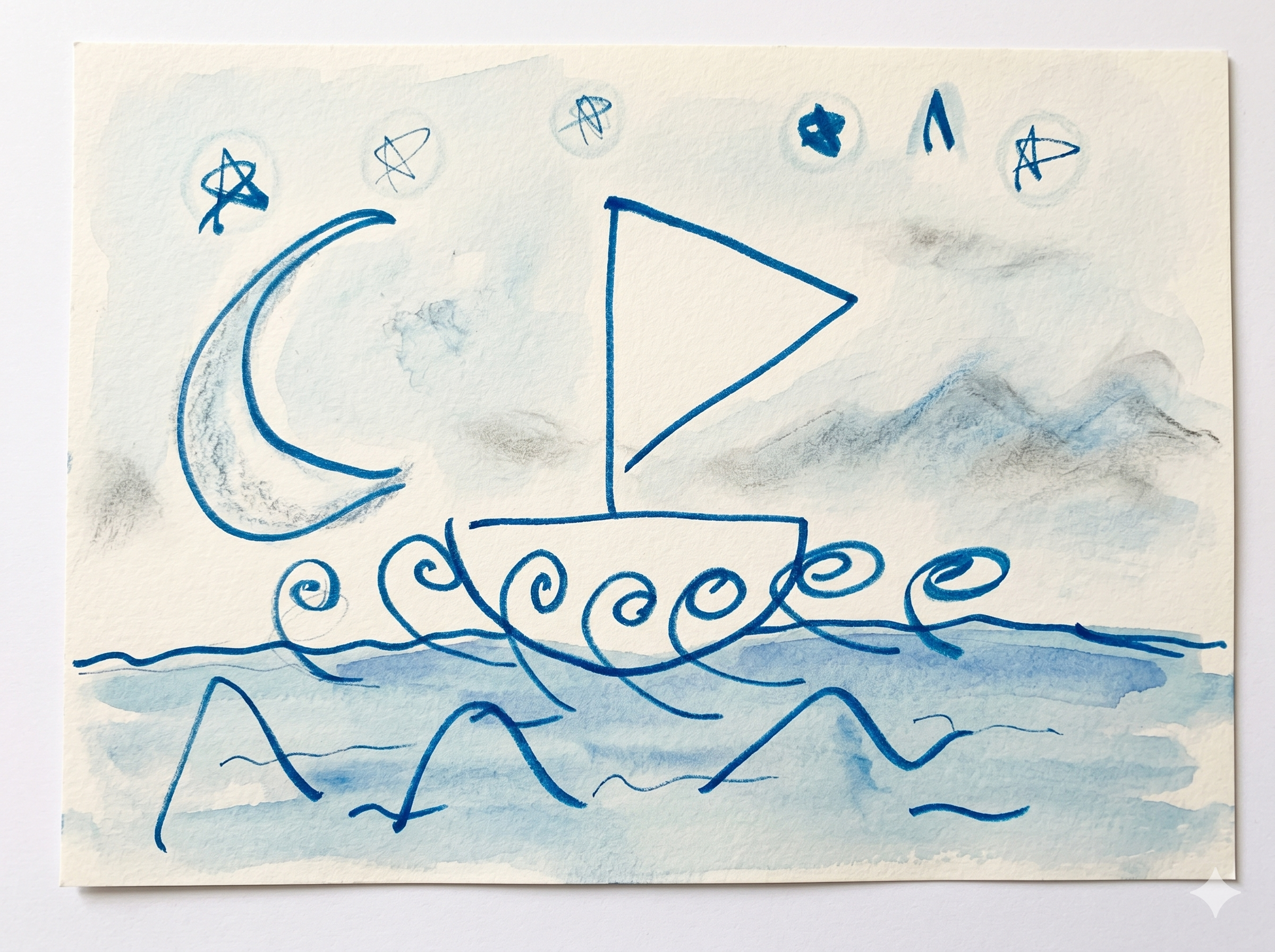
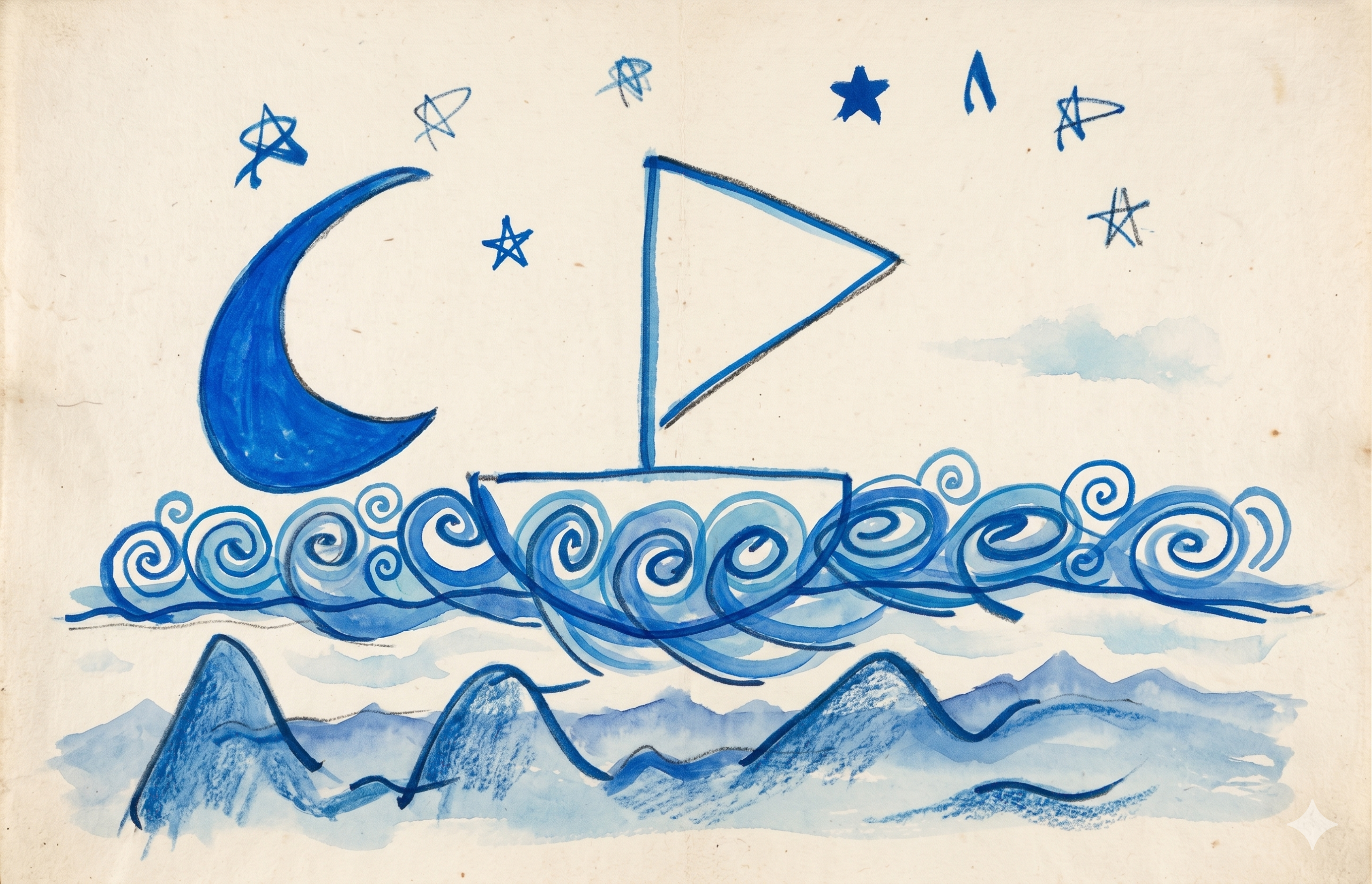
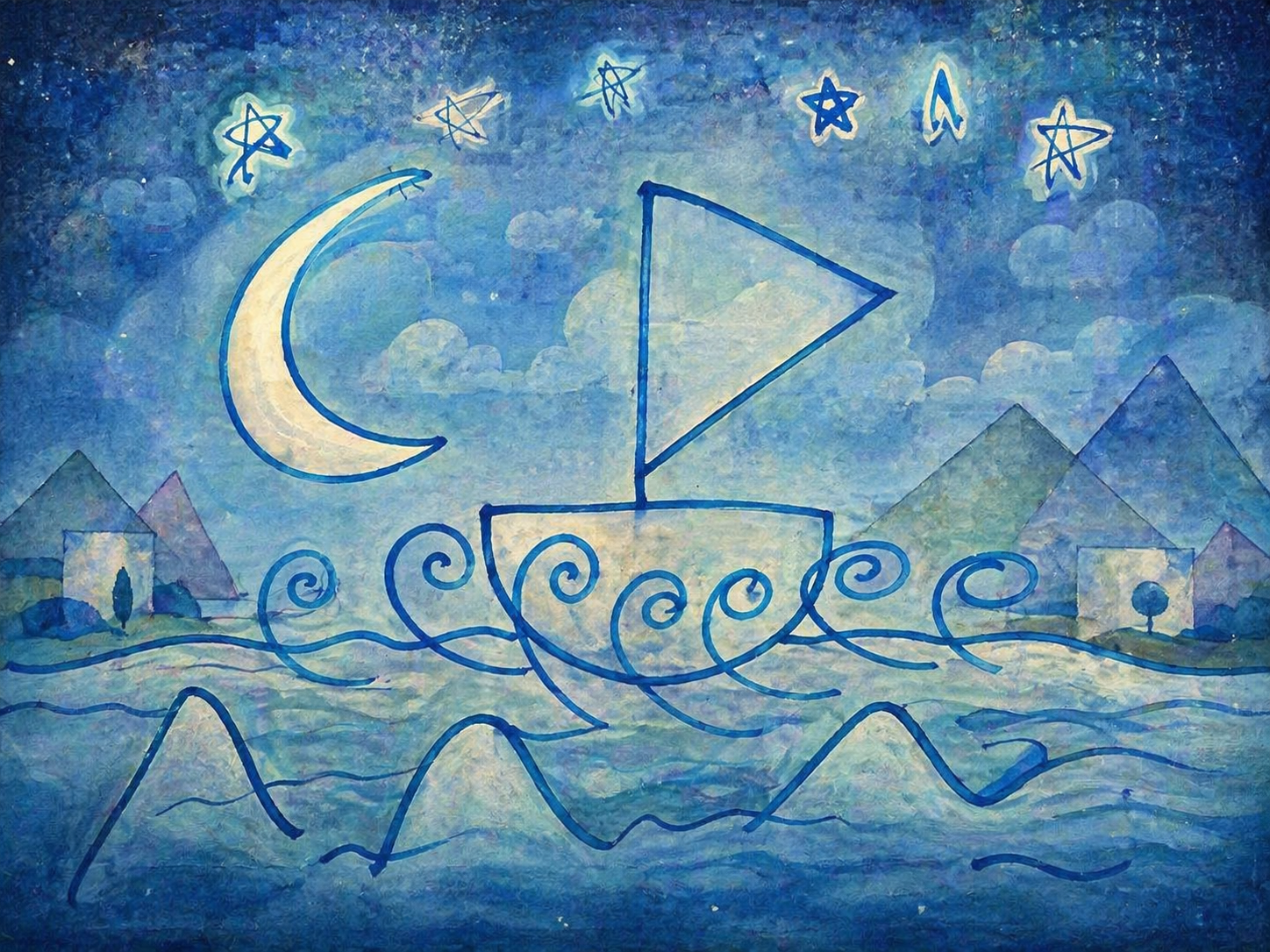
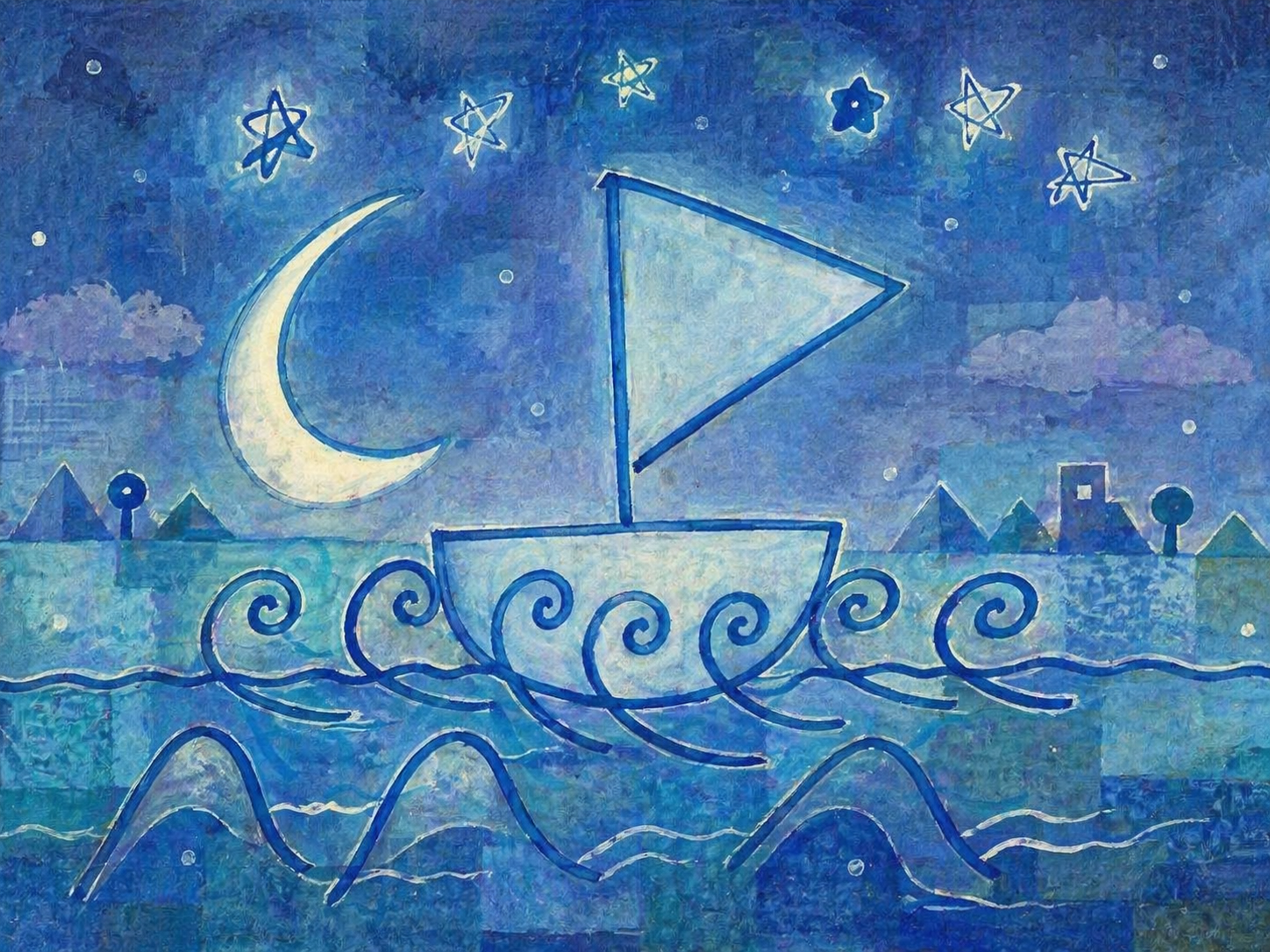
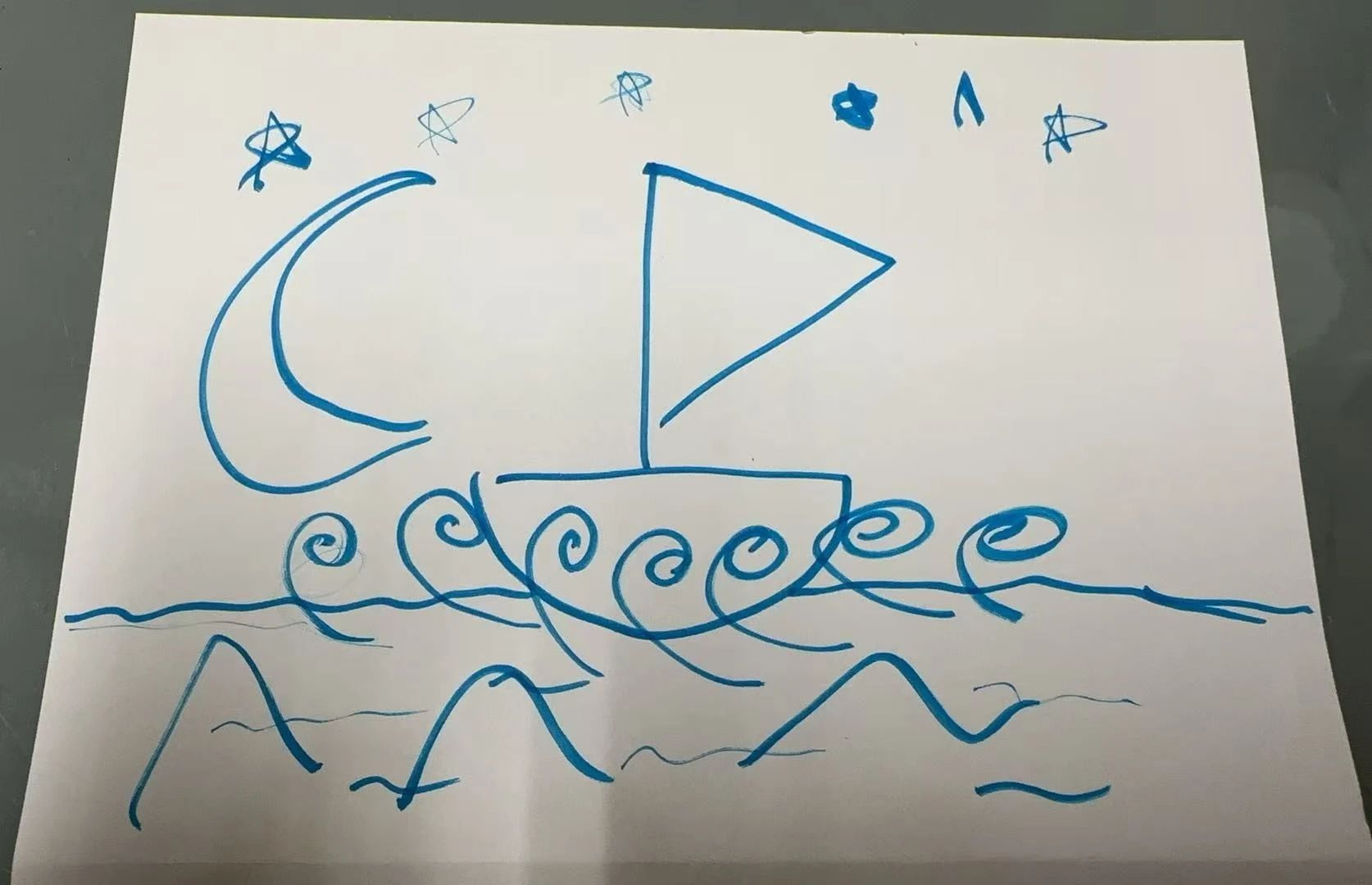
This artwork presents a sailboat traveling through a dreamlike night sea, built from the directness and emotional clarity of children’s drawing. The original blue-line sketch already contains the essential structure: a crescent moon on the left, simple stars above, a triangular sail at the center, curling waves below, and loose mountain-like forms near the bottom. These elements are not arranged according to realistic perspective; instead, they follow the logic of memory, play, and imagination. The sailboat becomes less a physical object than a symbol of inner movement, curiosity, and gentle adventure. The repeated spiral waves are especially important. They transform the ocean into rhythm, almost like music written in blue lines. Their circular motion suggests both water and feeling: excitement, safety, and wonder. The crescent moon balances the sail visually and emotionally, giving the composition a quiet nighttime tenderness. The enhanced versions deepen the image by adding layered washes of blue, distant clouds, mountains, and glowing stars, while still preserving the innocence of the first drawing. This balance is central to the work: artistic depth is added without erasing the childlike origin. The style recalls Paul Klee’s sensitivity to signs, symbols, and poetic geometry, where simple forms can hold complex emotion. The artwork invites viewers to see childhood drawing not as unfinished art, but as a complete visual language. Its beauty lies in the honesty of the line, the softness of the blue atmosphere, and the feeling that the boat is sailing through both ocean and dream.
[TRADITIONAL_CHINESE] 月光下航行的童心之船
這件作品以一艘夜海中的帆船為核心,呈現出兒童繪畫特有的直接性、純真感與想像力。原始圖像主要由藍色線條構成:左側有一彎新月,上方散布星星,中央是一艘由簡單幾何形組成的小船,下方則以連續旋轉的波浪線表現海面。畫面並不追求真實透視,而是依循兒童記憶與感受的邏輯來組織空間。船、月亮、星星、海浪與遠山像是被放置在同一個夢境舞台上,各自清楚、單純,卻共同構成一段溫柔的夜間航行。最具表現力的是海浪的螺旋線條。它們不只是水的符號,也像音樂的節奏,讓船彷彿在旋律中前進。月亮與帆形成視覺上的呼應,一邊是柔和的彎形,一邊是穩定的三角形,使畫面在童趣中保有平衡。後續生成圖像加入了深淺不同的藍色水彩、淡淡雲層、遠方山影與發光星辰,使作品更有空氣感與層次感。然而,這些加工並沒有掩蓋原始線條的天真,而是讓孩子的筆觸被更完整地看見。作品帶有保羅・克利式的詩性幾何精神:簡單符號可以承載豐富情感。它提醒我們,兒童畫不是尚未成熟的藝術,而是一種完整的視覺語言。
[SIMPLIFIED_CHINESE] 月夜航行中的童年想象
这件作品以夜晚海面上的帆船为主题,展现了儿童绘画中最珍贵的直接、单纯和想象力。原始图像用蓝色线条完成主要叙事:左侧是一弯新月,天空中有几颗自由画出的星星,中央是一艘由直线、三角形和长方形构成的小帆船,下面则是不断卷曲的波浪。画面并没有按照真实透视来安排,而是按照儿童心中的视觉秩序展开。船、月亮、星星、海浪和远处像山一样的线条,都像梦境中的符号,被放在同一个安静的夜晚里。最有力量的是波浪部分。连续的螺旋线让海水不只是背景,而成为画面的节奏,好像一首用蓝色写成的小夜曲。新月与船帆形成对比:一个柔软弯曲,一个清楚坚定,使作品既有温柔感,也有前进感。后续增强图像加入了不同层次的蓝色、淡淡的云、远山和更明亮的星光,让画面从单纯线描发展为具有梦幻气氛的夜海场景。但它并没有失去原来儿童画的纯净,反而让原始笔触更有情绪和空间。作品可以联想到保罗·克利对符号、几何和诗意的重视:简单形状并不贫乏,反而能装下丰富的内心世界。它让观者看见,儿童画不是未完成的艺术,而是一种真诚、自由、完整的表达方式。
[FRENCH] Le voyage au clair de lune de l’imagination enfantine
Cette œuvre représente un voilier avançant sur une mer nocturne, dans un langage visuel proche du dessin d’enfant. L’image d’origine repose presque entièrement sur des lignes bleues simples : un croissant de lune à gauche, quelques étoiles dispersées dans le ciel, une voile triangulaire au centre, une coque schématique et, sous le bateau, une succession de vagues en spirale. La scène ne cherche pas la perspective réaliste. Elle suit plutôt une logique intérieure, celle du souvenir, du jeu et du rêve. Le bateau n’est donc pas seulement un moyen de transport ; il devient le symbole d’un départ imaginaire, d’une curiosité douce et d’une aventure protégée par la nuit. Les vagues constituent le cœur expressif de la composition. Leur mouvement circulaire transforme l’océan en rythme, presque en écriture musicale. Le croissant de lune répond à la voile par contraste : la lune est courbe et tendre, tandis que la voile est droite et stable. Les versions enrichies ajoutent des lavis bleus, des nuages légers, des montagnes lointaines et des étoiles lumineuses, créant davantage de profondeur et d’atmosphère. Pourtant, l’essentiel du dessin enfantin demeure intact. C’est précisément cette tension qui rend l’image touchante : l’œuvre gagne en poésie sans perdre son innocence première. On peut y reconnaître une sensibilité proche de Paul Klee, pour qui les signes simples, les formes géométriques et les couleurs délicates pouvaient porter une émotion complexe. Cette création rappelle que le dessin d’enfant n’est pas une esquisse inachevée, mais une langue visuelle complète, sincère et profondément imaginative.
